 Add to Chrome
 Add to Firefox
 Add to Edge
Uncertainty and Fairness Awareness in LLM-Based Recommendation Systems
Jan 31, 2026
Large language models (LLMs) enable powerful zero-shot recommendations by leveraging broad contextual knowledge, yet predictive uncertainty and embedded biases threaten reliability and fairness. This paper studies how uncertainty and fairness evaluations affect the accuracy, consistency, and trustworthiness of LLM-generated recommendations. We introduce a benchmark of curated metrics and a dataset annotated for eight demographic attributes (31 categorical values) across two domains: movies and music. Through in-depth case studies, we quantify predictive uncertainty (via entropy) and demonstrate that Google DeepMind's Gemini 1.5 Flash exhibits systematic unfairness for certain sensitive attributes; measured similarity-based gaps are SNSR at 0.1363 and SNSV at 0.0507. These disparities persist under prompt perturbations such as typographical errors and multilingual inputs. We further integrate personality-aware fairness into the RecLLM evaluation pipeline to reveal personality-linked bias patterns and expose trade-offs between personalization and group fairness. We propose a novel uncertainty-aware evaluation methodology for RecLLMs, present empirical insights from deep uncertainty case studies, and introduce a personality profile-informed fairness benchmark that advances explainability and equity in LLM recommendations. Together, these contributions establish a foundation for safer, more interpretable RecLLMs and motivate future work on multi-model benchmarks and adaptive calibration for trustworthy deployment.

RUL forecasting for wind turbine predictive maintenance based on deep learning
Dec 09, 2024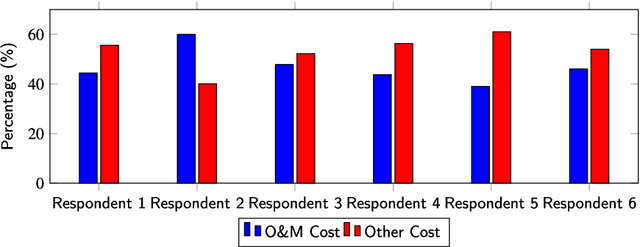
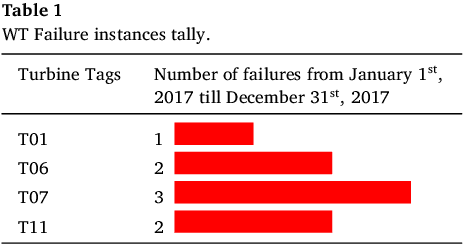
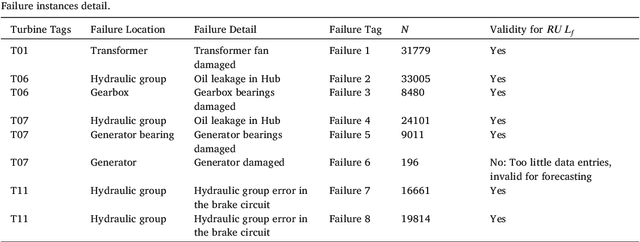
Predictive maintenance (PdM) is increasingly pursued to reduce wind farm operation and maintenance costs by accurately predicting the remaining useful life (RUL) and strategically scheduling maintenance. However, the remoteness of wind farms often renders current methodologies ineffective, as they fail to provide a sufficiently reliable advance time window for maintenance planning, limiting PdM's practicality. This study introduces a novel deep learning (DL) methodology for future RUL forecasting. By employing a multi-parametric attention-based DL approach that bypasses feature engineering, thereby minimizing the risk of human error, two models: ForeNet-2d and ForeNet-3d are proposed. These models successfully forecast the RUL for seven multifaceted wind turbine (WT) failures with a 2-week forecast window. The most precise forecast deviated by only 10 minutes from the actual RUL, while the least accurate prediction deviated by 1.8 days, with most predictions being off by only a few hours. This methodology offers a substantial time frame to access remote WTs and perform necessary maintenance, thereby enabling the practical implementation of PdM.
* 19 pages, 16 figures, Journal Paper