 Add to Chrome
 Add to Firefox
 Add to Edge
Managing Diabetic Retinopathy with Deep Learning: A Data Centric Overview
Apr 02, 2026
Diabetic Retinopathy (DR) is a serious microvascular complication of diabetes, and one of the leading causes of vision loss worldwide. Although automated detection and grading, with Deep Learning (DL), can reduce the burden on ophthalmologists, it is constrained by the limited availability of high-quality datasets. Existing repositories often remain geographically narrow, contain limited samples, and exhibit inconsistent annotations or variable image quality; thereby, restricting their clinical reliability. This paper presents a comprehensive review and comparative analysis of fundus image datasets used in the management of DR. The study evaluates their usability across key tasks, including binary classification, severity grading, lesion localization, and multi-disease screening. It also categorizes the datasets by size, accessibility, and annotation type (such as image-level, lesion-level, and multi-disease). Finally, a recently published dataset is presented as a case study to illustrate broader challenges in dataset curation and usage. The review consolidates current knowledge while highlighting persistent gaps such as the lack of standardized lesion-level annotations and longitudinal data. It also outlines recommendations for future dataset development to support clinically reliable and explainable solutions in DR screening.

Decoupling Wavelet Sub-bands for Single Source Domain Generalization in Fundus Image Segmentation
Mar 30, 2026Domain generalization in fundus imaging is challenging due to variations in acquisition conditions across devices and clinical settings. The inability to adapt to these variations causes performance degradation on unseen domains for deep learning models. Besides, obtaining annotated data across domains is often expensive and privacy constraints restricts their availability. Although single-source domain generalization (SDG) offers a realistic solution to this problem, the existing approaches frequently fail to capture anatomical topology or decouple appearance from anatomical features. This research introduces WaveSDG, a new wavelet-guided segmentation network for SDG. It decouples anatomical structure from domain-specific appearance through a wavelet sub-band decomposition. A novel Wavelet-based Invariant Structure Extraction and Refinement (WISER) module is proposed to process encoder features by leveraging distinct semantic roles of each wavelet sub-band. The module refines low-frequency components to anchor global anatomy, while selectively enhancing directional edges and suppressing noise within the high-frequency sub-bands. Extensive ablation studies validate the effectiveness of the WISER module and its decoupling strategy. Our evaluations on optic cup and optic disc segmentation across one source and five unseen target datasets show that WaveSDG consistently outperforms seven state-of-the-art methods. Notably, it achieves the best balanced Dice score and lowest 95th percentile Hausdorff distance with reduced variance, indicating improved accuracy, robustness, and cross-domain stability.
Adaptive Prototype-based Interpretable Grading of Prostate Cancer
Mar 05, 2026Prostate cancer being one of the frequently diagnosed malignancy in men, the rising demand for biopsies places a severe workload on pathologists. The grading procedure is tedious and subjective, motivating the development of automated systems. Although deep learning has made inroads in terms of performance, its limited interpretability poses challenges for widespread adoption in high-stake applications like medicine. Existing interpretability techniques for prostate cancer classifiers provide a coarse explanation but do not reveal why the highlighted regions matter. In this scenario, we propose a novel prototype-based weakly-supervised framework for an interpretable grading of prostate cancer from histopathology images. These networks can prove to be more trustworthy since their explicit reasoning procedure mirrors the workflow of a pathologist in comparing suspicious regions with clinically validated examples. The network is initially pre-trained at patch-level to learn robust prototypical features associated with each grade. In order to adapt it to a weakly-supervised setup for prostate cancer grading, the network is fine-tuned with a new prototype-aware loss function. Finally, a new attention-based dynamic pruning mechanism is introduced to handle inter-sample heterogeneity, while selectively emphasizing relevant prototypes for optimal performance. Extensive validation on the benchmark PANDA and SICAP datasets confirms that the framework can serve as a reliable assistive tool for pathologists in their routine diagnostic workflows.
Weakly Supervised Patch Annotation for Improved Screening of Diabetic Retinopathy
Mar 04, 2026Diabetic Retinopathy (DR) requires timely screening to prevent irreversible vision loss. However, its early detection remains a significant challenge since often the subtle pathological manifestations (lesions) get overlooked due to insufficient annotation. Existing literature primarily focuses on image-level supervision, weakly-supervised localization, and clustering-based representation learning, which fail to systematically annotate unlabeled lesion region(s) for refining the dataset. Expert-driven lesion annotation is labor-intensive and often incomplete, limiting the performance of deep learning models. We introduce Similarity-based Annotation via Feature-space Ensemble (SAFE), a two-stage framework that unifies weak supervision, contrastive learning, and patch-wise embedding inference, to systematically expand sparse annotations in the pathology. SAFE preserves fine-grained details of the lesion(s) under partial clinical supervision. In the first stage, a dual-arm Patch Embedding Network learns semantically structured, class-discriminative embeddings from expert annotated patches. Next, an ensemble of independent embedding spaces extrapolates labels to the unannotated regions based on spatial and semantic proximity. An abstention mechanism ensures trade-off between highly reliable annotation and noisy coverage. Experimental results demonstrate reliable separation of healthy and diseased patches, achieving upto 0.9886 accuracy. The annotation generated from SAFE substantially improves downstream tasks such as DR classification, demonstrating a substantial increase in F1-score of the diseased class and a performance gain as high as 0.545 in Area Under the Precision-Recall Curve (AUPRC). Qualitative analysis, with explainability, confirms that SAFE focuses on clinically relevant lesion patterns; and is further validated by ophthalmologists.
Efficient Self-Supervised Grading of Prostate Cancer Pathology
Jan 26, 2025Prostate cancer grading using the ISUP system (International Society of Urological Pathology) for treatment decisions is highly subjective and requires considerable expertise. Despite advances in computer-aided diagnosis systems, few have handled efficient ISUP grading on Whole Slide Images (WSIs) of prostate biopsies based only on slide-level labels. Some of the general challenges include managing gigapixel WSIs, obtaining patch-level annotations, and dealing with stain variability across centers. One of the main task-specific challenges faced by deep learning in ISUP grading, is the learning of patch-level features of Gleason patterns (GPs) based only on their slide labels. In this scenario, an efficient framework for ISUP grading is developed. The proposed TSOR is based on a novel Task-specific Self-supervised learning (SSL) model, which is fine-tuned using Ordinal Regression. Since the diversity of training samples plays a crucial role in SSL, a patch-level dataset is created to be relatively balanced w.r.t. the Gleason grades (GGs). This balanced dataset is used for pre-training, so that the model can effectively learn stain-agnostic features of the GP for better generalization. In medical image grading, it is desirable that misclassifications be as close as possible to the actual grade. From this perspective, the model is then fine-tuned for the task of ISUP grading using an ordinal regression-based approach. Experimental results on the most extensive multicenter prostate biopsies dataset (PANDA challenge), as well as the SICAP dataset, demonstrate the effectiveness of this novel framework compared to state-of-the-art methods.
Adaptive Class Learning to Screen Diabetic Disorders in Fundus Images of Eye
Jan 21, 2025The prevalence of ocular illnesses is growing globally, presenting a substantial public health challenge. Early detection and timely intervention are crucial for averting visual impairment and enhancing patient prognosis. This research introduces a new framework called Class Extension with Limited Data (CELD) to train a classifier to categorize retinal fundus images. The classifier is initially trained to identify relevant features concerning Healthy and Diabetic Retinopathy (DR) classes and later fine-tuned to adapt to the task of classifying the input images into three classes: Healthy, DR, and Glaucoma. This strategy allows the model to gradually enhance its classification capabilities, which is beneficial in situations where there are only a limited number of labeled datasets available. Perturbation methods are also used to identify the input image characteristics responsible for influencing the models decision-making process. We achieve an overall accuracy of 91% on publicly available datasets.
Are Vision xLSTM Embedded UNet More Reliable in Medical 3D Image Segmentation?
Jun 24, 2024The advancement of developing efficient medical image segmentation has evolved from initial dependence on Convolutional Neural Networks (CNNs) to the present investigation of hybrid models that combine CNNs with Vision Transformers. Furthermore, there is an increasing focus on creating architectures that are both high-performing in medical image segmentation tasks and computationally efficient to be deployed on systems with limited resources. Although transformers have several advantages like capturing global dependencies in the input data, they face challenges such as high computational and memory complexity. This paper investigates the integration of CNNs and Vision Extended Long Short-Term Memory (Vision-xLSTM) models by introducing a novel approach called UVixLSTM. The Vision-xLSTM blocks captures temporal and global relationships within the patches extracted from the CNN feature maps. The convolutional feature reconstruction path upsamples the output volume from the Vision-xLSTM blocks to produce the segmentation output. Our primary objective is to propose that Vision-xLSTM forms a reliable backbone for medical image segmentation tasks, offering excellent segmentation performance and reduced computational complexity. UVixLSTM exhibits superior performance compared to state-of-the-art networks on the publicly-available Synapse dataset. Code is available at: https://github.com/duttapallabi2907/UVixLSTM
Mixed Attention with Deep Supervision for Delineation of COVID Infection in Lung CT
Jan 17, 2023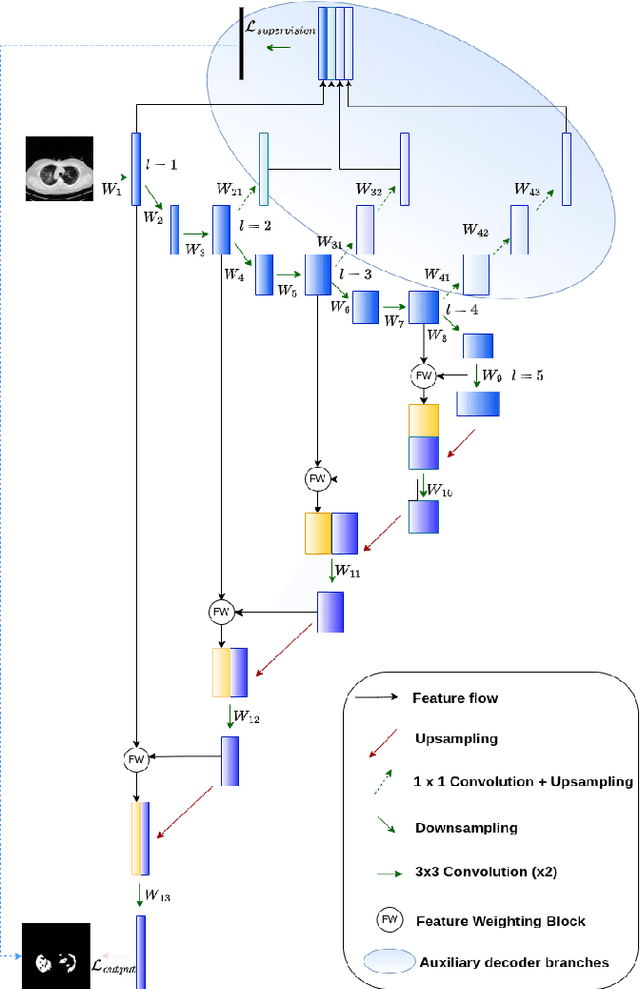
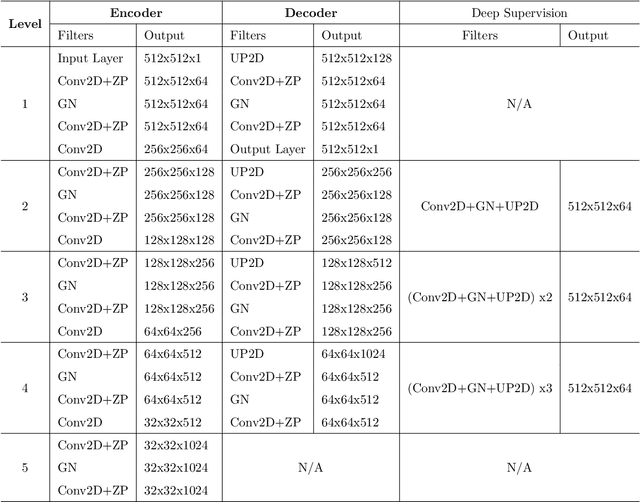
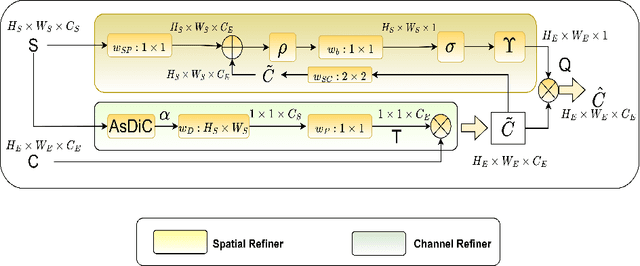
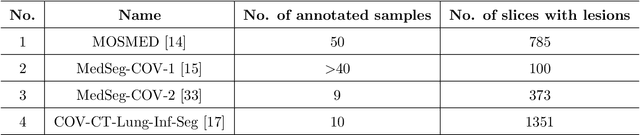
The COVID-19 pandemic, with its multiple variants, has placed immense pressure on the global healthcare system. An early effective screening and grading become imperative towards optimizing the limited available resources of the medical facilities. Computed tomography (CT) provides a significant non-invasive screening mechanism for COVID-19 infection. An automated segmentation of the infected volumes in lung CT is expected to significantly aid in the diagnosis and care of patients. However, an accurate demarcation of lesions remains problematic due to their irregular structure and location(s) within the lung. A novel deep learning architecture, Mixed Attention Deeply Supervised Network (MiADS-Net), is proposed for delineating the infected regions of the lung from CT images. Incorporating dilated convolutions with varying dilation rates, into a mixed attention framework, allows capture of multi-scale features towards improved segmentation of lesions having different sizes and textures. Mixed attention helps prioritise relevant feature maps to be probed, along with those regions containing crucial information within these maps. Deep supervision facilitates discovery of robust and discriminatory characteristics in the hidden layers at shallower levels, while overcoming the vanishing gradient. This is followed by estimating the severity of the disease, based on the ratio of the area of infected region in each lung with respect to its entire volume. Experimental results, on three publicly available datasets, indicate that the MiADS-Net outperforms several state-of-the-art architectures in the COVID-19 lesion segmentation task; particularly in defining structures involving complex geometries.
Collective Intelligent Strategy for Improved Segmentation of COVID-19 from CT
Dec 23, 2022The devastation caused by the coronavirus pandemic makes it imperative to design automated techniques for a fast and accurate detection. We propose a novel non-invasive tool, using deep learning and imaging, for delineating COVID-19 infection in lungs. The Ensembling Attention-based Multi-scaled Convolution network (EAMC), employing Leave-One-Patient-Out (LOPO) training, exhibits high sensitivity and precision in outlining infected regions along with assessment of severity. The Attention module combines contextual with local information, at multiple scales, for accurate segmentation. Ensemble learning integrates heterogeneity of decision through different base classifiers. The superiority of EAMC, even with severe class imbalance, is established through comparison with existing state-of-the-art learning models over four publicly-available COVID-19 datasets. The results are suggestive of the relevance of deep learning in providing assistive intelligence to medical practitioners, when they are overburdened with patients as in pandemics. Its clinical significance lies in its unprecedented scope in providing low-cost decision-making for patients lacking specialized healthcare at remote locations.
Full-scale Deeply Supervised Attention Network for Segmenting COVID-19 Lesions
Oct 27, 2022Automated delineation of COVID-19 lesions from lung CT scans aids the diagnosis and prognosis for patients. The asymmetric shapes and positioning of the infected regions make the task extremely difficult. Capturing information at multiple scales will assist in deciphering features, at global and local levels, to encompass lesions of variable size and texture. We introduce the Full-scale Deeply Supervised Attention Network (FuDSA-Net), for efficient segmentation of corona-infected lung areas in CT images. The model considers activation responses from all levels of the encoding path, encompassing multi-scalar features acquired at different levels of the network. This helps segment target regions (lesions) of varying shape, size and contrast. Incorporation of the entire gamut of multi-scalar characteristics into the novel attention mechanism helps prioritize the selection of activation responses and locations containing useful information. Determining robust and discriminatory features along the decoder path is facilitated with deep supervision. Connections in the decoder arm are remodeled to handle the issue of vanishing gradient. As observed from the experimental results, FuDSA-Net surpasses other state-of-the-art architectures; especially, when it comes to characterizing complicated geometries of the lesions.