 Add to Chrome
 Add to Firefox
 Add to Edge
Steering Emotional Dynamics for Art Therapy: Controllable Narrative Script Generation through Hierarchically Guided LLM Agents
Jun 15, 2026
Art therapy plays a vital role in emotional healing, in which narrative creation acts as the primary vehicle for emotional expression. Given the inherently dynamic nature of emotions during healing, narratives with finely controlled emotional fluctuations enable individuals to safely project inner conflicts and achieve emotional catharsis. Recently, with the rapid development of Large Language Models (LLMs), automated narrative generation technology has provided a new pathway to support such artistic designs. However, while existing methods can produce fluent texts, they struggle to generate narratives that adhere to specified affective trajectories, failing to meet the demands of emotion-oriented psychological healing. To address these issues, this paper proposes EC-Script, an LLM agent-based framework that enables hierarchical control of the affective trajectory in narrative generation for emotional healing. To ensure that the generated narratives strictly follow the given emotional patterns, EC-Script establishes overall narrative direction through Emotion-Trajectory Planning, propels scene-level plot development with Character-Driven Scene Generation, and regulates local emotional changes of characters via Emotion-Controlled Script Writing. Ultimately, it outputs scene-by-scene script content that remains highly consistent with the preset affective trajectory. Experimental results demonstrate that EC-Script significantly outperforms baseline methods in affective trajectory adherence, exhibiting excellent and reliable emotional controllability, thereby providing effective technical support for AI-assisted emotional healing scenarios.

Ghost in the Transformer: Tracing LLM Lineage with SVD-Fingerprint
Nov 17, 2025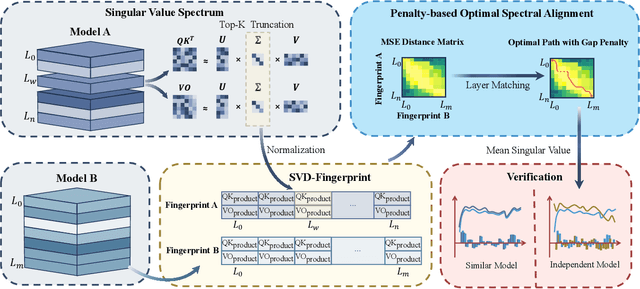
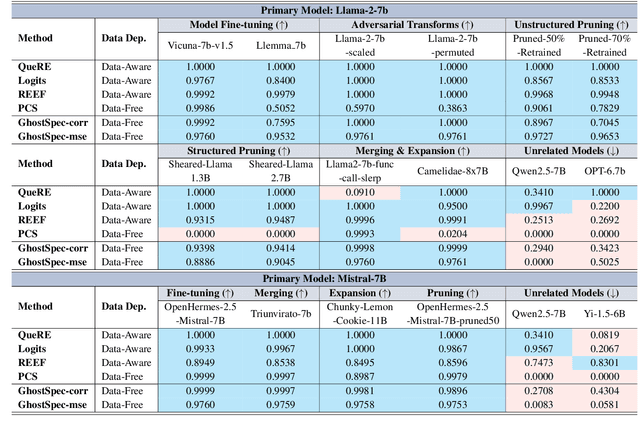
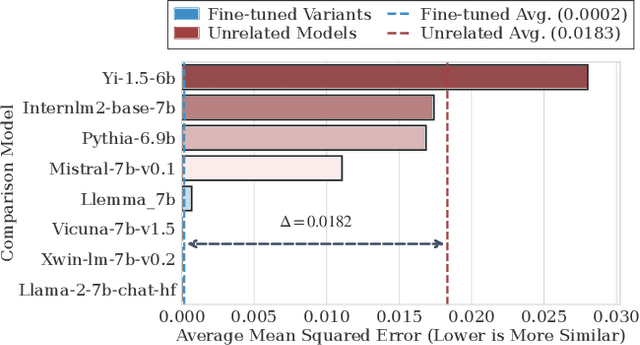
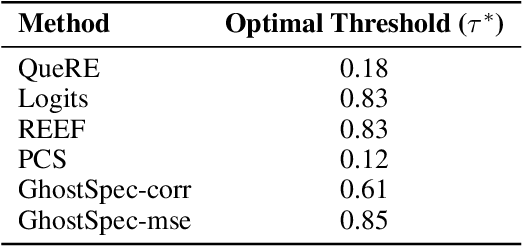
Large Language Models (LLMs) have rapidly advanced and are widely adopted across diverse fields. Due to the substantial computational cost and data requirements of training from scratch, many developers choose to fine-tune or modify existing open-source models. While most adhere to open-source licenses, some falsely claim original training despite clear derivation from public models. This raises pressing concerns about intellectual property protection and highlights the need for reliable methods to verify model provenance. In this paper, we propose GhostSpec, a lightweight yet effective method for verifying LLM lineage without access to training data or modification of model behavior. Our approach constructs compact and robust fingerprints by applying singular value decomposition (SVD) to invariant products of internal attention weight matrices, effectively capturing the structural identity of a model. Unlike watermarking or output-based methods, GhostSpec is fully data-free, non-invasive, and computationally efficient. It demonstrates strong robustness to sequential fine-tuning, pruning, block expansion, and even adversarial transformations. Extensive experiments show that GhostSpec can reliably trace the lineage of transformed models with minimal overhead. By offering a practical solution for model verification and reuse tracking, our method contributes to the protection of intellectual property and fosters a transparent, trustworthy ecosystem for large-scale language models.
CoViPAL: Layer-wise Contextualized Visual Token Pruning for Large Vision-Language Models
Aug 24, 2025Large Vision-Language Models (LVLMs) process multimodal inputs consisting of text tokens and vision tokens extracted from images or videos. Due to the rich visual information, a single image can generate thousands of vision tokens, leading to high computational costs during the prefilling stage and significant memory overhead during decoding. Existing methods attempt to prune redundant vision tokens, revealing substantial redundancy in visual representations. However, these methods often struggle in shallow layers due to the lack of sufficient contextual information. We argue that many visual tokens are inherently redundant even in shallow layers and can be safely and effectively pruned with appropriate contextual signals. In this work, we propose CoViPAL, a layer-wise contextualized visual token pruning method that employs a Plug-and-Play Pruning Module (PPM) to predict and remove redundant vision tokens before they are processed by the LVLM. The PPM is lightweight, model-agnostic, and operates independently of the LVLM architecture, ensuring seamless integration with various models. Extensive experiments on multiple benchmarks demonstrate that CoViPAL outperforms training-free pruning methods under equal token budgets and surpasses training-based methods with comparable supervision. CoViPAL offers a scalable and efficient solution to improve inference efficiency in LVLMs without compromising accuracy.