 Add to Chrome
 Add to Firefox
 Add to Edge
VoiceSHIELD-Small: Real-Time Malicious Speech Detection and Transcription
Mar 08, 2026
Voice interfaces are quickly becoming a common way for people to interact with AI systems. This also brings new security risks, such as prompt injection, social engineering, and harmful voice commands. Traditional security methods rely on converting speech to text and then filtering that text, which introduces delays and can ignore important audio cues. This paper introduces VoiceSHIELD-Small, a lightweight model that works in real time. It can transcribe speech and detect whether it is safe or harmful, all in one step. Built on OpenAI's Whisper-small encoder, VoiceSHIELD adds a mean-pooling layer and a simple classification head. It takes just 90-120 milliseconds to classify audio on mid-tier GPUs, while transcription happens at the same time. Tested on a balanced set of 947 audio clips, the model achieved 99.16 percent accuracy and an F1 score of 0.9865. At the default setting, it missed 2.33 percent of harmful inputs. Cross-validation showed consistent performance (F1 standard deviation = 0.0026). The paper also covers the model's design, training data, performance trade-offs, and responsible use guidelines. VoiceSHIELD is released under the MIT license to encourage further research and adoption in voice AI security.

Enhancing Discoverability in Enterprise Conversational Systems with Proactive Question Suggestions
Dec 14, 2024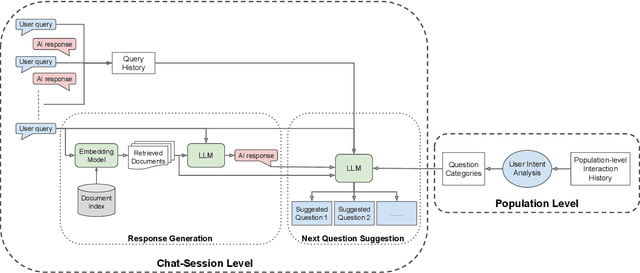
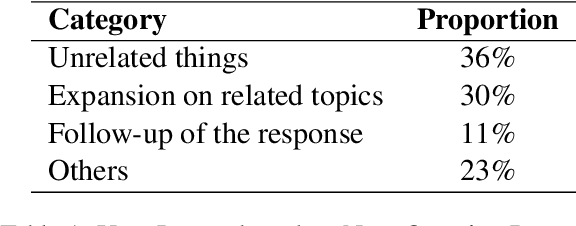
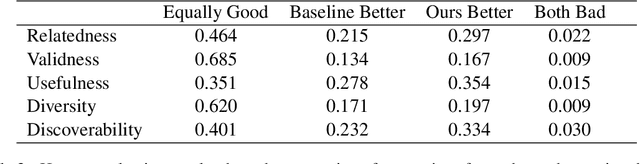
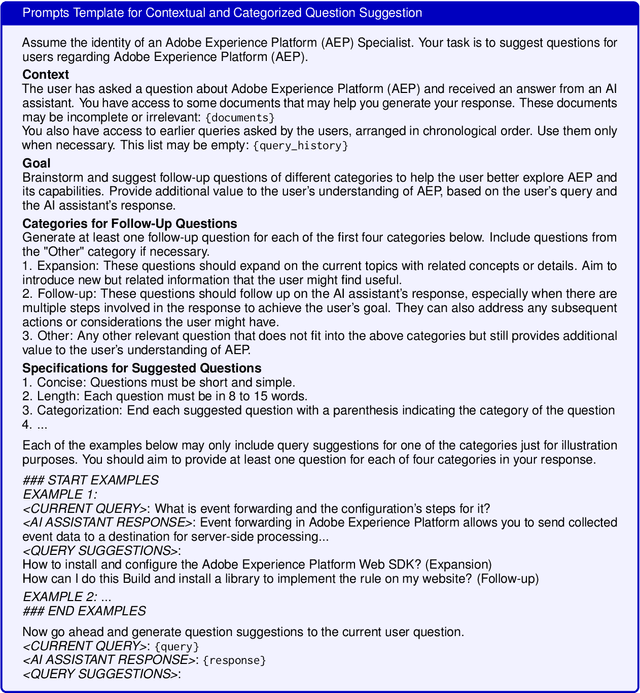
Enterprise conversational AI systems are becoming increasingly popular to assist users in completing daily tasks such as those in marketing and customer management. However, new users often struggle to ask effective questions, especially in emerging systems with unfamiliar or evolving capabilities. This paper proposes a framework to enhance question suggestions in conversational enterprise AI systems by generating proactive, context-aware questions that try to address immediate user needs while improving feature discoverability. Our approach combines periodic user intent analysis at the population level with chat session-based question generation. We evaluate the framework using real-world data from the AI Assistant for Adobe Experience Platform (AEP), demonstrating the improved usefulness and system discoverability of the AI Assistant.