 Add to Chrome
 Add to Firefox
 Add to Edge
Securing Agentic AI: From Per-Action Checks to Trajectory Assurance
Aug 03, 2026
Autonomous agents are increasingly used to execute consequential tasks in environments governed by operational constraints, organizational policies, regulatory requirements, and technical standards. Their safety is therefore determined not by the correctness of individual actions, but by whether their overall behavior remains consistent with the rules and invariants of the systems in which they operate. As large language model (LLM)-based agents become more autonomous and increasingly delegate tasks across organizational boundaries, securing them evolves from a single challenge into a broad and interconnected landscape spanning the entire agentic stack. At the single-agent level, untrusted inputs through prompts, memory, retrieved knowledge, and tool interfaces create attack surfaces. In multi-agent settings, delegation and communication introduce challenges related to identity, trust, capability control, and decision transparency, while the underlying model routing and execution control plane remains vulnerable to manipulation and to unverified model provenance. Perhaps the most fundamental challenge is behavioral containment: sequences of individually permissible actions may collectively violate system-level constraints and safety invariants. At the broader level, supply-chain integrity, provenance, accountability, and end-to-end observability remain largely open problems. A common principle unifies these directions: security must become a verifiable property of the architectures, protocols, and runtimes that govern agent behavior, rather than an optional layer of guidance. Charting these challenges provides a roadmap toward trustworthy autonomous agent deployment.

Contrastive Self-Supervised Learning Based Approach for Patient Similarity: A Case Study on Atrial Fibrillation Detection from PPG Signal
Jul 22, 2023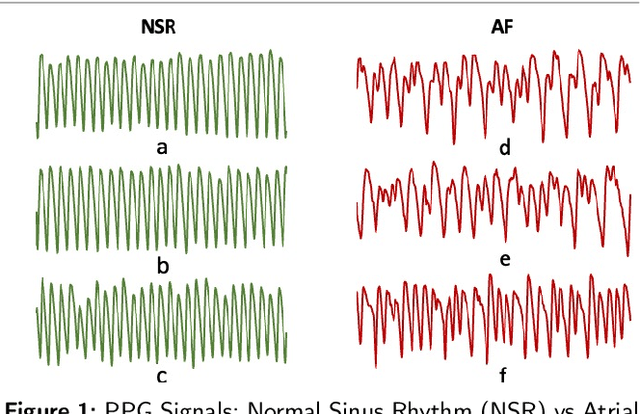

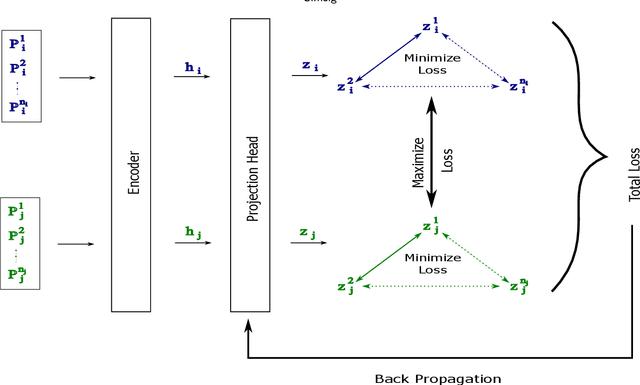
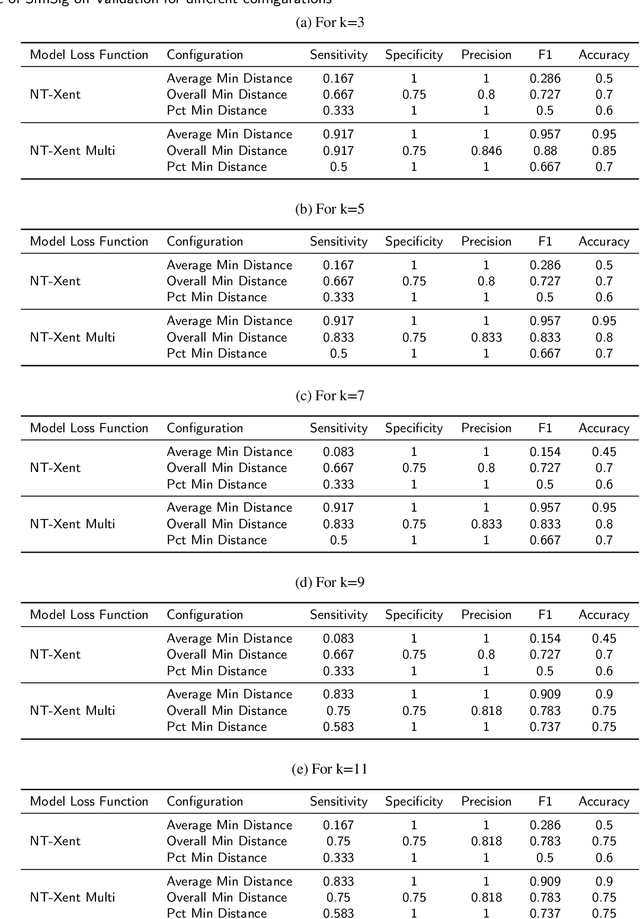
In this paper, we propose a novel contrastive learning based deep learning framework for patient similarity search using physiological signals. We use a contrastive learning based approach to learn similar embeddings of patients with similar physiological signal data. We also introduce a number of neighbor selection algorithms to determine the patients with the highest similarity on the generated embeddings. To validate the effectiveness of our framework for measuring patient similarity, we select the detection of Atrial Fibrillation (AF) through photoplethysmography (PPG) signals obtained from smartwatch devices as our case study. We present extensive experimentation of our framework on a dataset of over 170 individuals and compare the performance of our framework with other baseline methods on this dataset.
BayesBeat: A Bayesian Deep Learning Approach for Atrial Fibrillation Detection from Noisy Photoplethysmography Data
Nov 02, 2020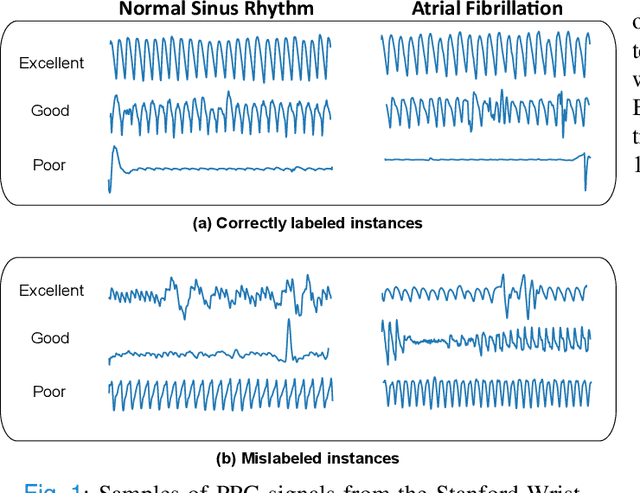
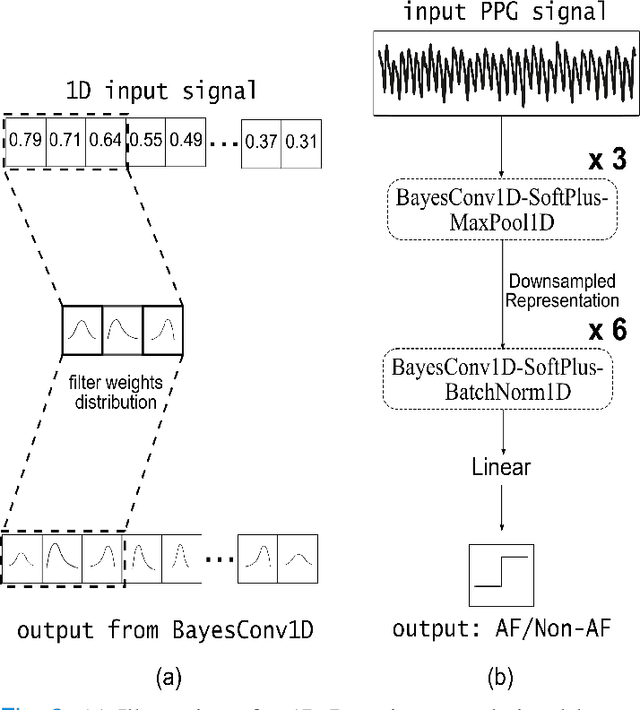
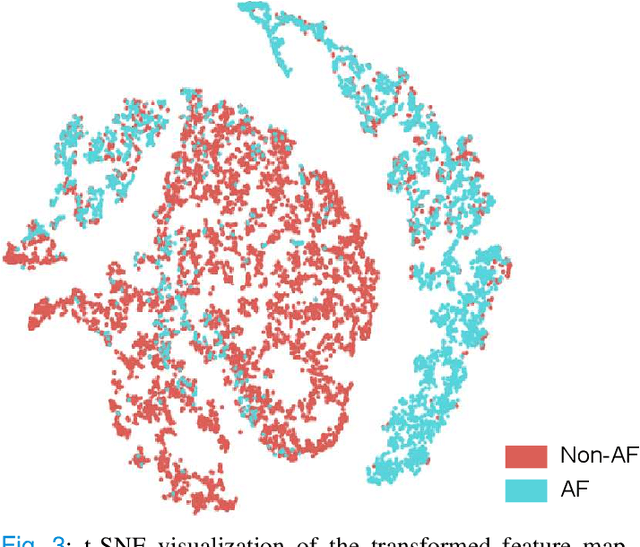
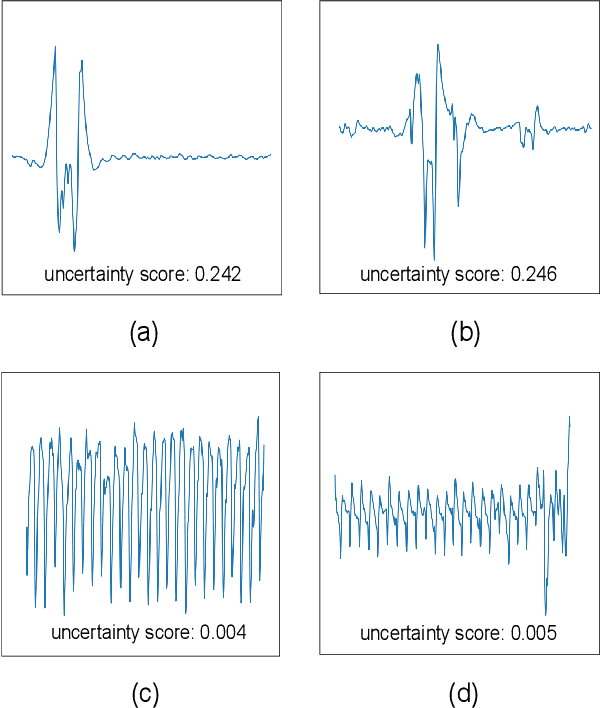
The increasing popularity of smartwatches as affordable and longitudinal monitoring devices enables us to capture photoplethysmography (PPG) sensor data for detecting Atrial Fibrillation (AF) in real-time. A significant challenge in AF detection from PPG signals comes from the inherent noise in the smartwatch PPG signals. In this paper, we propose a novel deep learning based approach, BayesBeat that leverages the power of Bayesian deep learning to accurately infer AF risks from noisy PPG signals, and at the same time provide the uncertainty estimate of the prediction. Bayesbeat is efficient, robust, flexible, and highly scalable which makes it particularly suitable for deployment in commercially available wearable devices. Extensive experiments on a recently published large dataset reveal that our proposed method BayesBeat substantially outperforms the existing state-of-the-art methods.