 Add to Chrome
 Add to Firefox
 Add to Edge
Enhancing EBSD throughput of battery electrode materials using super-resolution generative adversarial networks
Aug 19, 2026
Quantitative microstructural characterization of Li-ion battery electrode materials using electron backscatter diffraction (EBSD) has been proven as a critical method for optimizing cell performance. However, the inherently slow nature of EBSD can hinder the throughput of analyses needed for statistical representation of a material microstructure being developed. This work demonstrates a machine learning super-resolution framework using a generative adversarial network (SRGAN) to significantly increase EBSD throughput. The SRGAN model was trained on EBSD data of LiNixMnyCozO2 (NMC) cathode particles to computationally enhance low-resolution datasets and its performance is compared against classical interpolation methods across various upscaling factors (2x to 12x). Both qualitative image metrics and quantitative microstructural analysis verified that the SRGAN systematically outperformed classical methods, particularly in preserving small grains and maintaining realistic grain boundaries. We demonstrate that a 5x upscaling factor, corresponding to a 25x speed-up in acquisition time or a 25x larger field of view, is practical while maintaining acceptable accuracy in key metrics like grain size and shape. For instance, at 5x upscaling, relative errors were +5.7%, +8.2%, and -14.6% on grain area-equivalent diameter, grain maximum sphere-inscribed diameter, and grain boundary length, respectively. The SRGAN methodology developed in this work significantly enhances the efficiency of EBSD acquisition for more statistically robust microstructural dataset, enabling EBSD as a high-throughput characterization tool for materials research and industrial process development.

Final Report for CHESS: Cloud, High-Performance Computing, and Edge for Science and Security
Oct 21, 2024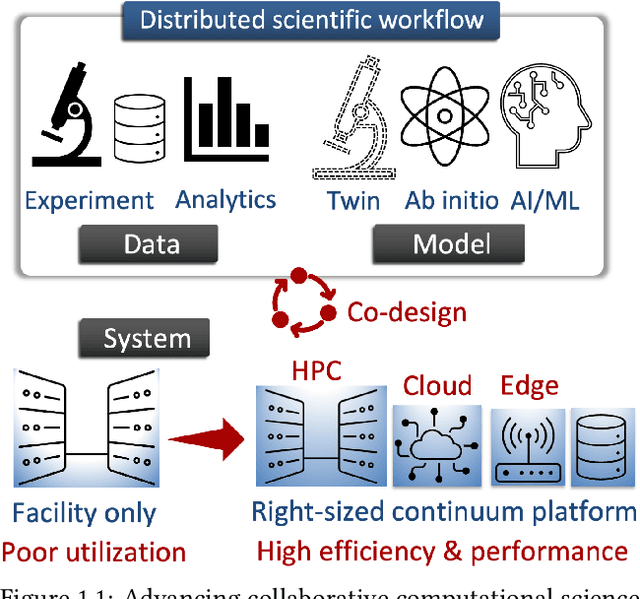
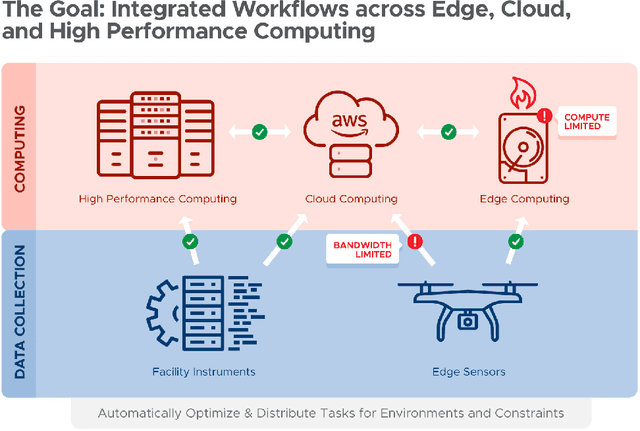
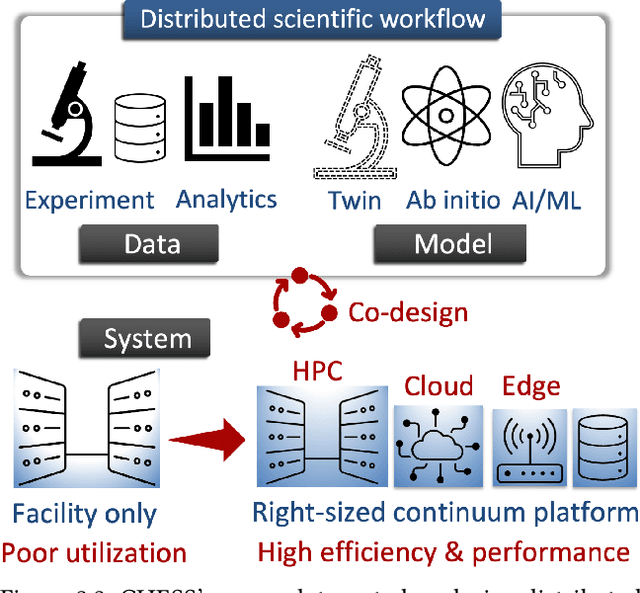
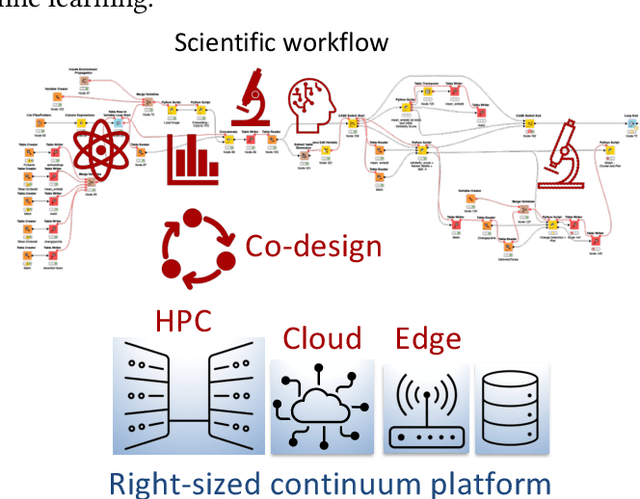
Automating the theory-experiment cycle requires effective distributed workflows that utilize a computing continuum spanning lab instruments, edge sensors, computing resources at multiple facilities, data sets distributed across multiple information sources, and potentially cloud. Unfortunately, the obvious methods for constructing continuum platforms, orchestrating workflow tasks, and curating datasets over time fail to achieve scientific requirements for performance, energy, security, and reliability. Furthermore, achieving the best use of continuum resources depends upon the efficient composition and execution of workflow tasks, i.e., combinations of numerical solvers, data analytics, and machine learning. Pacific Northwest National Laboratory's LDRD "Cloud, High-Performance Computing (HPC), and Edge for Science and Security" (CHESS) has developed a set of interrelated capabilities for enabling distributed scientific workflows and curating datasets. This report describes the results and successes of CHESS from the perspective of open science.
SAM-I-Am: Semantic Boosting for Zero-shot Atomic-Scale Electron Micrograph Segmentation
Apr 09, 2024


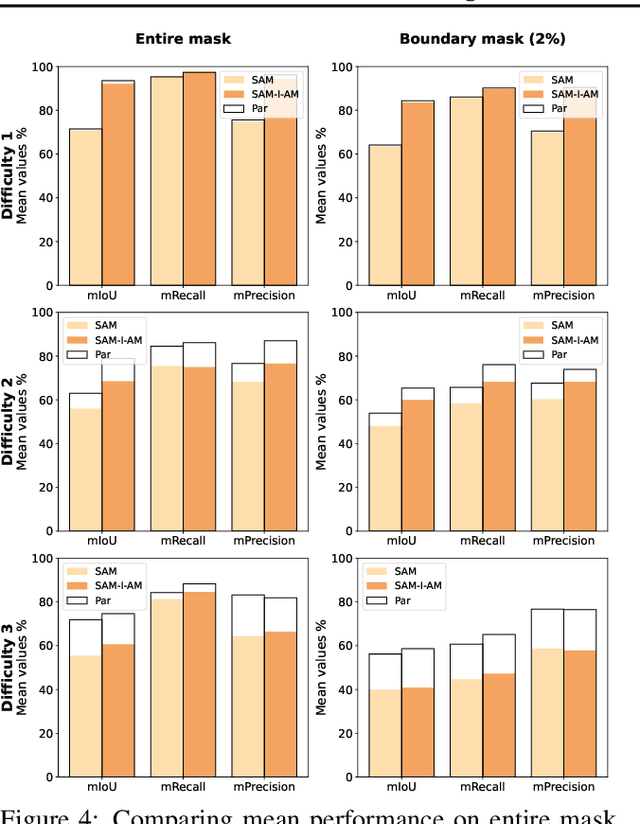
Image segmentation is a critical enabler for tasks ranging from medical diagnostics to autonomous driving. However, the correct segmentation semantics - where are boundaries located? what segments are logically similar? - change depending on the domain, such that state-of-the-art foundation models can generate meaningless and incorrect results. Moreover, in certain domains, fine-tuning and retraining techniques are infeasible: obtaining labels is costly and time-consuming; domain images (micrographs) can be exponentially diverse; and data sharing (for third-party retraining) is restricted. To enable rapid adaptation of the best segmentation technology, we propose the concept of semantic boosting: given a zero-shot foundation model, guide its segmentation and adjust results to match domain expectations. We apply semantic boosting to the Segment Anything Model (SAM) to obtain microstructure segmentation for transmission electron microscopy. Our booster, SAM-I-Am, extracts geometric and textural features of various intermediate masks to perform mask removal and mask merging operations. We demonstrate a zero-shot performance increase of (absolute) +21.35%, +12.6%, +5.27% in mean IoU, and a -9.91%, -18.42%, -4.06% drop in mean false positive masks across images of three difficulty classes over vanilla SAM (ViT-L).