 Add to Chrome
 Add to Firefox
 Add to Edge
RED-Sphere: Hyperspherical Residual Edge Debiasing for Cross-Population Fundus Disease Domain Generalization
Jul 12, 2026
Medical image classifiers are often trained within one source population, yet clinical deployment requires robustness to patients whose appearance, acquisition style, and disease prevalence differ from the source cohort. Existing fairness and robustness methods often require group supervision or treat appearance variation as an undifferentiated nuisance, which is insufficient when population-correlated low-level cues and lesion evidence share edge and texture structure. We study a strict source-only cross-population setting, where external populations are unseen during optimization, validation, scheduling, hyperparameter and model selection. We propose RED-Sphere, a plug-and-play robustness framework for image classification under unseen population shifts. It estimates shortcut-sensitive nuisance responses with an edge and feature energy prior, attenuates dominant responses through residual soft gating, regularizes masked nuisance views with counterfactual-inspired consistency and separation losses, and predicts labels with normalized spherical prototypes. It favours angular semantic evidence over source-correlated activation magnitude while preserving lesion structure. Although demonstrated on 2D Scanning Laser Ophthalmoscopy (SLO) fundus classification for Age-Related Macular Degeneration (AMD) and Diabetic Retinopathy (DR), RED-Sphere is not tied to retinal anatomy: the same principle can be adapted with modality-specific nuisance priors wherever appearance shortcuts and semantic evidence are entangled. Under a strict White-only Harvard-FairVision protocol, RED-Sphere improves held-out macro-F1 across all 20 task and backbone comparisons, with average gains of 1.28 and 2.98 F1 points on AMD and DR. Gains in AUC and PR-AUC, visual diagnostics, ablations, and sensitivity analyses further support stronger external semantic alignment and more stable angular disease geometry.

Hand Guided High Resolution Feature Enhancement for Fine-Grained Atomic Action Segmentation within Complex Human Assemblies
Nov 24, 2022Due to the rapid temporal and fine-grained nature of complex human assembly atomic actions, traditional action segmentation approaches requiring the spatial (and often temporal) down sampling of video frames often loose vital fine-grained spatial and temporal information required for accurate classification within the manufacturing domain. In order to fully utilise higher resolution video data (often collected within the manufacturing domain) and facilitate real time accurate action segmentation - required for human robot collaboration - we present a novel hand location guided high resolution feature enhanced model. We also propose a simple yet effective method of deploying offline trained action recognition models for real time action segmentation on temporally short fine-grained actions, through the use of surround sampling while training and temporally aware label cleaning at inference. We evaluate our model on a novel action segmentation dataset containing 24 (+background) atomic actions from video data of a real world robotics assembly production line. Showing both high resolution hand features as well as traditional frame wide features improve fine-grained atomic action classification, and that though temporally aware label clearing our model is capable of surpassing similar encoder/decoder methods, while allowing for real time classification.
Machine learning applications for electricity market agent-based models: A systematic literature review
Jun 05, 2022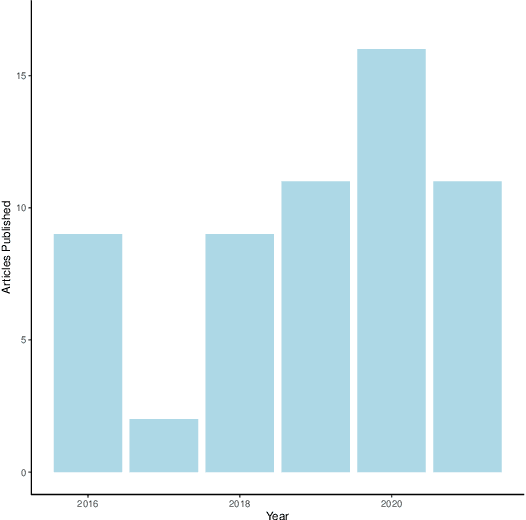
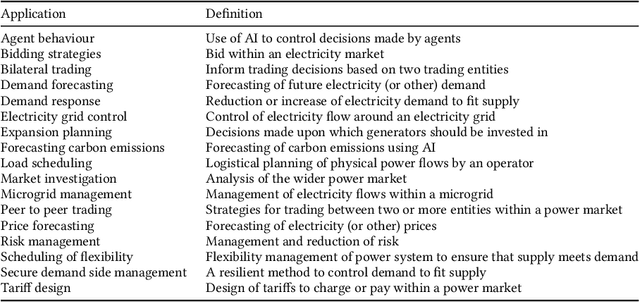
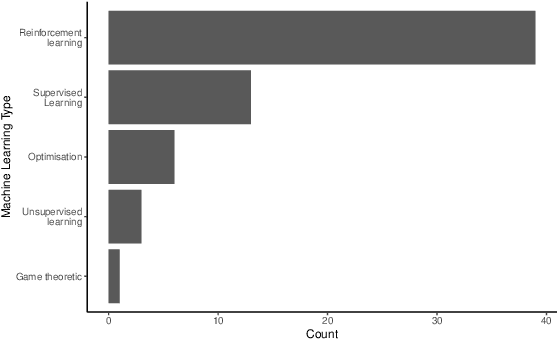
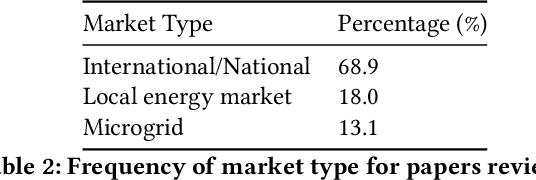
The electricity market has a vital role to play in the decarbonisation of the energy system. However, the electricity market is made up of many different variables and data inputs. These variables and data inputs behave in sometimes unpredictable ways which can not be predicted a-priori. It has therefore been suggested that agent-based simulations are used to better understand the dynamics of the electricity market. Agent-based models provide the opportunity to integrate machine learning and artificial intelligence to add intelligence, make better forecasts and control the power market in better and more efficient ways. In this systematic literature review, we review 55 papers published between 2016 and 2021 which focus on machine learning applied to agent-based electricity market models. We find that research clusters around popular topics, such as bidding strategies. However, there exists a long-tail of different research applications that could benefit from the high intensity research from the more investigated applications.