 Add to Chrome
 Add to Firefox
 Add to Edge
Machine Learning on Heterogeneous, Edge, and Quantum Hardware for Particle Physics (ML-HEQUPP)
Feb 24, 2026
The next generation of particle physics experiments will face a new era of challenges in data acquisition, due to unprecedented data rates and volumes along with extreme environments and operational constraints. Harnessing this data for scientific discovery demands real-time inference and decision-making, intelligent data reduction, and efficient processing architectures beyond current capabilities. Crucial to the success of this experimental paradigm are several emerging technologies, such as artificial intelligence and machine learning (AI/ML) and silicon microelectronics, and the advent of quantum algorithms and processing. Their intersection includes areas of research such as low-power and low-latency devices for edge computing, heterogeneous accelerator systems, reconfigurable hardware, novel codesign and synthesis strategies, readout for cryogenic or high-radiation environments, and analog computing. This white paper presents a community-driven vision to identify and prioritize research and development opportunities in hardware-based ML systems and corresponding physics applications, contributing towards a successful transition to the new data frontier of fundamental science.

Development Framework for Longitudinal Automated Driving Functions with Off-board Information Integration
Jun 18, 2019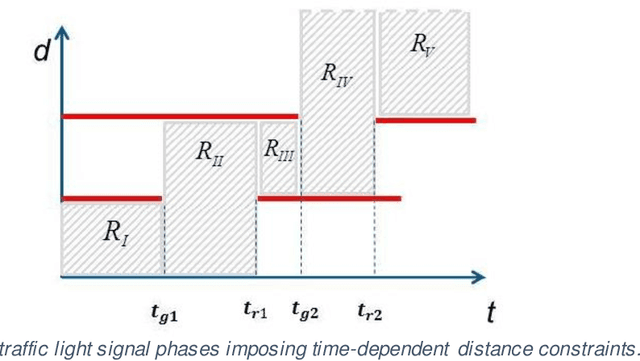
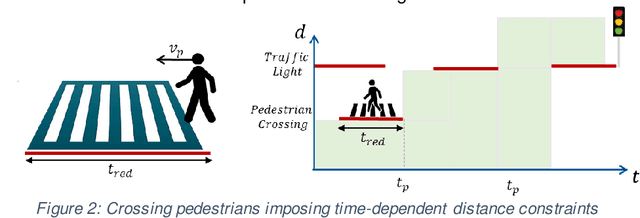
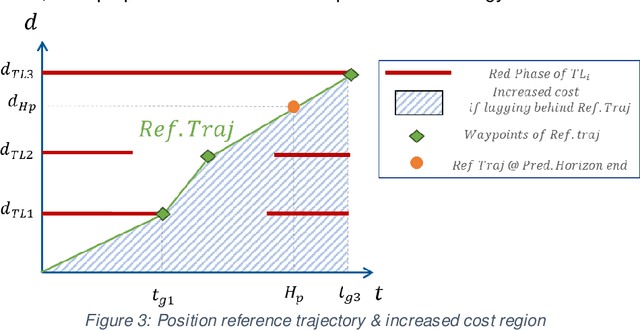
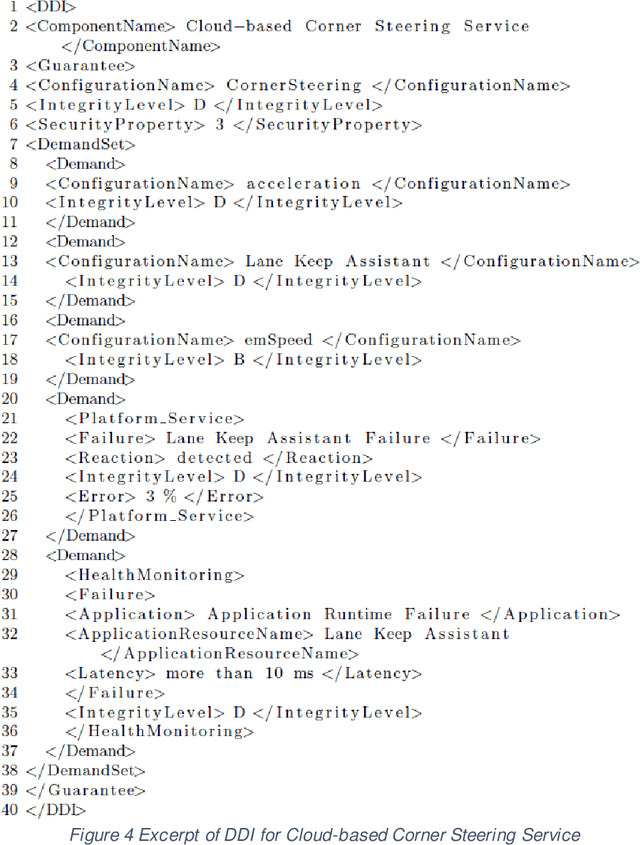
Increasingly sophisticated function development is taking place with the aim of developing efficient, safe and increasingly Automated Driving Functions. This development is possible with the use of diverse data from sources such as Navigation Systems, eHorizon, on-board sensor data, Vehicle-to-Infrastructure (V2I) and Vehicle-to-Vehicle (V2V) communication. Increasing challenges arise with the dependency on large amounts of real-time data coming from off-board sources. At the core of addressing these challenges lies the concept of a Digital Dependability Identity (DDI) of a component or system. DDIs are modular, composable, and executable components in the field, facilitating: $\bullet$ efficient synthesis of component and system dependability information, $\bullet$ effective evaluation of information for safe and secure composition of highly distributed and autonomous Cyber Physical Systems. In AVL's Connected Powertrain (TM), Automated Driving Functions are tailored to Powertrain Control Strategies that predictively increase energy efficiency according to the powertrain type and its component efficiencies. Simultaneously, the burden on the driver is reduced by optimizing the vehicle velocity, whilst minimizing any journey time penalty.In this work, the development of dependable Automated Driving Functions is exemplified by the Traffic Light Assistant, an adaptive strategy that utilizes predictions of preceding traffic, upcoming road curvature, inclination, speed limits, and especially traffic light signal phase and timing information to increase the energy efficiency in an urban traffic environment. A key aspect of this development is the possibility for seamless and simultaneous development; from office simulation to human-in-the-loop and to real-time tests that include vehicle and powertrain hardware. Driver's acceptance and comfort is rated in an advanced diver simulator mounted on a hexapod, capable of emulating longitudinal and lateral acceleration of a real vehicle. Test results from real-time function validation on a Powertrain Testbed are shown, including real traffic light signal phasing information and traffic flow representation on Graz city roads.