 Add to Chrome
 Add to Firefox
 Add to Edge
BioimageAIpub: a toolbox for AI-ready bioimaging data publishing
Dec 17, 2025
Modern bioimage analysis approaches are data hungry, making it necessary for researchers to scavenge data beyond those collected within their (bio)imaging facilities. In addition to scale, bioimaging datasets must be accompanied with suitable, high-quality annotations and metadata. Although established data repositories such as the Image Data Resource (IDR) and BioImage Archive offer rich metadata, their contents typically cannot be directly consumed by image analysis tools without substantial data wrangling. Such a tedious assembly and conversion of (meta)data can account for a dedicated amount of time investment for researchers, hindering the development of more powerful analysis tools. Here, we introduce BioimageAIpub, a workflow that streamlines bioimaging data conversion, enabling a seamless upload to HuggingFace, a widely used platform for sharing machine learning datasets and models.

Medical Image De-Identification Benchmark Challenge
Jul 31, 2025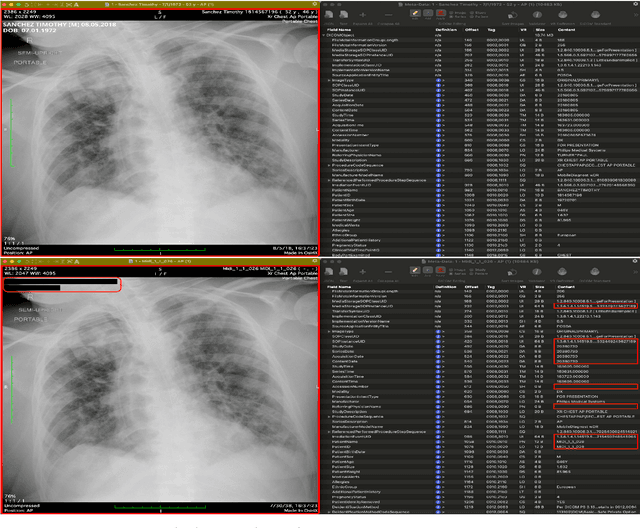
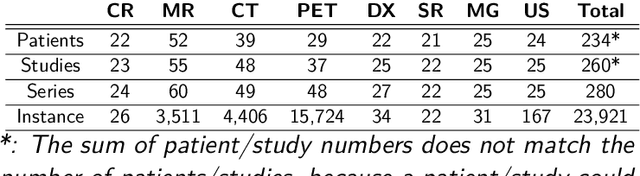
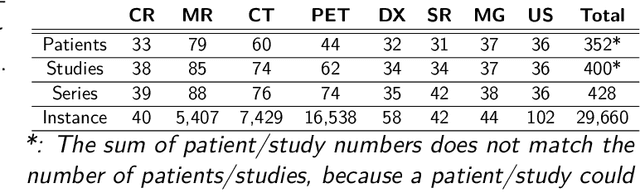
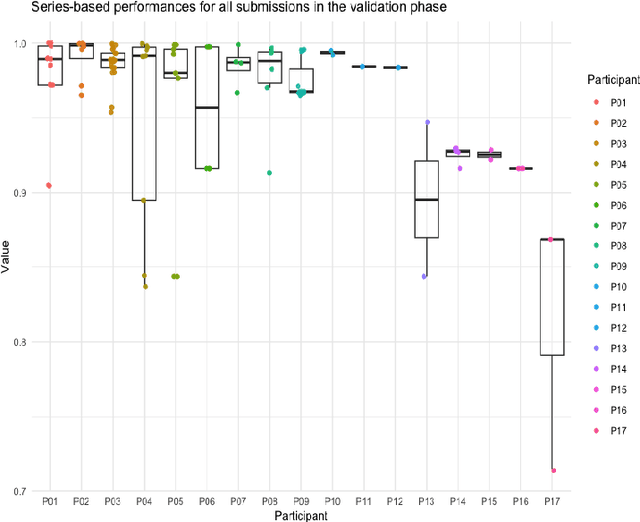
The de-identification (deID) of protected health information (PHI) and personally identifiable information (PII) is a fundamental requirement for sharing medical images, particularly through public repositories, to ensure compliance with patient privacy laws. In addition, preservation of non-PHI metadata to inform and enable downstream development of imaging artificial intelligence (AI) is an important consideration in biomedical research. The goal of MIDI-B was to provide a standardized platform for benchmarking of DICOM image deID tools based on a set of rules conformant to the HIPAA Safe Harbor regulation, the DICOM Attribute Confidentiality Profiles, and best practices in preservation of research-critical metadata, as defined by The Cancer Imaging Archive (TCIA). The challenge employed a large, diverse, multi-center, and multi-modality set of real de-identified radiology images with synthetic PHI/PII inserted. The MIDI-B Challenge consisted of three phases: training, validation, and test. Eighty individuals registered for the challenge. In the training phase, we encouraged participants to tune their algorithms using their in-house or public data. The validation and test phases utilized the DICOM images containing synthetic identifiers (of 216 and 322 subjects, respectively). Ten teams successfully completed the test phase of the challenge. To measure success of a rule-based approach to image deID, scores were computed as the percentage of correct actions from the total number of required actions. The scores ranged from 97.91% to 99.93%. Participants employed a variety of open-source and proprietary tools with customized configurations, large language models, and optical character recognition (OCR). In this paper we provide a comprehensive report on the MIDI-B Challenge's design, implementation, results, and lessons learned.