 Add to Chrome
 Add to Firefox
 Add to Edge
A novel RF-enabled Non-Destructive Inspection Method through Machine Learning and Programmable Wireless Environments
Jan 10, 2026
Contemporary industrial Non-Destructive Inspection (NDI) methods require sensing capabilities that operate in occluded, hazardous, or access restricted environments. Yet, the current visual inspection based on optical cameras offers limited quality of service to that respect. In that sense, novel methods for workpiece inspection, suitable, for smart manufacturing are needed. Programmable Wireless Environments (PWE) could help towards that direction, by redefining the wireless Radio Frequency (RF) wave propagation as a controllable inspector entity. In this work, we propose a novel approach to Non-Destructive Inspection, leveraging an RF sensing pipeline based on RF wavefront encoding for retrieving workpiece-image entries from a designated database. This approach combines PWE-enabled RF wave manipulation with machine learning (ML) tools trained to produce visual outputs for quality inspection. Specifically, we establish correlation relationships between RF wavefronts and target industrial assets, hence yielding a dataset which links wavefronts to their corresponding images in a structured manner. Subsequently, a Generative Adversarial Network (GAN) derives visual representations closely matching the database entries. Our results indicate that the proposed method achieves an SSIM 99.5% matching score in visual outputs, paving the way for next-generation quality control workflows in industry.

Realizing RF Wavefront Copying with RIS for Future Extended Reality Applications
Jun 11, 2024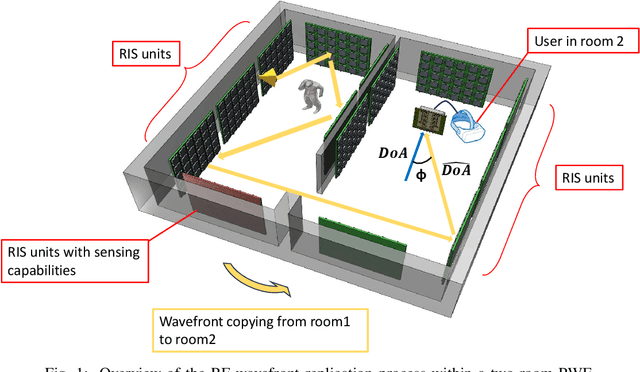
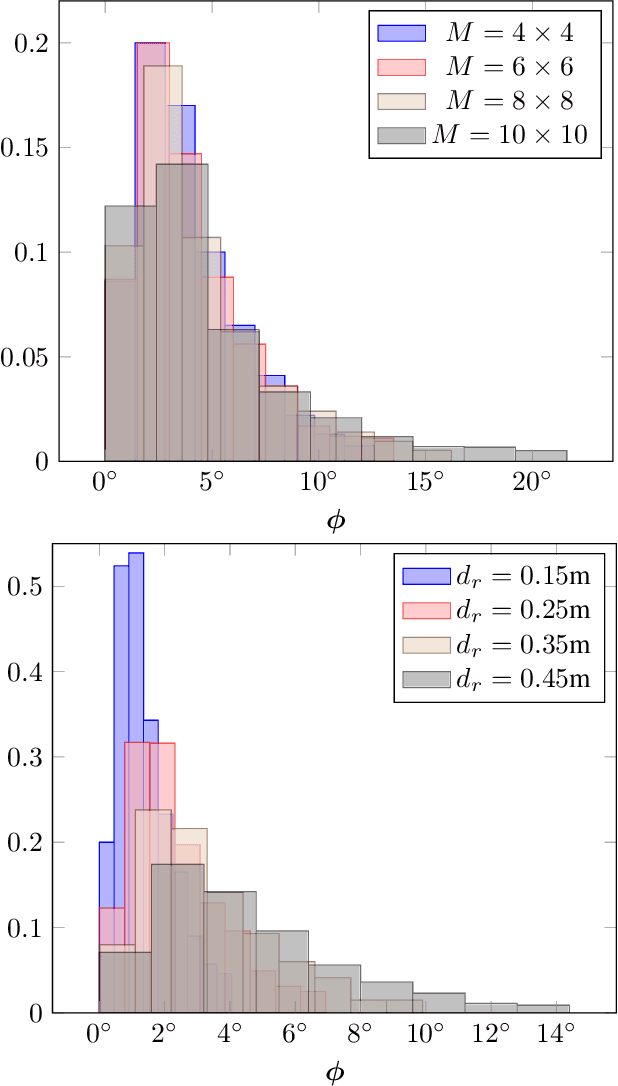
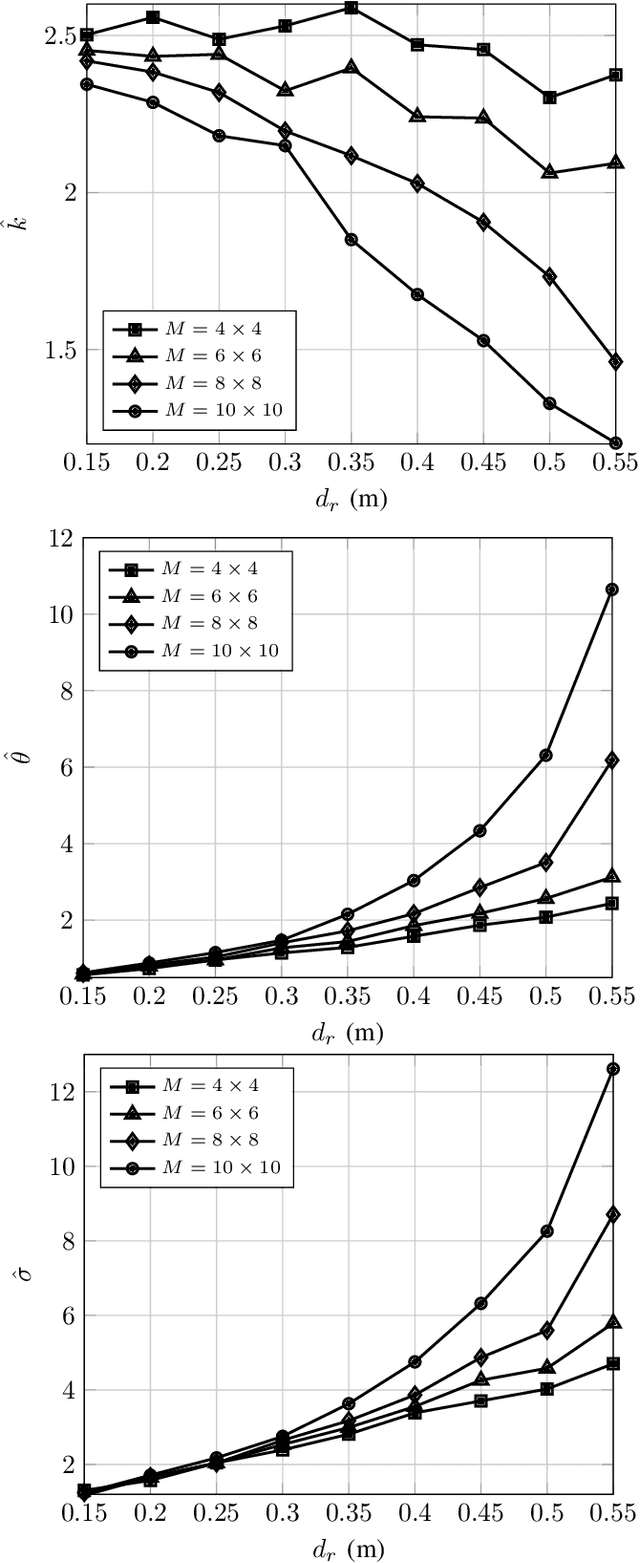
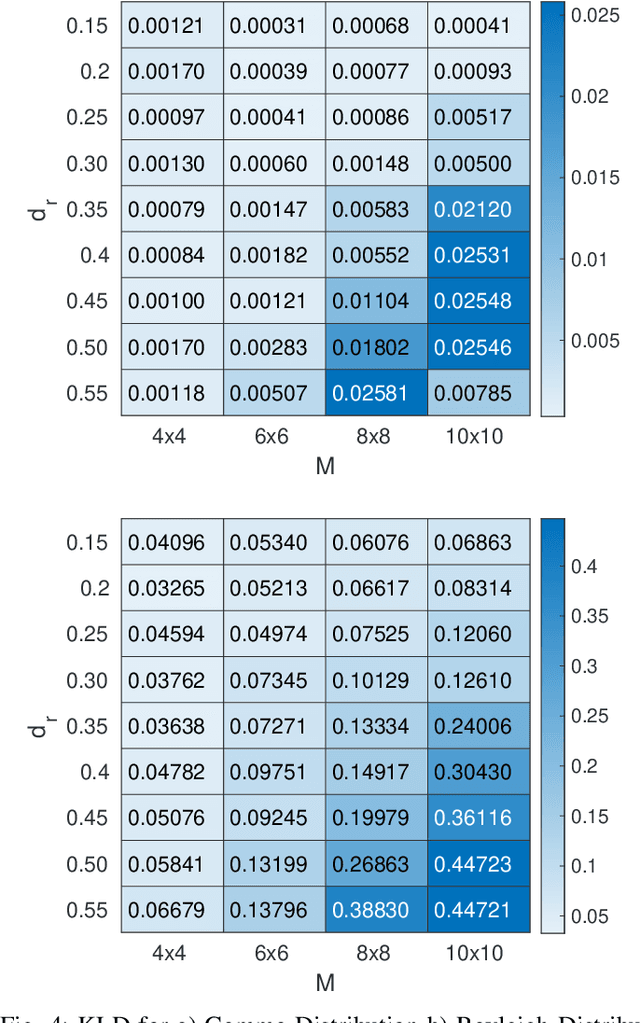
Lately a new approach to Extended Reality (XR), denoted as XR-RF, has been proposed which is realized by combining Radio Frequency (RF) Imaging and programmable wireless environments (PWEs). RF Imaging is a technique that aims to detect geometric and material features of an object through RF waves. On the other hand, the PWE focuses on the the conversion of the wireless RF propagation in a controllable, by software, entity through the utilization of Reconfigurable Intelligent Surfaces (RISs), which can have a controllable interaction with impinging RF waves. In that sense, this dynamic synergy leverages the potential of RF Imaging to detect the structure of an object through RF wavefronts and the PWE's ability to selectively replicate those RF wavefronts from one spatial location to wherever an XR-RF mobile user is presently located. Then the captured wavefront, through appropriate hardware, is mapped to the visual representation of the object through machine learning models. As a key aspect of the XR-RF's system workflow is the wavefront copying mechanism, this work introduces a new PWE configuration algorithm for XR-RF. Moreover, it is shown that the waveform replication process inevitably yields imprecision in the replication process. After statistical analysis, based on simulation results, it is shown that this imprecision can be effectively modeled by the gamma distribution.