 Add to Chrome
 Add to Firefox
 Add to Edge
SAFARI: Scaling Long Horizon Agentic Fault Attribution via Active Investigation
Jun 23, 2026
As autonomous agents tackle increasingly complex multi-step, multi-agent tasks, their execution trajectories have scaled beyond the constraints of even the largest context windows. Current methods for effectively diagnosing agent failures load the full trajectory into an LLM's context window, which suffers from attention dilution and fails when agentic traces inevitably exceed context limits. To address this, we introduce SAFARI (Scaling long-horizon Agentic Fault AttRibution via active Investigation), a framework that replaces linear context loading with a tool-augmented diagnostic loop. By equipping LLMs with a specialized toolbox to read and search trajectory segments alongside a persistent Short-Term Memory (STM) for cross-turn reasoning, SAFARI effectively decouples diagnostic accuracy from architectural context limits. Our experiments demonstrate that SAFARI outperforms state-of-the-art results by 20% on the Who&When dataset within a 1M token budget, and by 19% on TRAIL GAIA subset on a 25K token budget. Most significantly, SAFARI maintains a 0.58 precision even when the target fault resides 5x beyond the model's native context window, a scenario where traditional evaluators fail entirely.

DF-RAG: Query-Aware Diversity for Retrieval-Augmented Generation
Jan 23, 2026Retrieval-augmented generation (RAG) is a common technique for grounding language model outputs in domain-specific information. However, RAG is often challenged by reasoning-intensive question-answering (QA), since common retrieval methods like cosine similarity maximize relevance at the cost of introducing redundant content, which can reduce information recall. To address this, we introduce Diversity-Focused Retrieval-Augmented Generation (DF-RAG), which systematically incorporates diversity into the retrieval step to improve performance on complex, reasoning-intensive QA benchmarks. DF-RAG builds upon the Maximal Marginal Relevance framework to select information chunks that are both relevant to the query and maximally dissimilar from each other. A key innovation of DF-RAG is its ability to optimize the level of diversity for each query dynamically at test time without requiring any additional fine-tuning or prior information. We show that DF-RAG improves F1 performance on reasoning-intensive QA benchmarks by 4-10 percent over vanilla RAG using cosine similarity and also outperforms other established baselines. Furthermore, we estimate an Oracle ceiling of up to 18 percent absolute F1 gains over vanilla RAG, of which DF-RAG captures up to 91.3 percent.
EMULATE: A Multi-Agent Framework for Determining the Veracity of Atomic Claims by Emulating Human Actions
May 22, 2025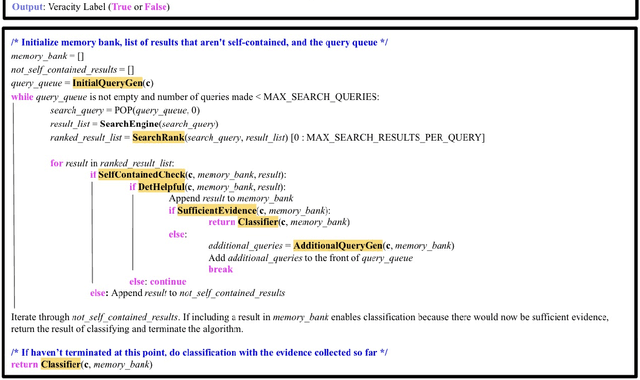
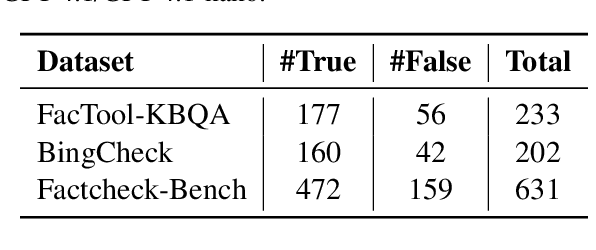
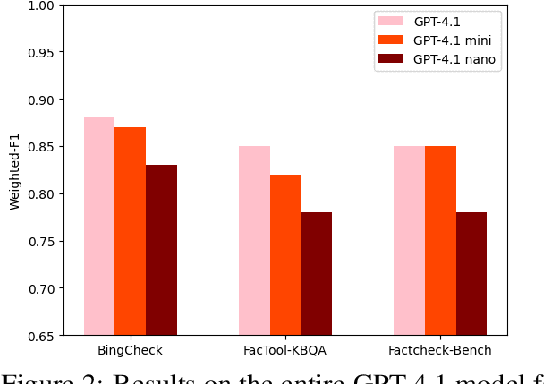
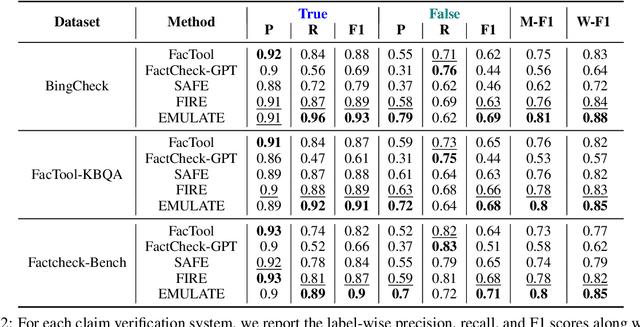
Determining the veracity of atomic claims is an imperative component of many recently proposed fact-checking systems. Many approaches tackle this problem by first retrieving evidence by querying a search engine and then performing classification by providing the evidence set and atomic claim to a large language model, but this process deviates from what a human would do in order to perform the task. Recent work attempted to address this issue by proposing iterative evidence retrieval, allowing for evidence to be collected several times and only when necessary. Continuing along this line of research, we propose a novel claim verification system, called EMULATE, which is designed to better emulate human actions through the use of a multi-agent framework where each agent performs a small part of the larger task, such as ranking search results according to predefined criteria or evaluating webpage content. Extensive experiments on several benchmarks show clear improvements over prior work, demonstrating the efficacy of our new multi-agent framework.