 Add to Chrome
 Add to Firefox
 Add to Edge
Deep Learning From Routine Histology Improves Risk Stratification for Biochemical Recurrence in Prostate Cancer
Mar 15, 2026
Accurate prediction of biochemical recurrence (BCR) after radical prostatectomy is critical for guiding adjuvant treatment and surveillance decisions in prostate cancer. However, existing clinicopathological risk models reduce complex morphology to relatively coarse descriptors, leaving substantial prognostic information embedded in routine histopathology underexplored. We present a deep learning-based biomarker that predicts continuous, patient-specific risk of BCR directly from H&E-stained whole-slide prostatectomy specimens. Trained end-to-end on time-to-event outcomes and evaluated across four independent international cohorts, our model demonstrates robust generalization across institutions and patient populations. When integrated with the CAPRA-S clinical risk score, the deep learning risk score consistently improved discrimination for BCR, increasing concordance indices from 0.725-0.772 to 0.749-0.788 across cohorts. To support clinical interpretability, outcome-grounded analyses revealed subtle histomorphological patterns associated with recurrence risk that are not captured by conventional clinicopathological risk scores. This multicohort study demonstrates that deep learning applied to routine prostate histopathology can deliver reproducible and clinically generalizable biomarkers that augment postoperative risk stratification, with potential to support personalized management of prostate cancer in real-world clinical settings.

Multicenter automatic detection of invasive carcinoma on breast whole slide images
Jan 17, 2023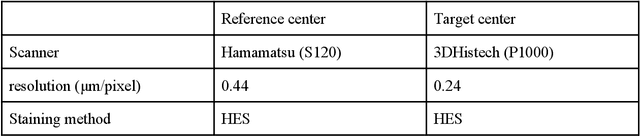
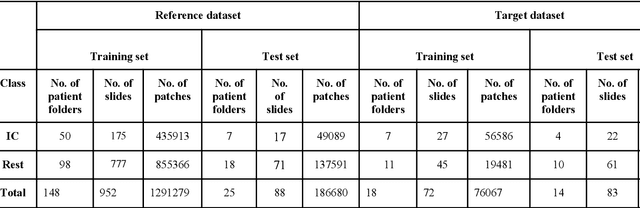
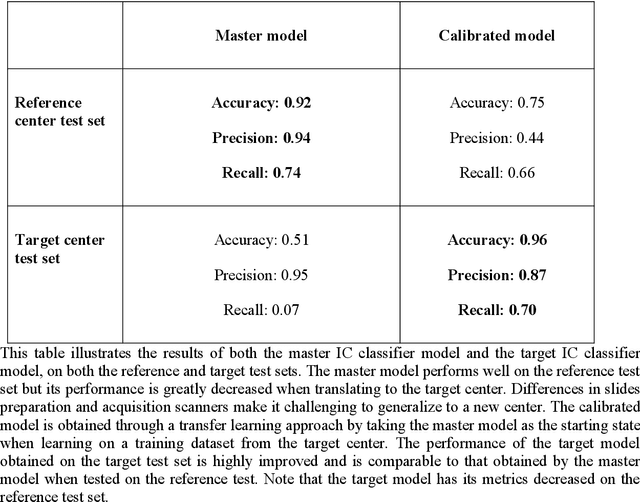
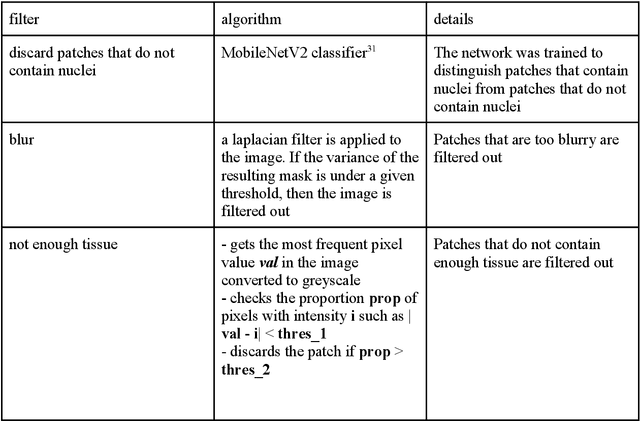
Breast cancer is one of the most prevalent cancers worldwide and pathologists are closely involved in establishing a diagnosis. Tools to assist in making a diagnosis are required to manage the increasing workload. In this context, artificial intelligence (AI) and deep-learning based tools may be used in daily pathology practice. However, it is challenging to develop fast and reliable algorithms that can be trusted by practitioners, whatever the medical center. We describe a patch-based algorithm that incorporates a convolutional neural network to detect and locate invasive carcinoma on breast whole-slide images. The network was trained on a dataset extracted from a reference acquisition center. We then performed a calibration step based on transfer learning to maintain the performance when translating on a new target acquisition center by using a limited amount of additional training data. Performance was evaluated using classical binary measures (accuracy, recall, precision) for both centers (referred to as test reference dataset and test target dataset) and at two levels: patch and slide level. At patch level, accuracy, recall, and precision of the model on the reference and target test sets were 92.1\% and 96.3\%, 95\% and 87.8\%, and 73.9\% and 70.6\%, respectively. At slide level, accuracy, recall, and precision were 97.6\% and 92.0\%, 90.9\% and 100\%, and 100\% and 70.8\% for test sets 1 and 2, respectively. The high performance of the algorithm at both centers shows that the calibration process is efficient. This is performed using limited training data from the new target acquisition center and requires that the model is trained beforehand on a large database from a reference center. This methodology allows the implementation of AI diagnostic tools to help in routine pathology practice.