 Add to Chrome
 Add to Firefox
 Add to Edge
Comparative Evaluation of Explainable Machine Learning Versus Linear Regression for Predicting County-Level Lung Cancer Mortality Rate in the United States
Dec 10, 2025
Lung cancer (LC) is a leading cause of cancer-related mortality in the United States. Accurate prediction of LC mortality rates is crucial for guiding targeted interventions and addressing health disparities. Although traditional regression-based models have been commonly used, explainable machine learning models may offer enhanced predictive accuracy and deeper insights into the factors influencing LC mortality. This study applied three models: random forest (RF), gradient boosting regression (GBR), and linear regression (LR) to predict county-level LC mortality rates across the United States. Model performance was evaluated using R-squared and root mean squared error (RMSE). Shapley Additive Explanations (SHAP) values were used to determine variable importance and their directional impact. Geographic disparities in LC mortality were analyzed through Getis-Ord (Gi*) hotspot analysis. The RF model outperformed both GBR and LR, achieving an R2 value of 41.9% and an RMSE of 12.8. SHAP analysis identified smoking rate as the most important predictor, followed by median home value and the percentage of the Hispanic ethnic population. Spatial analysis revealed significant clusters of elevated LC mortality in the mid-eastern counties of the United States. The RF model demonstrated superior predictive performance for LC mortality rates, emphasizing the critical roles of smoking prevalence, housing values, and the percentage of Hispanic ethnic population. These findings offer valuable actionable insights for designing targeted interventions, promoting screening, and addressing health disparities in regions most affected by LC in the United States.
* 9 Pages, 4 Figures, 1 Table

Explainable artificial intelligence in breast cancer detection and risk prediction: A systematic scoping review
Jul 12, 2024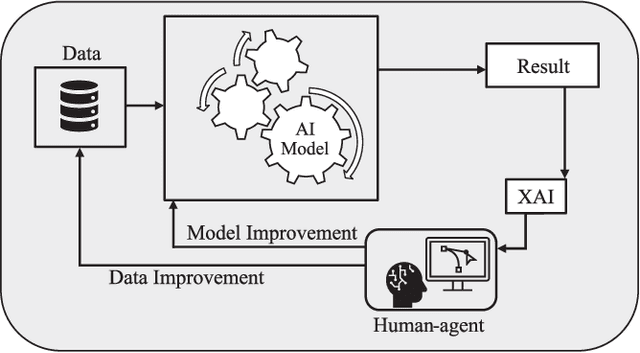
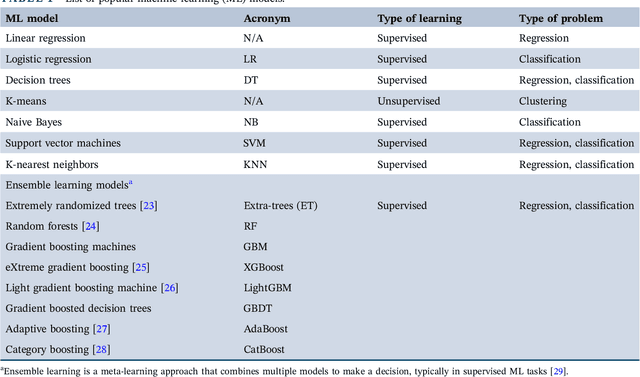

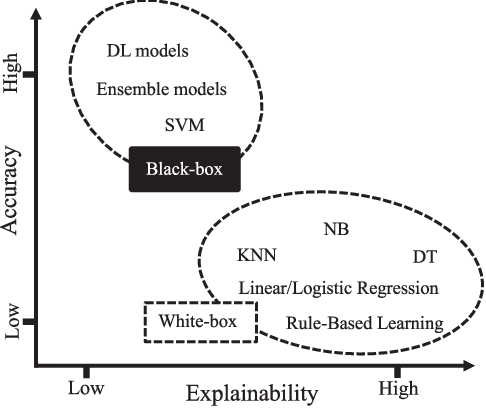
With the advances in artificial intelligence (AI), data-driven algorithms are becoming increasingly popular in the medical domain. However, due to the nonlinear and complex behavior of many of these algorithms, decision-making by such algorithms is not trustworthy for clinicians and is considered a black-box process. Hence, the scientific community has introduced explainable artificial intelligence (XAI) to remedy the problem. This systematic scoping review investigates the application of XAI in breast cancer detection and risk prediction. We conducted a comprehensive search on Scopus, IEEE Explore, PubMed, and Google Scholar (first 50 citations) using a systematic search strategy. The search spanned from January 2017 to July 2023, focusing on peer-reviewed studies implementing XAI methods in breast cancer datasets. Thirty studies met our inclusion criteria and were included in the analysis. The results revealed that SHapley Additive exPlanations (SHAP) is the top model-agnostic XAI technique in breast cancer research in terms of usage, explaining the model prediction results, diagnosis and classification of biomarkers, and prognosis and survival analysis. Additionally, the SHAP model primarily explained tree-based ensemble machine learning models. The most common reason is that SHAP is model agnostic, which makes it both popular and useful for explaining any model prediction. Additionally, it is relatively easy to implement effectively and completely suits performant models, such as tree-based models. Explainable AI improves the transparency, interpretability, fairness, and trustworthiness of AI-enabled health systems and medical devices and, ultimately, the quality of care and outcomes.
* 22 Pages, 6 Figures, 13 Tables