 Add to Chrome
 Add to Firefox
 Add to Edge
Scalable Message-Passing Quantum Graph Neural Networks in the Weisfeiler-Leman Hierarchy
Jun 25, 2026
Graphs provide a natural language for relational data in chemistry, biology and optimisation. Graph neural networks (GNNs) have driven much of the recent progress in learning from such data through message passing, a single primitive that generalises convolution and attention. Quantum counterparts have been proposed, but with limited connection to message passing and few guarantees on performance or scalability. More broadly, the trainability of variational quantum circuits is a recognised bottleneck for their wide applicability, and pre-training has emerged as one way to address it. Yet for a quantum model to be useful, it must offer expressivity guarantees along with demonstrable scalability. Here we show how a quantum graph neural network can be built to perform message passing, to be permutation equivariant, and to sit at a chosen level of the Weisfeiler-Leman hierarchy, the standard measure of how finely a model can tell graphs apart. We show that, as for classical GNNs, the training can be done first on small graph instances, allowing for a pre-training that can mitigate usual training issues, and its output can be read out at a cost that stays low as the graph grows. We validate the framework in large-scale simulations of up to 56 qubits across three datasets, on synthetic graphs that ordinary message passing cannot separate, on molecular property prediction, and on the travelling salesperson problem. Our framework opens a path for near-term quantum algorithms with theoretical guarantees and practical scalability, bringing the principles of graph learning into quantum circuit design.

Adaptive directional gradients for parameterised quantum circuits
Jun 08, 2026Training parameterised quantum circuits (PQCs) on quantum hardware is bottlenecked by the measurement cost of gradient estimation, which under the parameter-shift rule scales linearly in the number of trainable parameters and dominates the total shot budget of training at scale. In this work, we propose a framework of forward gradient estimators for PQCs, based on the forward mode of automatic differentiation, that yields an unbiased estimator of the gradient by averaging a freely tunable number of random directional derivatives and recovers SPSA, random coordinate descent, and the parameter-shift rule as limiting cases, with no ancilla qubits or controlled-gate overhead. We prove that stochastic quantum forward gradient descent converges under standard assumptions, with an explicit second-moment expansion that interpolates between the single-direction extreme of SPSA and the full-gradient extreme of parameter-shift. Within this framework we derive QUIVER (Quantum Iterative V-adaptive Estimator Rule), an adaptive optimiser for parameterised circuits whose update rule follows from a closed-form minimum measurement-cost allocation. We show numerically that forward gradients train Hamming-weight-preserving orthogonal quantum neural networks with up to 60 qubits and 1770 parameters on the ECG5000 and MNIST datasets orders of magnitude more efficiently than the parameter-shift rule. We also demonstrate that our proposed QUIVER optimiser can outperform iCANS and gCANS measurement-frugal optimisers on optimisation problems using the quantum approximate optimisation algorithm and quantum simulation with the variational quantum eigensolver.
Bayesian Quantum Orthogonal Neural Networks for Anomaly Detection
Apr 25, 2025Identification of defects or anomalies in 3D objects is a crucial task to ensure correct functionality. In this work, we combine Bayesian learning with recent developments in quantum and quantum-inspired machine learning, specifically orthogonal neural networks, to tackle this anomaly detection problem for an industrially relevant use case. Bayesian learning enables uncertainty quantification of predictions, while orthogonality in weight matrices enables smooth training. We develop orthogonal (quantum) versions of 3D convolutional neural networks and show that these models can successfully detect anomalies in 3D objects. To test the feasibility of incorporating quantum computers into a quantum-enhanced anomaly detection pipeline, we perform hardware experiments with our models on IBM's 127-qubit Brisbane device, testing the effect of noise and limited measurement shots.
Hyper Compressed Fine-Tuning of Large Foundation Models with Quantum Inspired Adapters
Feb 10, 2025Fine-tuning pre-trained large foundation models for specific tasks has become increasingly challenging due to the computational and storage demands associated with full parameter updates. Parameter-Efficient Fine-Tuning (PEFT) methods address this issue by updating only a small subset of model parameters using adapter modules. In this work, we propose \emph{Quantum-Inspired Adapters}, a PEFT approach inspired by Hamming-weight preserving quantum circuits from quantum machine learning literature. These models can be both expressive and parameter-efficient by operating in a combinatorially large space while simultaneously preserving orthogonality in weight parameters. We test our proposed adapters by adapting large language models and large vision transformers on benchmark datasets. Our method can achieve 99.2\% of the performance of existing fine-tuning methods such LoRA with a 44x parameter compression on language understanding datasets like GLUE and VTAB. Compared to existing orthogonal fine-tuning methods such as OFT or BOFT, we achieve 98\% relative performance with 25x fewer parameters. This demonstrates competitive performance paired with a significant reduction in trainable parameters. Through ablation studies, we determine that combining multiple Hamming-weight orders with orthogonality and matrix compounding are essential for performant fine-tuning. Our findings suggest that Quantum-Inspired Adapters offer a promising direction for efficient adaptation of language and vision models in resource-constrained environments.
Training-efficient density quantum machine learning
May 30, 2024Quantum machine learning requires powerful, flexible and efficiently trainable models to be successful in solving challenging problems. In this work, we present density quantum neural networks, a learning model incorporating randomisation over a set of trainable unitaries. These models generalise quantum neural networks using parameterised quantum circuits, and allow a trade-off between expressibility and efficient trainability, particularly on quantum hardware. We demonstrate the flexibility of the formalism by applying it to two recently proposed model families. The first are commuting-block quantum neural networks (QNNs) which are efficiently trainable but may be limited in expressibility. The second are orthogonal (Hamming-weight preserving) quantum neural networks which provide well-defined and interpretable transformations on data but are challenging to train at scale on quantum devices. Density commuting QNNs improve capacity with minimal gradient complexity overhead, and density orthogonal neural networks admit a quadratic-to-constant gradient query advantage with minimal to no performance loss. We conduct numerical experiments on synthetic translationally invariant data and MNIST image data with hyperparameter optimisation to support our findings. Finally, we discuss the connection to post-variational quantum neural networks, measurement-based quantum machine learning and the dropout mechanism.
Quantum Deep Hedging
Mar 29, 2023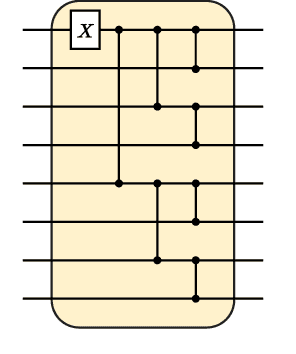
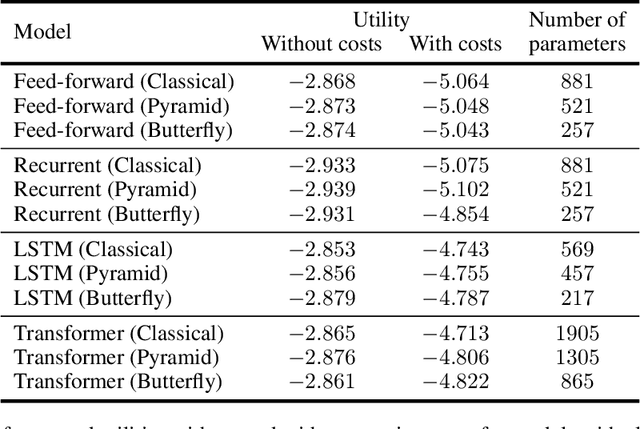
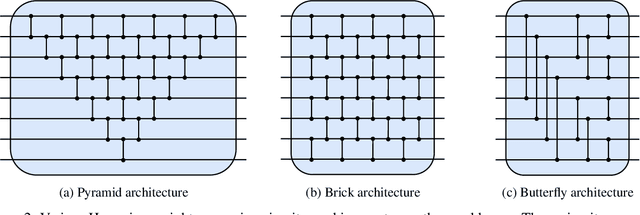
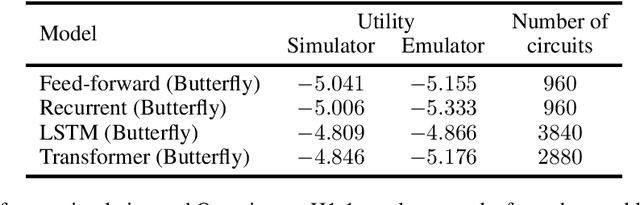
Quantum machine learning has the potential for a transformative impact across industry sectors and in particular in finance. In our work we look at the problem of hedging where deep reinforcement learning offers a powerful framework for real markets. We develop quantum reinforcement learning methods based on policy-search and distributional actor-critic algorithms that use quantum neural network architectures with orthogonal and compound layers for the policy and value functions. We prove that the quantum neural networks we use are trainable, and we perform extensive simulations that show that quantum models can reduce the number of trainable parameters while achieving comparable performance and that the distributional approach obtains better performance than other standard approaches, both classical and quantum. We successfully implement the proposed models on a trapped-ion quantum processor, utilizing circuits with up to $16$ qubits, and observe performance that agrees well with noiseless simulation. Our quantum techniques are general and can be applied to other reinforcement learning problems beyond hedging.