 Add to Chrome
 Add to Firefox
 Add to Edge
Transformers with Selective Access to Early Representations
May 05, 2026
Several recent Transformer architectures expose later layers to representations computed in the earliest layers, motivated by the observation that low-level features can become harder to recover as the residual stream is repeatedly transformed through depth. The cheapest among these methods add static value residuals: learned mixing coefficients that expose the first-layer value projection V_1 uniformly across tokens and heads. More expressive dense or dynamic alternatives recover finer-grained access, but at higher memory cost and lower throughput. The usefulness of V_1 is unlikely to be constant across tokens, heads, and contexts; different positions plausibly require different amounts of access to early lexical or semantic information. We therefore treat early-representation reuse as a retrieval problem rather than a connectivity problem, and introduce Selective Access Transformer (SATFormer), which preserves the first-layer value pathway while controlling access with a context-dependent gate. Across models from 130M to 1.3B parameters, SATFormer consistently improves validation loss and zero-shot accuracy over the static value-residual and Transformer baselines. Its strongest gains appear on retrieval-intensive benchmarks, where it improves over static value residuals by approximately 1.5 average points, while maintaining throughput and memory usage close to the baseline Transformer. Gate analyses suggest sparse, depth-dependent, head-specific, and category-sensitive access patterns, supporting the interpretation that SATFormer learns selective reuse of early representations rather than uniform residual copying. Our code is available at https://github.com/SkyeGunasekaran/SATFormer.

Future-Guided Learning: A Predictive Approach To Enhance Time-Series Forecasting
Oct 19, 2024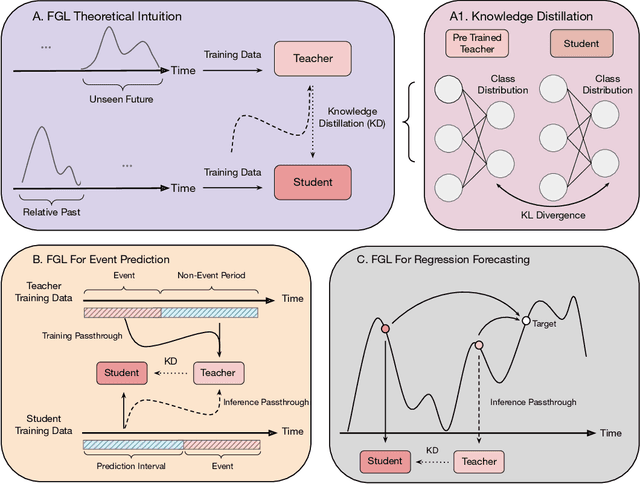
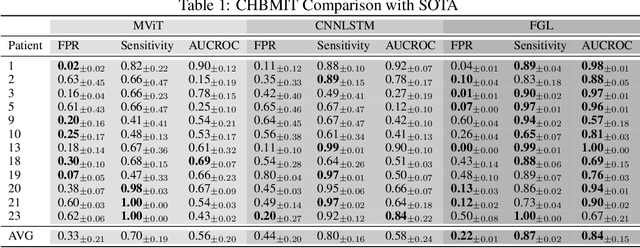
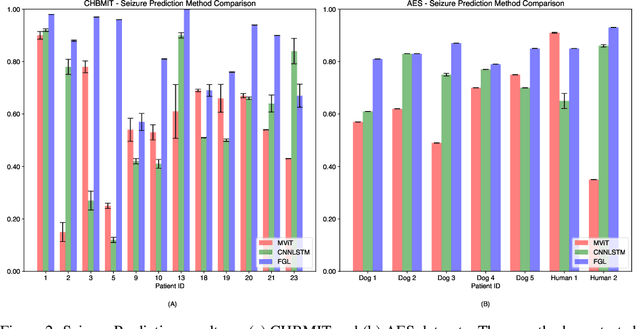
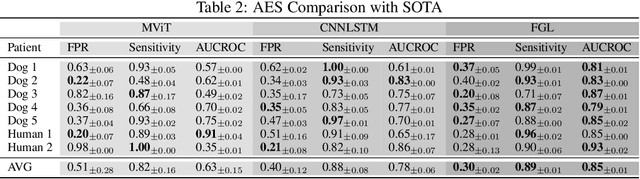
Accurate time-series forecasting is essential across a multitude of scientific and industrial domains, yet deep learning models often struggle with challenges such as capturing long-term dependencies and adapting to drift in data distributions over time. We introduce Future-Guided Learning, an approach that enhances time-series event forecasting through a dynamic feedback mechanism inspired by predictive coding. Our approach involves two models: a detection model that analyzes future data to identify critical events and a forecasting model that predicts these events based on present data. When discrepancies arise between the forecasting and detection models, the forecasting model undergoes more substantial updates, effectively minimizing surprise and adapting to shifts in the data distribution by aligning its predictions with actual future outcomes. This feedback loop, drawing upon principles of predictive coding, enables the forecasting model to dynamically adjust its parameters, improving accuracy by focusing on features that remain relevant despite changes in the underlying data. We validate our method on a variety of tasks such as seizure prediction in biomedical signal analysis and forecasting in dynamical systems, achieving a 40\% increase in the area under the receiver operating characteristic curve (AUC-ROC) and a 10\% reduction in mean absolute error (MAE), respectively. By incorporating a predictive feedback mechanism that adapts to data distribution drift, Future-Guided Learning offers a promising avenue for advancing time-series forecasting with deep learning.