 Add to Chrome
 Add to Firefox
 Add to Edge
Touchless Intraoperative Image Access System Based on Vision-Based Hand Tracking
Apr 27, 2026
Touchless interaction with medical images is becoming increasingly important in the surgical field, where sterility and continuity of the operational workflow are essential requirements. This work presents a vision-based system for intraoperative navigation of medical images through hand gestures acquired using a single RGB camera. Unlike many existing solutions, the system does not require additional hardware or user-specific training. Hand tracking is performed in real time using MediaPipe Hands, which provides a 2.5D estimation of hand landmarks. Simple and intuitive gestures are then mapped into translation, rotation, and zoom commands, enabling continuous and natural interaction with the image viewer. The system architecture is independent from the visualization software and, for implementation simplicity, in this study it was integrated with PyVista. Performance was evaluated through frame-level logging and quantitative analysis of latency, stability, and interaction robustness metrics. Experimental results highlight real-time behavior, with reduced latencies and stable control, in line with the requirements of fluid interaction. The system demonstrates the feasibility of a low-cost touchless solution for intraoperative access to medical images, laying the groundwork for future clinical evaluations.

Radiomics- and Clinical Feature-Driven Prediction of Volumetric Response in Skull-Base Meningioma after CyberKnife Radiosurgery
Apr 27, 2026Skull-base meningiomas are often characterized by favorable long-term prognosis, yet their anatomical complexity and proximity to critical neurovascular structures make treatment selection challenging. Stereotactic radiosurgery with CyberKnife represents an effective therapeutic option when surgical resection is not feasible; however, not all patients benefit equally from this treatment. Early identification of patients likely to respond to radiosurgery remains an open clinical problem. In this study, we propose a radiomics- and clinical feature-driven framework for predicting volumetric response in skull-base meningiomas treated with CyberKnife. Unlike most existing approaches that focus on progression-free survival or recurrence, our method targets volumetric response as an indicator of treatment efficacy. Pre-treatment MRI images from 104 patients were processed to extract radiomic features, which were combined with clinical variables and analyzed using six models. To ensure methodological rigor, the entire modeling process was implemented within a nested cross-validation scheme. Among the evaluated models, TabPFN achieved the best overall performance, with an AUC of 0.81 and consistently favorable classification metrics. These results suggest that advanced machine learning architectures, when combined with robust validation strategies, can effectively capture patterns associated with treatment response even in small-sample, high-dimensional settings.
Age Group Discrimination via Free Handwriting Indicators
Sep 29, 2023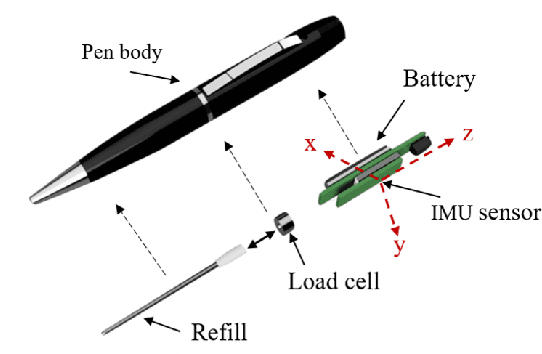



The growing global elderly population is expected to increase the prevalence of frailty, posing significant challenges to healthcare systems. Frailty, a syndrome associated with ageing, is characterised by progressive health decline, increased vulnerability to stressors and increased risk of mortality. It represents a significant burden on public health and reduces the quality of life of those affected. The lack of a universally accepted method to assess frailty and a standardised definition highlights a critical research gap. Given this lack and the importance of early prevention, this study presents an innovative approach using an instrumented ink pen to ecologically assess handwriting for age group classification. Content-free handwriting data from 80 healthy participants in different age groups (20-40, 41-60, 61-70 and 70+) were analysed. Fourteen gesture- and tremor-related indicators were computed from the raw data and used in five classification tasks. These tasks included discriminating between adjacent and non-adjacent age groups using Catboost and Logistic Regression classifiers. Results indicate exceptional classifier performance, with accuracy ranging from 82.5% to 97.5%, precision from 81.8% to 100%, recall from 75% to 100% and ROC-AUC from 92.2% to 100%. Model interpretability, facilitated by SHAP analysis, revealed age-dependent sensitivity of temporal and tremor-related handwriting features. Importantly, this classification method offers potential for early detection of abnormal signs of ageing in uncontrolled settings such as remote home monitoring, thereby addressing the critical issue of frailty detection and contributing to improved care for older adults.