 Add to Chrome
 Add to Firefox
 Add to Edge
BitLogic: Training Framework for Gradient-Based FPGA-Native Neural Networks
Feb 07, 2026
The energy and latency costs of deep neural network inference are increasingly driven by deployment rather than training, motivating hardware-specialized alternatives to arithmetic-heavy models. Field-Programmable Gate Arrays (FPGAs) provide an attractive substrate for such specialization, yet existing FPGA-based neural approaches are fragmented and difficult to compare. We present BitLogic, a fully gradient-based, end-to-end trainable framework for FPGA-native neural networks built around Lookup Table (LUT) computation. BitLogic replaces multiply-accumulate operations with differentiable LUT nodes that map directly to FPGA primitives, enabling native binary computation, sparse connectivity, and efficient hardware realization. The framework offers a modular functional API supporting diverse architectures, along with learned encoders, hardware-aware heads, and multiple boundary-consistent LUT relaxations. An automated Register Transfer Level (RTL) export pipeline translates trained PyTorch models into synthesizable HDL, ensuring equivalence between software and hardware inference. Experiments across standard vision benchmarks and heterogeneous hardware platforms demonstrate competitive accuracy and substantial gains in FPGA efficiency, including 72.3% test accuracy on CIFAR-10 achieved with fewer than 0.3M logic gates, while attaining sub-20 ns single-sample inference using only LUT resources.

GIC-DLC: Differentiable Logic Circuits for Hardware-Friendly Grayscale Image Compression
Jan 20, 2026Neural image codecs achieve higher compression ratios than traditional hand-crafted methods such as PNG or JPEG-XL, but often incur substantial computational overhead, limiting their deployment on energy-constrained devices such as smartphones, cameras, and drones. We propose Grayscale Image Compression with Differentiable Logic Circuits (GIC-DLC), a hardware-aware codec where we train lookup tables to combine the flexibility of neural networks with the efficiency of Boolean operations. Experiments on grayscale benchmark datasets show that GIC-DLC outperforms traditional codecs in compression efficiency while allowing substantial reductions in energy consumption and latency. These results demonstrate that learned compression can be hardware-friendly, offering a promising direction for low-power image compression on edge devices.
Recurrent Deep Differentiable Logic Gate Networks
Aug 08, 2025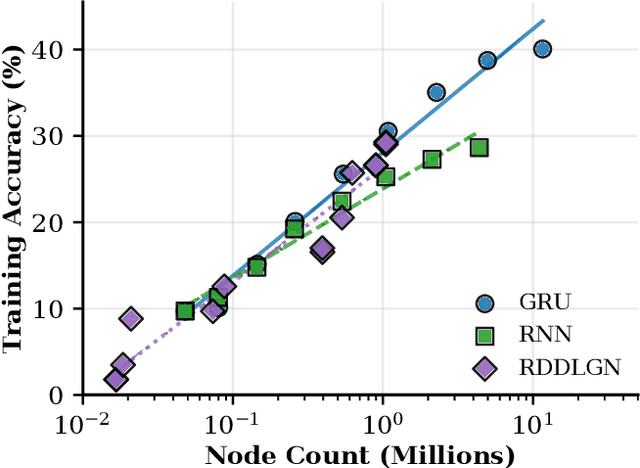
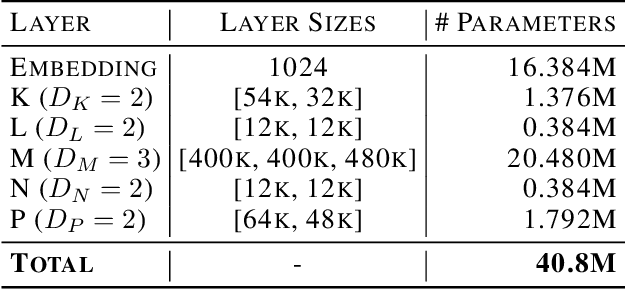
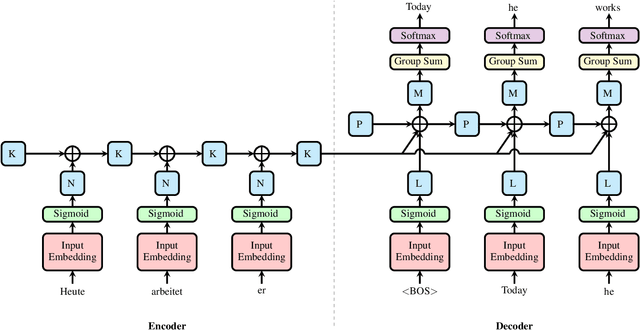
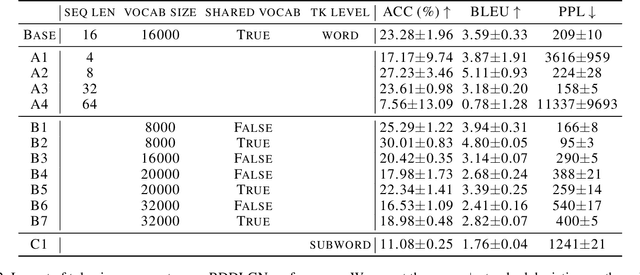
While differentiable logic gates have shown promise in feedforward networks, their application to sequential modeling remains unexplored. This paper presents the first implementation of Recurrent Deep Differentiable Logic Gate Networks (RDDLGN), combining Boolean operations with recurrent architectures for sequence-to-sequence learning. Evaluated on WMT'14 English-German translation, RDDLGN achieves 5.00 BLEU and 30.9\% accuracy during training, approaching GRU performance (5.41 BLEU) and graceful degradation (4.39 BLEU) during inference. This work establishes recurrent logic-based neural computation as viable, opening research directions for FPGA acceleration in sequential modeling and other recursive network architectures.