 Add to Chrome
 Add to Firefox
 Add to Edge
Auditing Reward Hackability in Code RL Training Environments
Jun 14, 2026
We measure the rate at which code RL environments accept incorrect solutions as correct. On a 49-task sample of SWE-bench Verified, 28.5% of tasks have test suites weak enough that a Docker-verified incorrect patch passes them. On 20 R2E-Gym tasks across 6 repositories, the same pipeline at single-shot exploit generation yields 25.0%. A random-effects meta-analysis over 134 frontier model submissions to SWE-bench Verified finds, within the same human-rated difficulty stratum, model Pass@1 is +14.14 percentage points higher on flagged-hackable tasks than on robust ones (95% CI [+11.80, +16.48]; one-sided p < 10^-6; I^2 = 0%; 123 of 134 models positive). We then describe a procedure for hardening the broken tasks. An inline LLM judge with a Docker gold-sanity gate runs each generated test against the gold solution before the judge is consulted. On the 11 broken tasks in the audit, the gate flags 65 of 105 decisive LLM-generated tests as failing on the gold patch itself, a 61.9% per-augmentation defect rate the LLM judge alone misses. With diversity-biased retry, the loop converges 9 of 11 tasks to a gated upgrade.

Uncertainty-Gated Region-Level Retrieval for Robust Semantic Segmentation
Dec 19, 2025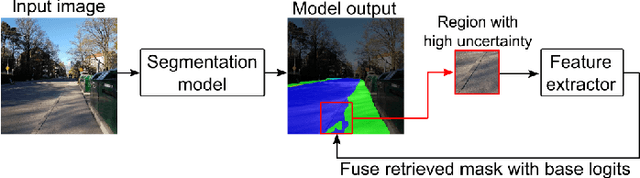
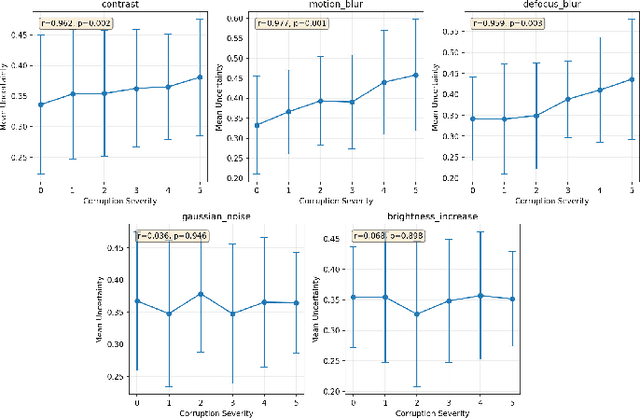
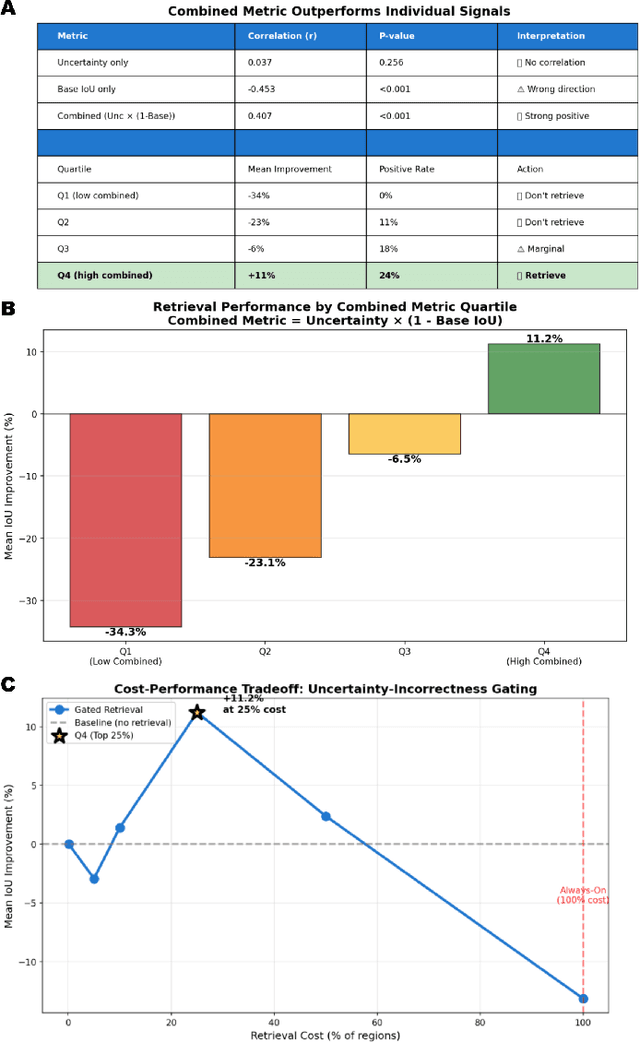
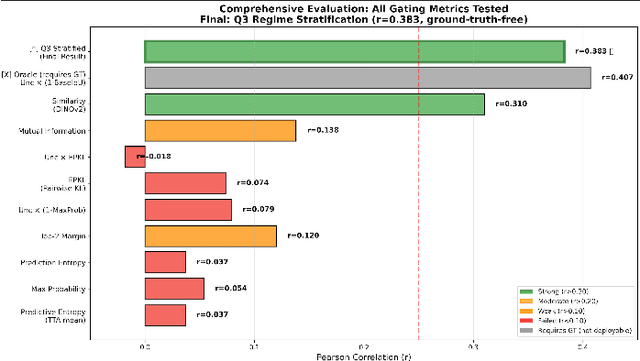
Semantic segmentation of outdoor street scenes plays a key role in applications such as autonomous driving, mobile robotics, and assistive technology for visually-impaired pedestrians. For these applications, accurately distinguishing between key surfaces and objects such as roads, sidewalks, vehicles, and pedestrians is essential for maintaining safety and minimizing risks. Semantic segmentation must be robust to different environments, lighting and weather conditions, and sensor noise, while being performed in real-time. We propose a region-level, uncertainty-gated retrieval mechanism that improves segmentation accuracy and calibration under domain shift. Our best method achieves an 11.3% increase in mean intersection-over-union while reducing retrieval cost by 87.5%, retrieving for only 12.5% of regions compared to 100% for always-on baseline.
Arithmetic-Intensity-Aware Quantization
Dec 17, 2025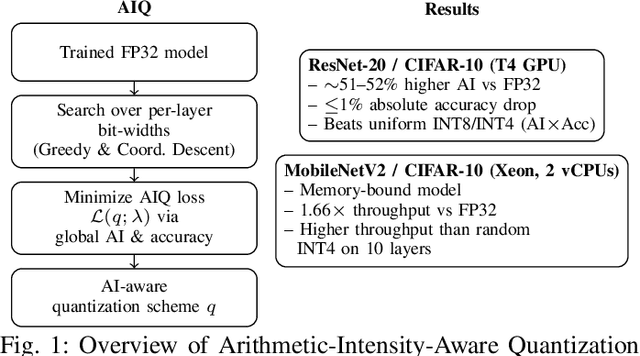
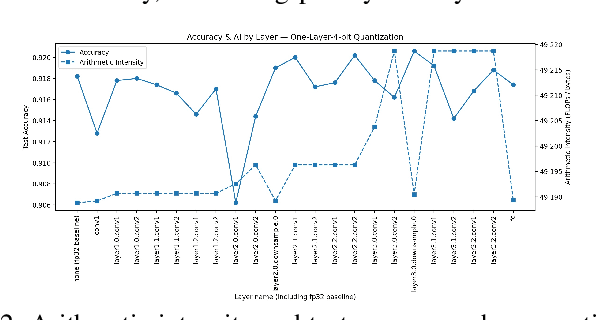
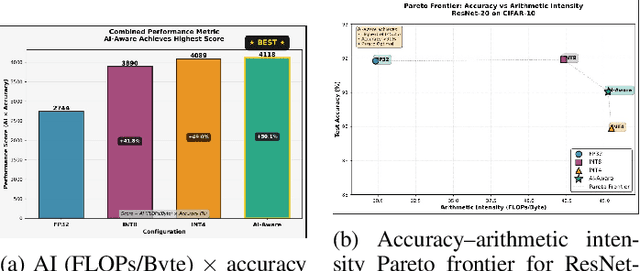
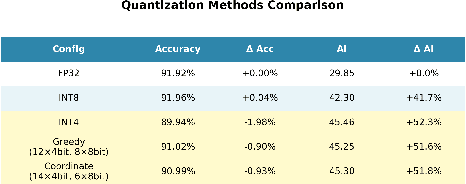
As modern neural networks become increasingly memory-bound, inference throughput is limited by DRAM bandwidth rather than compute. We present Arithmetic-Intensity-Aware Quantization (AIQ), a mixed precision quantization framework that chooses per-layer bit-widths to maximize arithmetic intensity (AI) while minimizing accuracy loss. AIQ is a post-training quantization method that uses search algorithms over per-layer quantization schemes to minimize a weighted loss over AI and accuracy. On ResNet-20/CIFAR-10, AIQ increases AI by ~50% over an FP32 baseline while keeping test accuracy within ~1 percentage point, and outperforming global uniform quantization schemes. On a memory-bound MobileNetV2 architecture, AIQ configurations give a 1.66x higher throughput than the FP32 baseline while keeping test accuracy within 1 percentage point. We also find that AIQ naturally quantizes larger layers more aggressively.