 Add to Chrome
 Add to Firefox
 Add to Edge
One Retrieval to Cover Them All: Co-occurrence-Aware Knowledge Base Reorganization for Session-Level RAG
Jun 30, 2026
RAG systems retrieve documents optimized for answering one query at a time. Yet enterprise users arrive with sessions, that is, coherent episodes of related questions that span semantically distant parts of the knowledge base. We show that a single retrieval call over a standard knowledge base covers only 41% of a user's session-level information need. To close this gap, we reorganize the KB offline using co-occurrence-aware clustering and expand retrieval candidates through cluster neighborhoods at query time. On WixQA (6,221 enterprise support articles), our method raises single-query session coverage to 58% (+17% absolute; 95% CI: [14.1, 20.4]), reduces retrieval calls to 70% coverage by 34%, and compresses the KB to 20% of its original size, all consistently across four embedding models and six functional domains. We argue that session-level coverage, not single-query recall, should be the primary metric for enterprise RAG evaluation.

The Geometry of Refusal: Linear Instability in Safety-Aligned LLMs
Jun 21, 2026Modern Large Language Models (LLMs) rely on extensive safety alignment, yet the mechanistic basis of refusal remains opaque. In this work, we investigate whether safety compliance is a deep semantic decision or a manipulable linear feature. We introduce Contrastive Logit Steering (CLS), a zero-optimization framework that isolates the "refusal direction" by contrasting hidden states derived from safe and unrestricted system prompts. Unlike representation engineering methods that intervene on internal activations, CLS operates directly on the output distribution, serving as a diagnostic probe for alignment fragility. When coupled with prefix injection to bypass initial refusal reflexes, this method induces a phase transition where guardrails collapse. Our experiments on 7 model families reveal that safety implementation is architecturally deterministic. While models like Llama-3.1 exhibit a "Late Decision" topology that is easily bypassed by CLS (reaching 95% ASR in approximately one second), others like Qwen-2.5 demonstrate "Early Divergence" by integrating safety mid-computation. Direct comparison with established activation-level steering methods shows that CLS achieves substantially higher attack success rates on Llama 2 (73% vs. 22.6%) and Qwen 7B (91% vs. 79.2%), demonstrating that logit-level intervention exposes alignment vulnerabilities that hidden-state methods underestimate. Beyond attacks, we show that this linearity enables bidirectional control: inverting the steering vector "hardens" models against jailbreaks without retraining. Our findings suggest that current alignment techniques create a steerable "safety axis" that serves as both a critical vulnerability and a precise primitive for defense.
Beyond QA Pairs: Assessing Parameter-Efficient Fine-Tuning for Fact Embedding in LLMs
Mar 03, 2025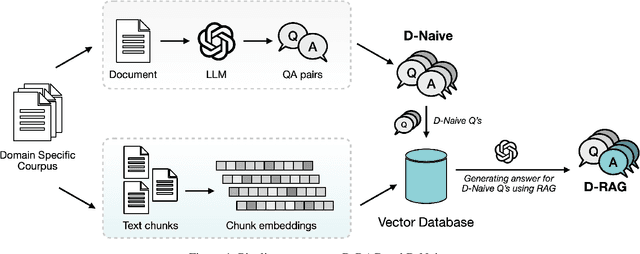
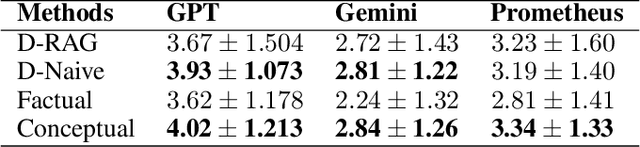
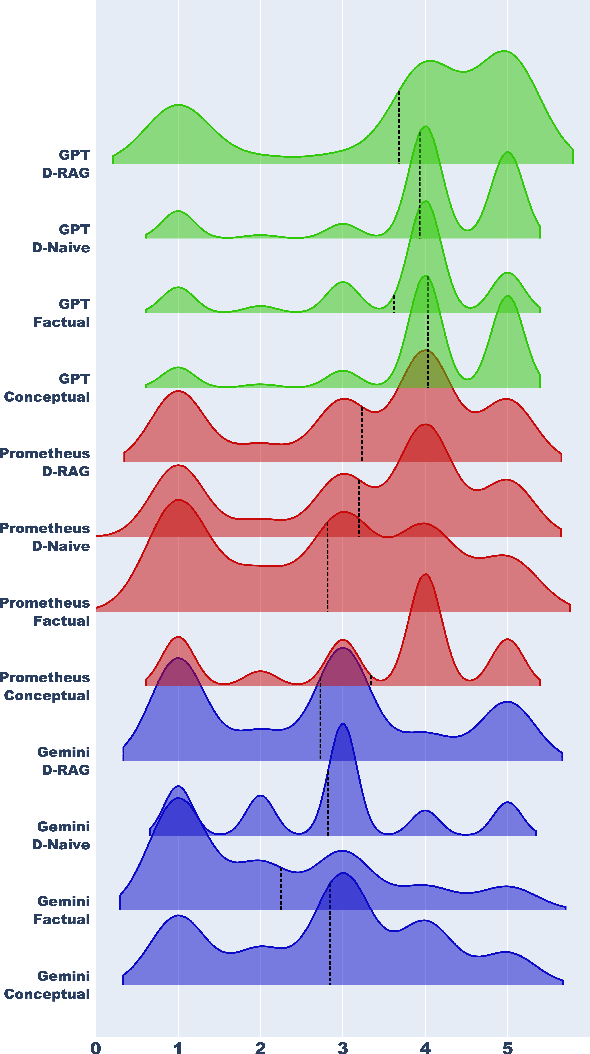
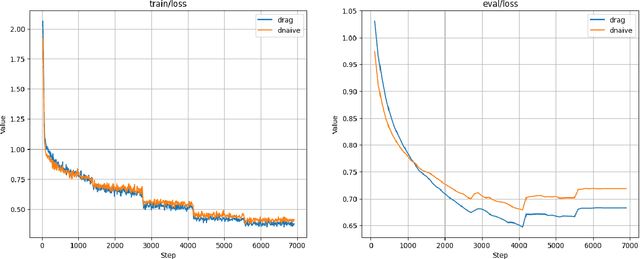
This paper presents an extensive examination of Parameter-Efficient Fine-Tuning (PEFT) for embedding domain specific facts into Large Language Models (LLMs), focusing on improving the fine-tuning process by categorizing question-answer (QA) pairs into Factual and Conceptual classes using a BERT-based classifier. Two distinct Llama-2 models are fine-tuned based on these classifications and evaluated using larger models like GPT-3.5 Turbo and Gemini. Our results indicate that models trained on conceptual datasets outperform those trained on factual datasets. Additionally, we compare the efficiency of two synthetic fine-tuning dataset generation techniques, D-RAG and D-Naive, with D-Naive demonstrating superior performance. Although PEFT has shown effectiveness, our research indicates that it may not be the most optimal method for embedding facts into LLMs. However, it has demonstrated exceptional performance in instruction-based tasks. Our findings are reinforced by a 1000-sample dataset in the data center domain, where the fine-tuned Llama-2 7B model significantly outperforms the baseline model in generating product recommendations. Our study highlights the importance of QA pair categorization and synthetic dataset generation techniques in enhancing the performance of LLMs in specific domains.
* Presented at the Workshop on Preparing Good Data for Generative AI: Challenges and Approaches (Good-Data) in conjunction with AAAI 2025. The authors retain the copyright
STARLING: Self-supervised Training of Text-based Reinforcement Learning Agent with Large Language Models
Jun 09, 2024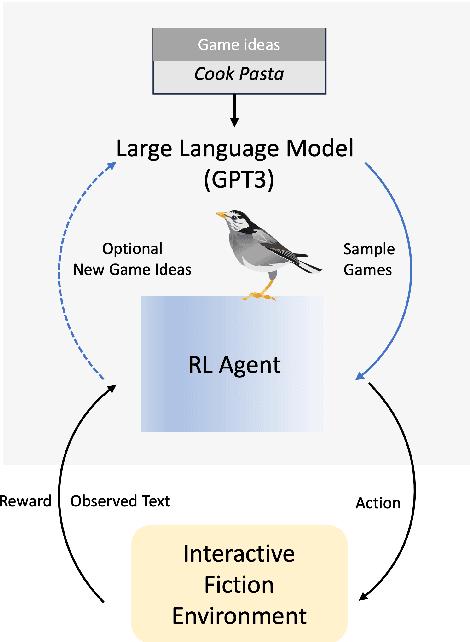
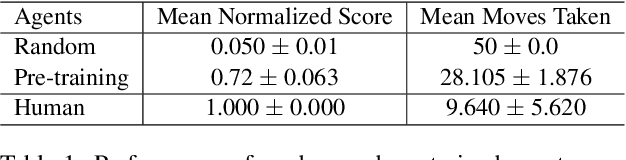
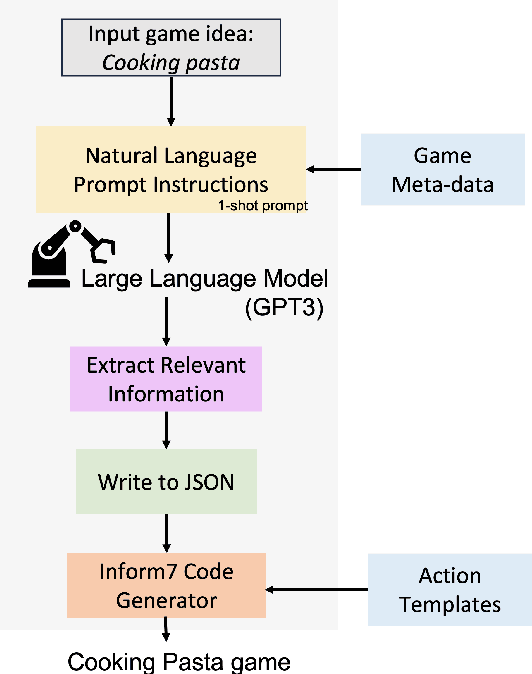
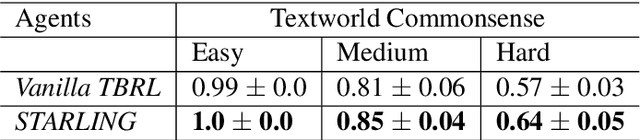
Interactive fiction games have emerged as an important application to improve the generalization capabilities of language-based reinforcement learning (RL) agents. Existing environments for interactive fiction games are domain-specific or time-consuming to generate and do not train the RL agents to master a specific set of skills. In this work, we introduce an interactive environment for self-supervised RL, STARLING, for text-based games that bootstraps the text-based RL agents with automatically generated games (based on the seed set of game ideas) to boost the performance and generalization capabilities to reach a goal of the target environment. These games let the agent hone their skills on a predefined set of tasks. We create and test an environment with 100 games, generated using this automated framework that uses large language models (GPT-3) and an interactive fiction game engine (based on Inform7) to provide the user with the ability to generate more games under minimal human supervision. Experimental results based on both the human participants and baseline text-based RL agents reveal that current state-of-the-art text-based RL agents cannot use previously learned skills in new situations at the level humans can. These results enforce STARLING's potential to serve as a sandbox environment for further research in self-supervised text-based RL.