 Add to Chrome
 Add to Firefox
 Add to Edge
Transcending Classical Neural Network Boundaries: A Quantum-Classical Synergistic Paradigm for Seismic Data Processing
Mar 25, 2026
In recent years, a number of neural-network (NN) methods have exhibited good performance in seismic data processing, such as denoising, interpolation, and frequency-band extension. However, these methods rely on stacked perceptrons and standard activation functions, which imposes a bottleneck on the representational capacity of deep-learning models, making it difficult to capture the complex and non-stationary dynamics of seismic wavefields. Different from the classical perceptron-stacked NNs which are fundamentally confined to real-valued Euclidean spaces, the quantum NNs leverage the exponential state space of quantum mechanics to map the features into high-dimensional Hilbert spaces, transcending the representational boundary of classical NNs. Based on this insight, we propose a quantum-classical synergistic generative adversarial network (QC-GAN) for seismic data processing, serving as the first application of quantum NNs in seismic exploration. In QC-GAN, a quantum pathway is used to exploit the high-order feature correlations, while the convolutional pathway specializes in extracting the waveform structures of seismic wavefields. Furthermore, we design a QC feature complementarity loss to enforce the feature orthogonality in the proposed QC-GAN. This novel loss function can ensure that the two pathways encode non-overlapping information to enrich the capacity of feature representation. On the whole, by synergistically integrating the quantum and convolutional pathways, the proposed QC-GAN breaks the representational bottleneck inherent in classical GAN. Experimental results on denoising and interpolation tasks demonstrate that QC-GAN preserves wavefield continuity and amplitude-phase information under complex noise conditions.

PreAdaptFWI: Pretrained-Based Adaptive Residual Learning for Full-Waveform Inversion Without Dataset Dependency
Feb 17, 2025Full-waveform inversion (FWI) is a method that utilizes seismic data to invert the physical parameters of subsurface media by minimizing the difference between simulated and observed waveforms. Due to its ill-posed nature, FWI is susceptible to getting trapped in local minima. Consequently, various research efforts have attempted to combine neural networks with FWI to stabilize the inversion process. This study presents a simple yet effective training framework that is independent of dataset reliance and requires only moderate pre-training on a simple initial model to stabilize network outputs. During the transfer learning phase, the conventional FWI gradients will simultaneously update both the neural network and the proposed adaptive residual learning module, which learns the residual mapping of large-scale distribution features in the network's output, rather than directly fitting the target mapping. Through this synergistic training paradigm, the proposed algorithm effectively infers the physically-informed prior knowledge into a global representation of stratigraphic distribution, as well as capturing subtle variations in inter-layer velocities within local details, thereby escaping local optima. Evaluating the method on two benchmark models under various conditions, including absent low-frequency data, noise interference, and differing initial models, along with corresponding ablation experiments, consistently demonstrates the superiority of the proposed approach.
Invisible Steganography via Generative Adversarial Networks
Oct 10, 2018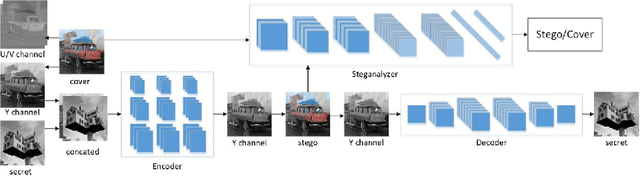
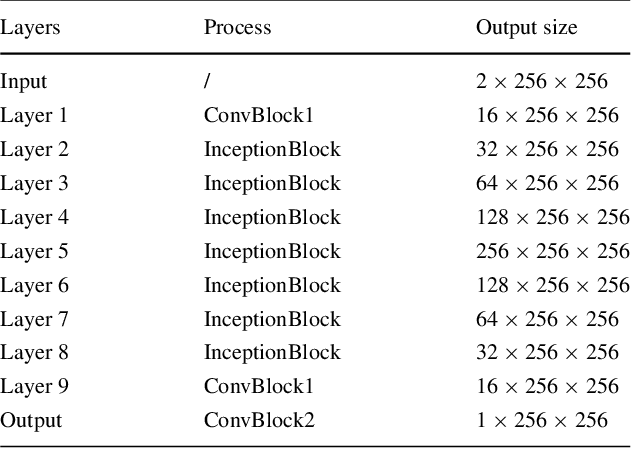
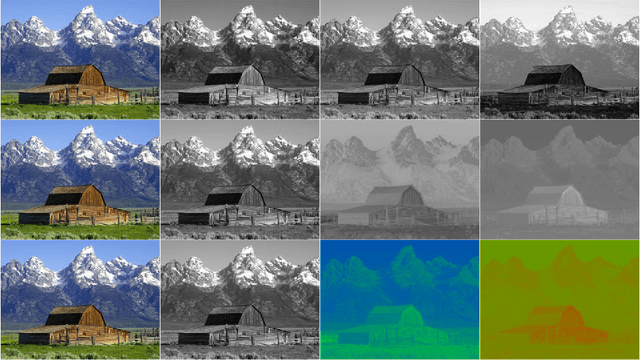
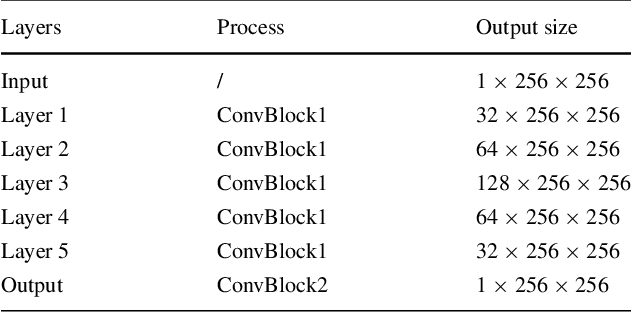
Nowadays, there are plenty of works introducing convolutional neural networks (CNNs) to the steganalysis and exceeding conventional steganalysis algorithms. These works have shown the improving potential of deep learning in information hiding domain. There are also several works based on deep learning to do image steganography, but these works still have problems in capacity, invisibility and security. In this paper, we propose a novel CNN architecture named as \isgan to conceal a secret gray image into a color cover image on the sender side and exactly extract the secret image out on the receiver side. There are three contributions in our work: (i) we improve the invisibility by hiding the secret image only in the Y channel of the cover image; (ii) We introduce the generative adversarial networks to strengthen the security by minimizing the divergence between the empirical probability distributions of stego images and natural images. (iii) In order to associate with the human visual system better, we construct a mixed loss function which is more appropriate for steganography to generate more realistic stego images and reveal out more better secret images. Experiment results show that ISGAN can achieve start-of-art performances on LFW, Pascal VOC2012 and ImageNet datasets.