 Add to Chrome
 Add to Firefox
 Add to Edge
SpeechSense: A Paralinguistic-Focused Dataset for Fine-Grained Speech Sentiment Analysis
Aug 18, 2026
Recent advances in AI have revolutionized speech processing, yet effective speech understanding requires discerning not just what is said, but how it is said. Speech Sentiment Analysis plays a critical role in decoding these paralinguistic cues for diverse real-world applications such as recruitment and customer service. However, existing Speech Sentiment Analysis research faces two primary limitations. First, dominant approaches rely on text-centric pipelines that cascade Automatic Speech Recognition with text analysis. This process inevitably discards essential acoustic features like prosody and tone, failing to capture attitudinal meanings in acoustically ambiguous utterances. Second, current benchmarks suffer from a mismatch in label granularity, prioritizing basic emotions (e.g., happy, sad) over the nuanced interpersonal stances (e.g., confident, impatient) necessary for social sensitivity. To address these limitations, we propose a novel dataset, SpeechSense, for fine-grained speech sentiment analysis. Specifically, we define a specialized 8-class taxonomy of interpersonal stances detectable primarily through prosodic cues beyond lexical content alone. We then construct a curated dataset based on this taxonomy, built from high-fidelity speech synthesis and rigorous human validation. Comprehensive experiments across multi-modal LLMs, text-only LLMs, and speech encoders demonstrate that models with acoustic access consistently outperform text-only baselines. These results empirically validate the primacy of acoustic cues in detecting subtle speaker attitudes, highlighting the necessity of SpeechSense. Dataset and supplementary materials are available at https://github.com/Sher13cked/SpeechSense.

A Literature Review of Recent Graph Embedding Techniques for Biomedical Data
Jan 20, 2021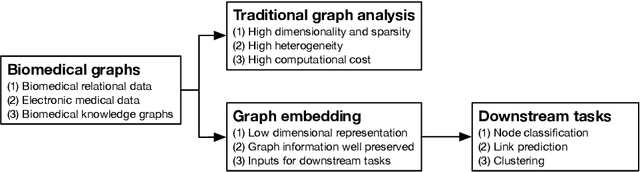
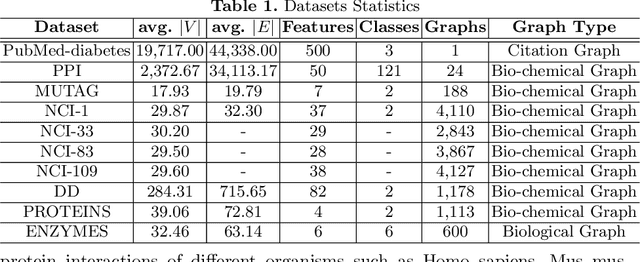
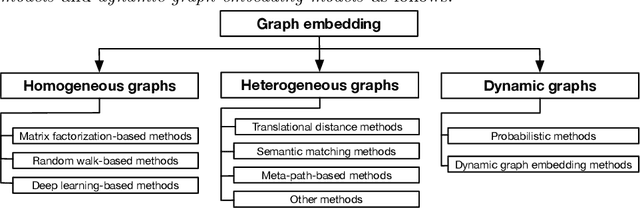
With the rapid development of biomedical software and hardware, a large amount of relational data interlinking genes, proteins, chemical components, drugs, diseases, and symptoms has been collected for modern biomedical research. Many graph-based learning methods have been proposed to analyze such type of data, giving a deeper insight into the topology and knowledge behind the biomedical data, which greatly benefit to both academic research and industrial application for human healthcare. However, the main difficulty is how to handle high dimensionality and sparsity of the biomedical graphs. Recently, graph embedding methods provide an effective and efficient way to address the above issues. It converts graph-based data into a low dimensional vector space where the graph structural properties and knowledge information are well preserved. In this survey, we conduct a literature review of recent developments and trends in applying graph embedding methods for biomedical data. We also introduce important applications and tasks in the biomedical domain as well as associated public biomedical datasets.