 Add to Chrome
 Add to Firefox
 Add to Edge
COTONET: A custom cotton detection algorithm based on YOLO11 for stage of growth cotton boll detection
Mar 12, 2026
Cotton harvesting is a critical phase where cotton capsules are physically manipulated and can lead to fibre degradation. To maintain the highest quality, harvesting methods must emulate delicate manual grasping, to preserve cotton's intrinsic properties. Automating this process requires systems capable of recognising cotton capsules across various phenological stages. To address this challenge, we propose COTONET, an enhanced custom YOLO11 model tailored with attention mechanisms to improve the detection of difficult instances. The architecture incorporates gradients in non-learnable operations to enhance shape and feature extraction. Key architectural modifications include: the replacement of convolutional blocks with Squeeze-and-Exitation blocks, a redesigned backbone integrating attention mechanisms, and the substitution of standard upsampling operations for Content Aware Reassembly of Features (CARAFE). Additionally, we integrate Simple Attention Modules (SimAM) for primary feature aggregation and Parallel Hybrid Attention Mechanisms (PHAM) for channel-wise, spatial-wise and coordinate-wise attention in the downward neck path. This configuration offers increased flexibility and robustness for interpreting the complexity of cotton crop growth. COTONET aligns with small-to-medium YOLO models utilizing 7.6M parameters and 27.8 GFLOPS, making it suitable for low-resource edge computing and mobile robotics. COTONET outperforms the standard YOLO baselines, achieving a mAP50 of 81.1% and a mAP50-95 of 60.6%.

A gripper for flap separation and opening of sealed bags
Mar 11, 2026Separating thin, flexible layers that must be individually grasped is a common but challenging manipulation primitive for most off-the-shelf grippers. A prominent example arises in clinical settings: the opening of sterile flat pouches for the preparation of the operating room, where the first step is to separate and grasp the flaps. We present a novel gripper design and opening strategy that enables reliable flap separation and robust seal opening. This capability addresses a high-volume repetitive hospital procedure in which nurses manually open up to 240 bags per shift, a physically demanding task linked to musculoskeletal injuries. Our design combines an active dented-roller fingertip with compliant fingers that exploit environmental constraints to robustly grasp thin flexible flaps. Experiments demonstrate that the proposed gripper reliably grasps and separates sealed bag flaps and other thin-layered materials from the hospital, the most sensitive variable affecting performance being the normal force applied. When two copies of the gripper grasp both flaps, the system withstands the forces needed to open the seals robustly. To our knowledge, this is one of the first demonstrations of robotic assistance to automate this repetitive, low-value, but critical hospital task.
Ontological foundations for contrastive explanatory narration of robot plans
Sep 26, 2025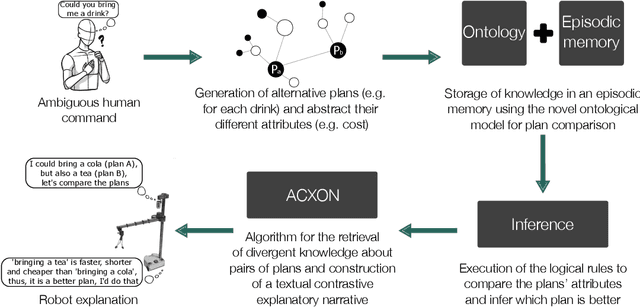
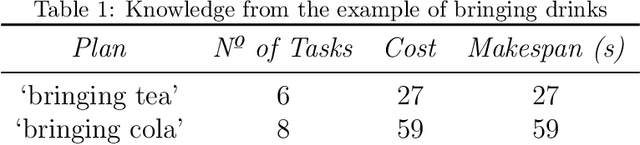
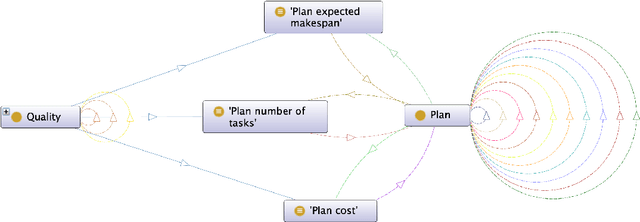
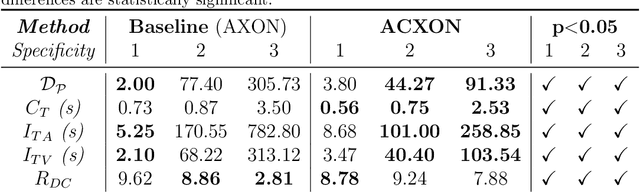
Mutual understanding of artificial agents' decisions is key to ensuring a trustworthy and successful human-robot interaction. Hence, robots are expected to make reasonable decisions and communicate them to humans when needed. In this article, the focus is on an approach to modeling and reasoning about the comparison of two competing plans, so that robots can later explain the divergent result. First, a novel ontological model is proposed to formalize and reason about the differences between competing plans, enabling the classification of the most appropriate one (e.g., the shortest, the safest, the closest to human preferences, etc.). This work also investigates the limitations of a baseline algorithm for ontology-based explanatory narration. To address these limitations, a novel algorithm is presented, leveraging divergent knowledge between plans and facilitating the construction of contrastive narratives. Through empirical evaluation, it is observed that the explanations excel beyond the baseline method.