 Add to Chrome
 Add to Firefox
 Add to Edge
Shift-invariant spaces on finite undirected graphs
Feb 22, 2026
Shift-invariant spaces (SISs) on the real line provide a natural framework for representing, analyzing and processing signals with inherent shift-invariant structure. In this paper, we extend this framework to the finite undirected graph setting by introducing the concept of graph shift-invariant spaces (GSISs). We examine several properties of GSISs, including their characterization via range functions and fiber functions in the Fourier domain, their connections to shift-invariant filters and polynomial filters, the frame and Riesz basis structures of finitely generated GSISs, and their intricate relationships with bandlimited spaces, finitely generated GSISs, and graph reproducing kernel Hilbert spaces with shift-invariant reproducing kernels (SIGRKHSs). Our analysis reveals several distinctions between SISs on the line and GSISs, such as the shift-invariance of the frame operator, the existence of shift-invariant dual frames, the emergence of fractional shift-invariance, and the interrelationships among GSISs, finitely generated GSISs, SIGRKHSs and bandlimited spaces. In this paper, we also introduce a spectral decomposition of the identity associated with graph shifts and propose a novel definition of the graph Fourier transform (GFT) of spectral type, together with explicit formulations for the GFTs on complete graphs and circulant graphs. In addition, we establish a clear connection between polynomial filters and shift-invariant filters, and we derive a graph uncertainty principle governing the essential supports of a nonzero graph signal and its GFT.

Shift-invariant spaces, bandlimited spaces and reproducing kernel spaces with shift-invariant kernels on undirected finite graphs
Dec 17, 2024In this paper, we introduce the concept of graph shift-invariant space (GSIS) on an undirected finite graph, which is the linear space of graph signals being invariant under graph shifts, and we study its bandlimiting, kernel reproducing and sampling properties. Graph bandlimited spaces have been widely applied where large datasets on networks need to be handled efficiently. In this paper, we show that every GSIS is a bandlimited space, and every bandlimited space is a principal GSIS. Functions in a reproducing kernel Hilbert space with shift-invariant kernel could be learnt with significantly low computational cost. In this paper, we demonstrate that every GSIS is a reproducing kernel Hilbert space with a shift-invariant kernel. Based on the nested Krylov structure of GSISs in the spatial domain, we propose a novel sampling and reconstruction algorithm with finite steps, with its performance tested for well-localized signals on circulant graphs and flight delay dataset of the 50 busiest airports in the USA.
Barron Space for Graph Convolution Neural Networks
Nov 06, 2023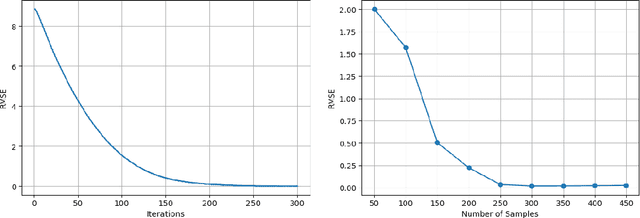
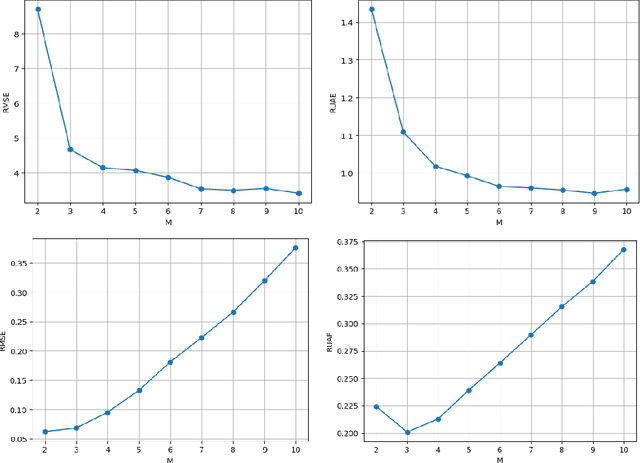
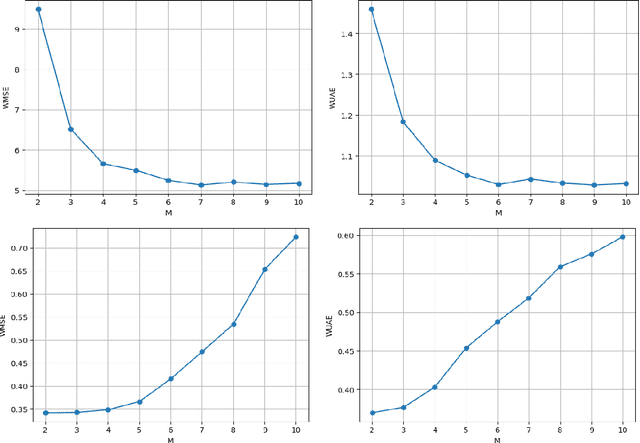
Graph convolutional neural network (GCNN) operates on graph domain and it has achieved a superior performance to accomplish a wide range of tasks. In this paper, we introduce a Barron space of functions on a compact domain of graph signals. We prove that the proposed Barron space is a reproducing kernel Banach space, it can be decomposed into the union of a family of reproducing kernel Hilbert spaces with neuron kernels, and it could be dense in the space of continuous functions on the domain. Approximation property is one of the main principles to design neural networks. In this paper, we show that outputs of GCNNs are contained in the Barron space and functions in the Barron space can be well approximated by outputs of some GCNNs in the integrated square and uniform measurements. We also estimate the Rademacher complexity of functions with bounded Barron norm and conclude that functions in the Barron space could be learnt from their random samples efficiently.