 Add to Chrome
 Add to Firefox
 Add to Edge
Efficient Jailbreak Mitigation Using Semantic Linear Classification in a Multi-Staged Pipeline
Dec 22, 2025
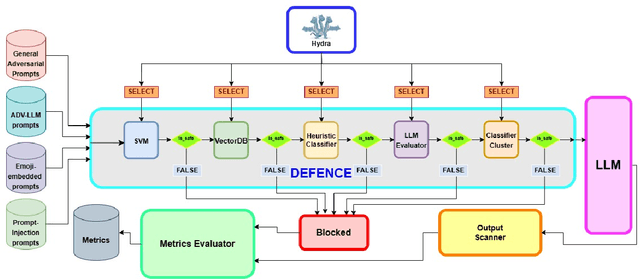
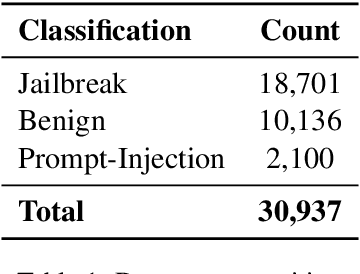

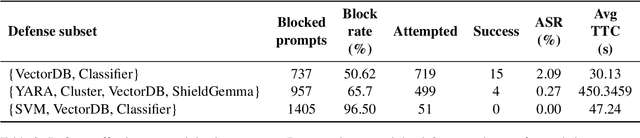
Prompt injection and jailbreaking attacks pose persistent security challenges to large language model (LLM)-based systems. We present an efficient and systematically evaluated defense architecture that mitigates these threats through a lightweight, multi-stage pipeline. Its core component is a semantic filter based on text normalization, TF-IDF representations, and a Linear SVM classifier. Despite its simplicity, this module achieves 93.4% accuracy and 96.5% specificity on held-out data, substantially reducing attack throughput while incurring negligible computational overhead. Building on this efficient foundation, the full pipeline integrates complementary detection and mitigation mechanisms that operate at successive stages, providing strong robustness with minimal latency. In comparative experiments, our SVM-based configuration improves overall accuracy from 35.1% to 93.4% while reducing average time to completion from approximately 450s to 47s, yielding over 10 times lower latency than ShieldGemma. These results demonstrate that the proposed design simultaneously advances defensive precision and efficiency, addressing a core limitation of current model-based moderators. Evaluation across a curated corpus of over 30,000 labeled prompts, including benign, jailbreak, and application-layer injections, confirms that staged, resource-efficient defenses can robustly secure modern LLM-driven applications.

State-Space Identification of Unmanned Helicopter Dynamics using Invasive Weed Optimization Algorithm on Flight Data
Sep 02, 2018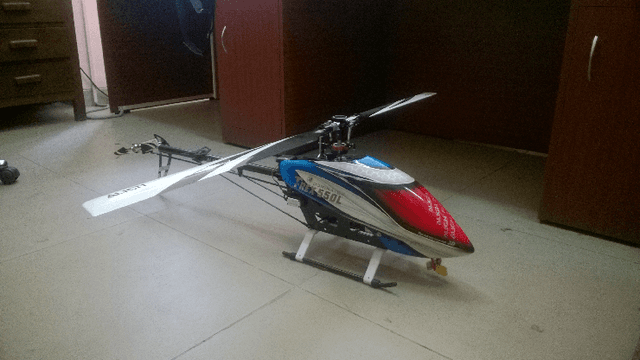
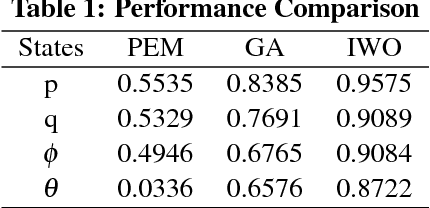
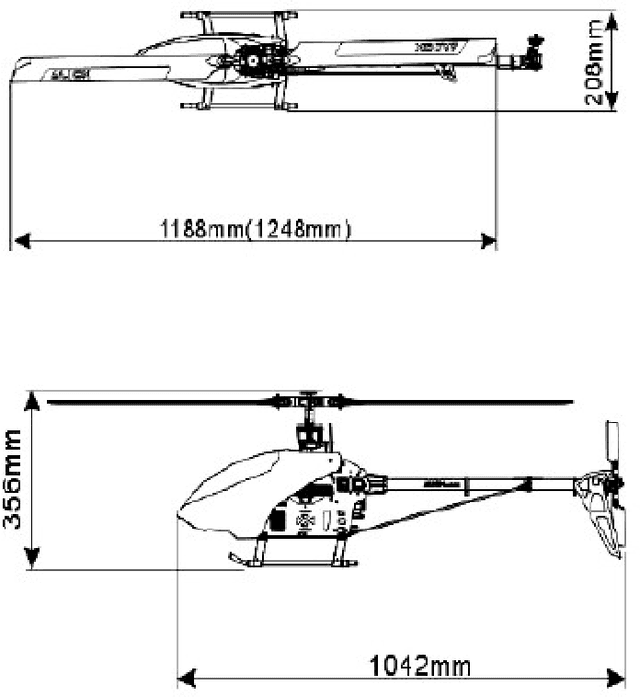
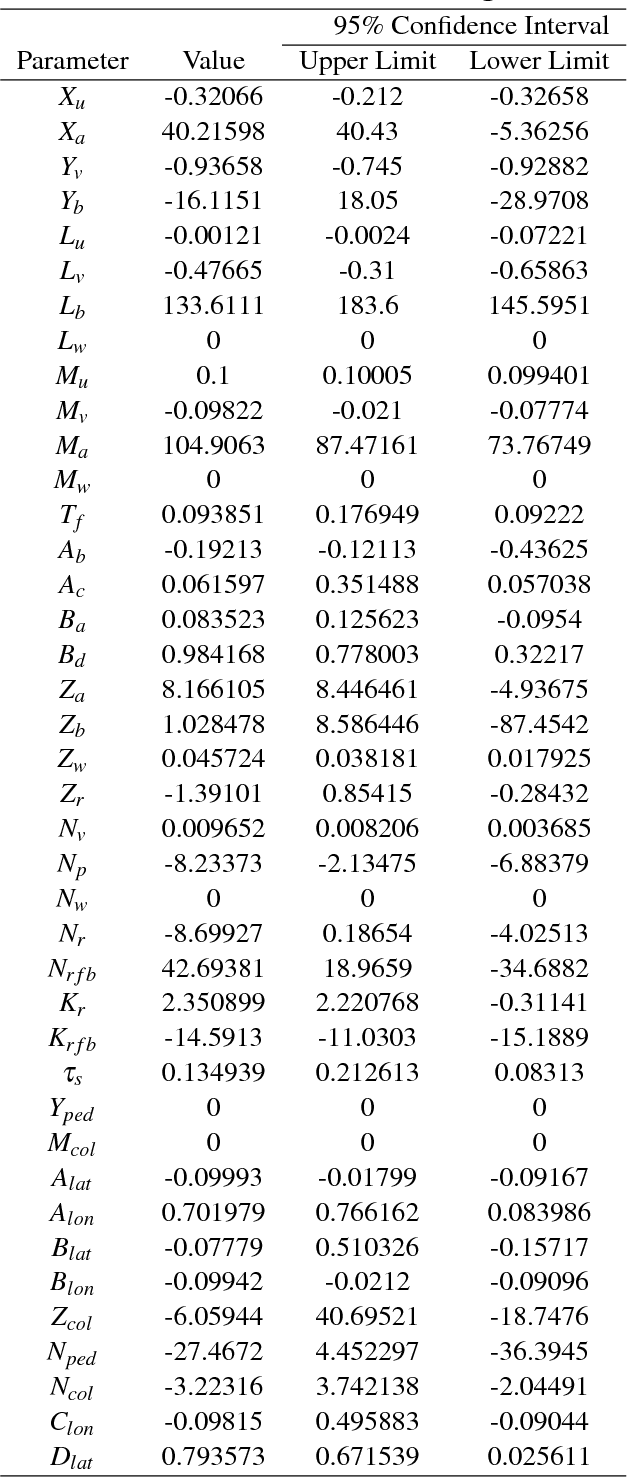
In order to achieve a good level of autonomy in unmanned helicopters, an accurate replication of vehicle dynamics is required, which is achievable through precise mathematical modeling. This paper aims to identify a parametric state-space system for an unmanned helicopter to a good level of accuracy using Invasive Weed Optimization (IWO) algorithm. The flight data of Align TREX 550 flybarless helicopter is used in the identification process. The rigid-body dynamics of the helicopter is modeled in a state-space form that has 40 parameters, which serve as control variables for the IWO algorithm. The results after 1000 iterations were compared with the traditionally used Prediction Error Minimization (PEM) method and also with Genetic Algorithm (GA), which serve as references. Results show a better level of correlation between the actual and estimated responses of the system identified using IWO to that of PEM and GA.