 Add to Chrome
 Add to Firefox
 Add to Edge
MARC v1: An Open-Source Multi-Agent Framework for Clinical AI Reasoning and Coordination
Aug 13, 2026
We present Multi-Agent Reasoning and Coordination (MARC), an open-source framework that replaces monolithic LLM prompting with deterministic multi-agent orchestration for clinical reasoning. MARC coordinates role-specialized agents for extraction, reasoning, answer generation, and evaluation, with explicit context passing and traceable intermediate outputs, enabling stage-wise failure attribution. We additionally introduce a Decomposer module that generates task-specific agent prompts from a plain-language description, eliminating manual prompt engineering. The framework supports both API-based and local CPU-compatible deployments and is entirely configurable via YAML, without code modifications. MARC is designed to be model-agnostic, interpretable, and accessible to clinical domain experts without programming expertise. The full framework is available at https://github.com/Penn-RAIL/MARC-v1.

SPARC-Rad: A Multimodal Benchmark Dataset and Evaluation Pipeline for Spatial and Anatomical Reasoning in Radiology Vision-Language Models
Jul 30, 2026Vision-language models (VLMs) are increasingly being evaluated for medical imaging, but many available benchmarks emphasize disease classification, report generation, or broad visual question answering rather than the spatial and anatomical reasoning required for radiology. We developed the Spatial Perception and Anatomical Reasoning in Clinical Radiology (SPARC-Rad) Benchmark, a manually curated multimodal benchmark dataset and evaluation pipeline for assessing these capabilities in radiology VLMs. SPARC-Rad includes 300 image-question pairs derived from healthy control imaging studies in The Cancer Imaging Archive (TCIA), spanning CT, MRI, and radiography across the abdomen, chest, breast, neuro, and musculoskeletal categories. Radiology trainees manually designed and annotated questions to evaluate anatomical identification, localization, laterality, regional recognition, device identification, and inter-structure spatial relationships. The evaluation pipeline supports standardized prompting, structured output collection, response normalization, LLM-as-judge grading, human quality review, binary correctness scoring, and subgroup analysis by modality, anatomy, and reasoning type. SPARC-Rad provides a reusable framework for evaluating whether VLMs can provide reasoning for radiologic anatomy as a spatial system, supporting future model development, failure-mode analysis, and pre-deployment assessment.
Logic Sketch Prompting (LSP): A Deterministic and Interpretable Prompting Method
Dec 24, 2025Large language models (LLMs) excel at natural language reasoning but remain unreliable on tasks requiring strict rule adherence, determinism, and auditability. Logic Sketch Prompting (LSP) is a lightweight prompting framework that introduces typed variables, deterministic condition evaluators, and a rule based validator that produces traceable and repeatable outputs. Using two pharmacologic logic compliance tasks, we benchmark LSP against zero shot prompting, chain of thought prompting, and concise prompting across three open weight models: Gemma 2, Mistral, and Llama 3. Across both tasks and all models, LSP consistently achieves the highest accuracy (0.83 to 0.89) and F1 score (0.83 to 0.89), substantially outperforming zero shot prompting (0.24 to 0.60), concise prompts (0.16 to 0.30), and chain of thought prompting (0.56 to 0.75). McNemar tests show statistically significant gains for LSP across nearly all comparisons (p < 0.01). These results demonstrate that LSP improves determinism, interpretability, and consistency without sacrificing performance, supporting its use in clinical, regulated, and safety critical decision support systems.
EvoSTS Forecasting: Evolutionary Sparse Time-Series Forecasting
Apr 14, 2022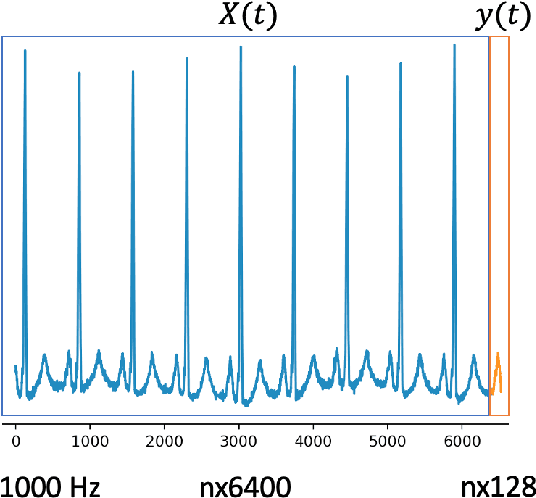
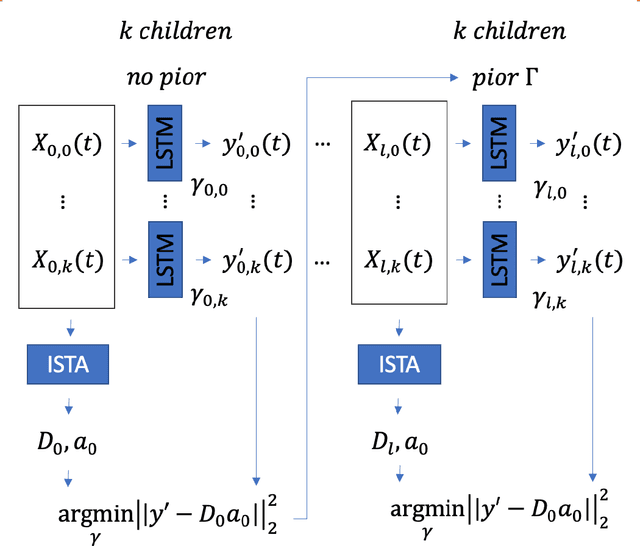
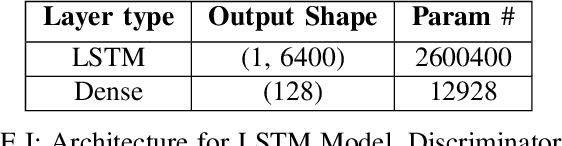
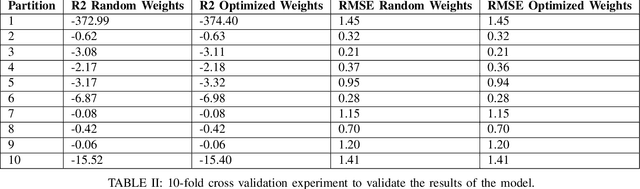
In this work, we highlight our novel evolutionary sparse time-series forecasting algorithm also known as EvoSTS. The algorithm attempts to evolutionary prioritize weights of Long Short-Term Memory (LSTM) Network that best minimize the reconstruction loss of a predicted signal using a learned sparse coded dictionary. In each generation of our evolutionary algorithm, a set number of children with the same initial weights are spawned. Each child undergoes a training step and adjusts their weights on the same data. Due to stochastic back-propagation, the set of children has a variety of weights with different levels of performance. The weights that best minimize the reconstruction loss with a given signal dictionary are passed to the next generation. The predictions from the best-performing weights of the first and last generation are compared. We found improvements while comparing the weights of these two generations. However, due to several confounding parameters and hyperparameter limitations, some of the weights had negligible improvements. To the best of our knowledge, this is the first attempt to use sparse coding in this way to optimize time series forecasting model weights, such as those of an LSTM network.
Early Diagnostic Prediction of Covid-19 using Gradient-Boosting Machine Model
Oct 19, 2021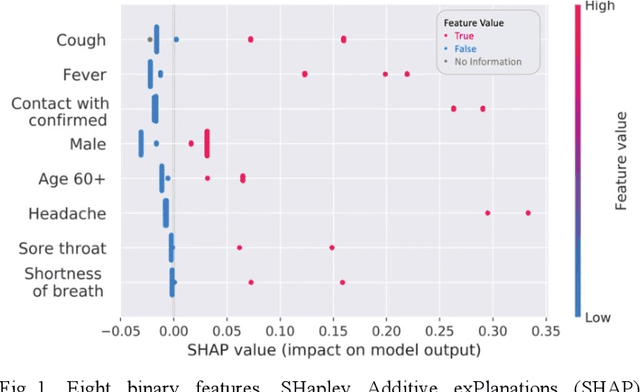
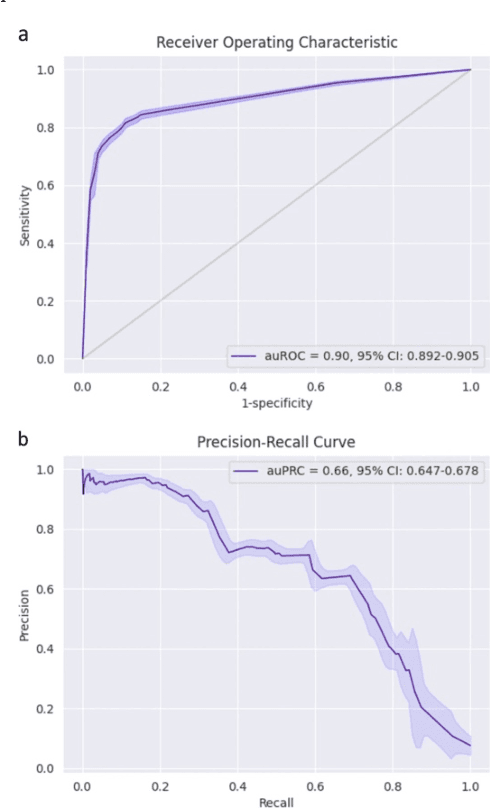
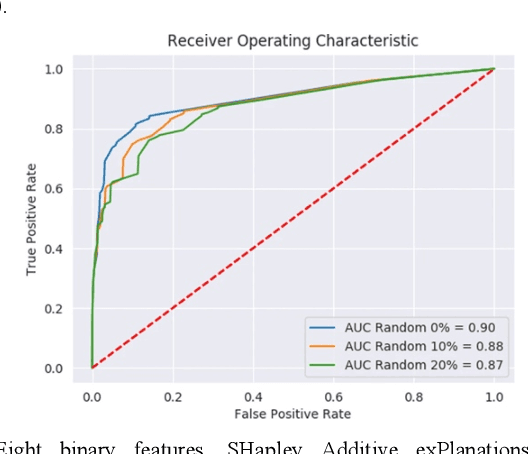
With the huge spike in the COVID-19 cases across the globe and reverse transcriptase-polymerase chain reaction (RT-PCR) test remains a key component for rapid and accurate detection of severe acute respiratory syndrome coronavirus 2 (SARS-CoV-2). In recent months there has been an acute shortage of medical supplies in developing countries, especially a lack of RT-PCR testing resulting in delayed patient care and high infection rates. We present a gradient-boosting machine model that predicts the diagnostics result of SARS-CoV- 2 in an RT-PCR test by utilizing eight binary features. We used the publicly available nationwide dataset released by the Israeli Ministry of Health.