 Add to Chrome
 Add to Firefox
 Add to Edge
Long-Horizon Plan Execution in Large Tool Spaces through Entropy-Guided Branching
Apr 13, 2026
Large Language Models (LLMs) have significantly advanced tool-augmented agents, enabling autonomous reasoning via API interactions. However, executing multi-step tasks within massive tool libraries remains challenging due to two critical bottlenecks: (1) the absence of rigorous, plan-level evaluation frameworks and (2) the computational demand of exploring vast decision spaces stemming from large toolsets and long-horizon planning. To bridge these gaps, we first introduce SLATE (Synthetic Large-scale API Toolkit for E-commerce), a large-scale context-aware benchmark designed for the automated assessment of tool-integrated agents. Unlike static metrics, SLATE accommodates diverse yet functionally valid execution trajectories, revealing that current agents struggle with self-correction and search efficiency. Motivated by these findings, we next propose Entropy-Guided Branching (EGB), an uncertainty-aware search algorithm that dynamically expands decision branches where predictive entropy is high. EGB optimizes the exploration-exploitation trade-off, significantly enhancing both task success rates and computational efficiency. Extensive experiments on SLATE demonstrate that our dual contribution provides a robust foundation for developing reliable and scalable LLM agents in tool-rich environments.

Value of Information in Probabilistic Logic Programs
Sep 18, 2019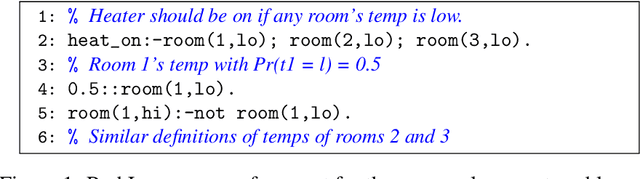
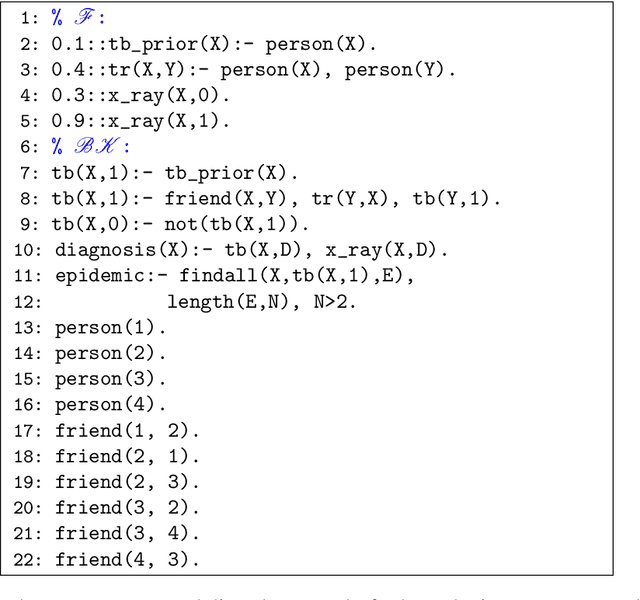
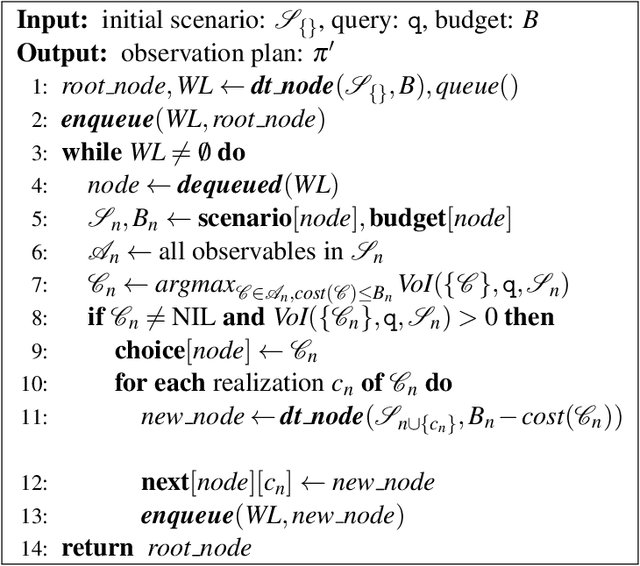
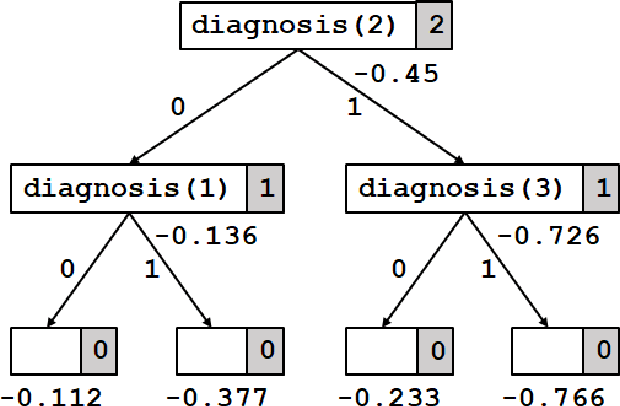
In medical decision making, we have to choose among several expensive diagnostic tests such that the certainty about a patient's health is maximized while remaining within the bounds of resources like time and money. The expected increase in certainty in the patient's condition due to performing a test is called the value of information (VoI) for that test. In general, VoI relates to acquiring additional information to improve decision-making based on probabilistic reasoning in an uncertain system. This paper presents a framework for acquiring information based on VoI in uncertain systems modeled as Probabilistic Logic Programs (PLPs). Optimal decision-making in uncertain systems modeled as PLPs have already been studied before. But, acquiring additional information to further improve the results of making the optimal decision has remained open in this context. We model decision-making in an uncertain system with a PLP and a set of top-level queries, with a set of utility measures over the distributions of these queries. The PLP is annotated with a set of atoms labeled as "observable"; in the medical diagnosis example, the observable atoms will be results of diagnostic tests. Each observable atom has an associated cost. This setting of optimally selecting observations based on VoI is more general than that considered by any prior work. Given a limited budget, optimally choosing observable atoms based on VoI is intractable in general. We give a greedy algorithm for constructing a "conditional plan" of observations: a schedule where the selection of what atom to observe next depends on earlier observations. We show that, preempting the algorithm anytime before completion provides a usable result, the result improves over time, and, in the absence of a well-defined budget, converges to the optimal solution.
* In Proceedings ICLP 2019, arXiv:1909.07646