 Add to Chrome
 Add to Firefox
 Add to Edge
Text2Arch: A Dataset for Generating Scientific Architecture Diagrams from Natural Language Descriptions
Apr 16, 2026
Communicating complex system designs or scientific processes through text alone is inefficient and prone to ambiguity. A system that automatically generates scientific architecture diagrams from text with high semantic fidelity can be useful in multiple applications like enterprise architecture visualization, AI-driven software design, and educational content creation. Hence, in this paper, we focus on leveraging language models to perform semantic understanding of the input text description to generate intermediate code that can be processed to generate high-fidelity architecture diagrams. Unfortunately, no clean large-scale open-access dataset exists, implying lack of any effective open models for this task. Hence, we contribute a comprehensive dataset, \system, comprising scientific architecture images, their corresponding textual descriptions, and associated DOT code representations. Leveraging this resource, we fine-tune a suite of small language models, and also perform in-context learning using GPT-4o. Through extensive experimentation, we show that \system{} models significantly outperform existing baseline models like DiagramAgent and perform at par with in-context learning-based generations from GPT-4o. We make the code, data and models publicly available.

Rethinking Robustness of Model Attributions
Dec 16, 2023

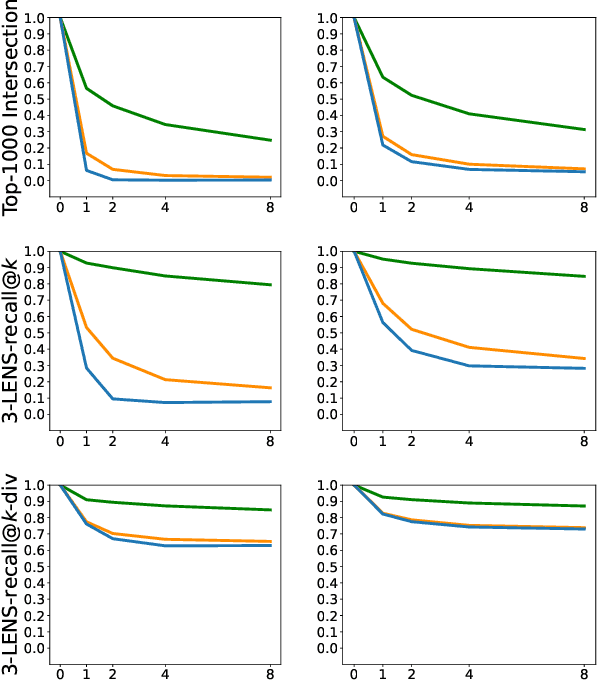
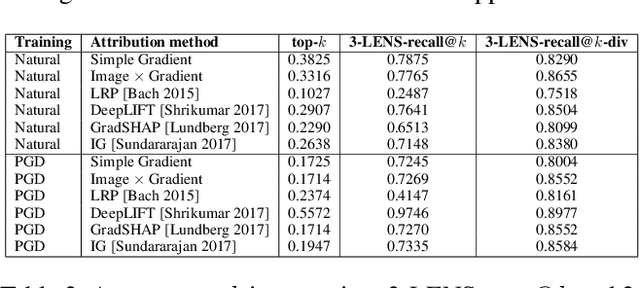
For machine learning models to be reliable and trustworthy, their decisions must be interpretable. As these models find increasing use in safety-critical applications, it is important that not just the model predictions but also their explanations (as feature attributions) be robust to small human-imperceptible input perturbations. Recent works have shown that many attribution methods are fragile and have proposed improvements in either these methods or the model training. We observe two main causes for fragile attributions: first, the existing metrics of robustness (e.g., top-k intersection) over-penalize even reasonable local shifts in attribution, thereby making random perturbations to appear as a strong attack, and second, the attribution can be concentrated in a small region even when there are multiple important parts in an image. To rectify this, we propose simple ways to strengthen existing metrics and attribution methods that incorporate locality of pixels in robustness metrics and diversity of pixel locations in attributions. Towards the role of model training in attributional robustness, we empirically observe that adversarially trained models have more robust attributions on smaller datasets, however, this advantage disappears in larger datasets. Code is available at https://github.com/ksandeshk/LENS.