 Add to Chrome
 Add to Firefox
 Add to Edge
Community-Led AI Integration for Wildfire Risk Assessment: A Participatory AI Literacy and Explainability Integration (PALEI) Framework in Los Angeles, CA
Apr 20, 2026
Climate-driven wildfires are intensifying, particularly in urban regions such as Southern California. Yet, traditional fire risk communication tools often fail to gain public trust due to inaccessible design, non-transparent outputs, and limited contextual relevance. These challenges are especially critical in high-risk communities, where trust depends on how clearly and locally information is presented. Neighborhoods such as Pacific Palisades, Pasadena, and Altadena in Los Angeles exemplify these conditions. This study introduces a community-led approach for integrating AI into wildfire risk assessment using the Participatory AI Literacy and Explainability Integration (PALEI) framework. PALEI emphasizes early literacy building, value alignment, and participatory evaluation before deploying predictive models, prioritizing clarity, accessibility, and mutual learning between developers and residents. Early engagement findings show strong acceptance of visual, context-specific risk communication, positive fairness perceptions, and clear adoption interest, alongside privacy and data security concerns that influence trust. Participants emphasized localized imagery, accessible explanations, neighborhood-specific mitigation guidance, and transparent communication of uncertainty. The outcome is a mobile application co-designed with users and stakeholders, enabling residents to scan visible property features and receive interpretable fire risk scores with tailored recommendations. By embedding local context into design, the tool becomes an everyday resource for risk awareness and preparedness. This study argues that user experience is central to ethical and effective AI deployment and provides a replicable, literacy-first pathway for applying the PALEI framework to climate-related hazards.

Real-Time Bus Departure Prediction Using Neural Networks for Smart IoT Public Bus Transit
Jan 17, 2025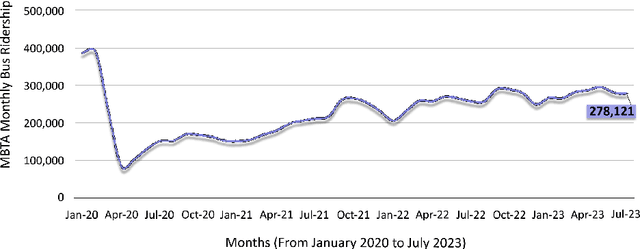

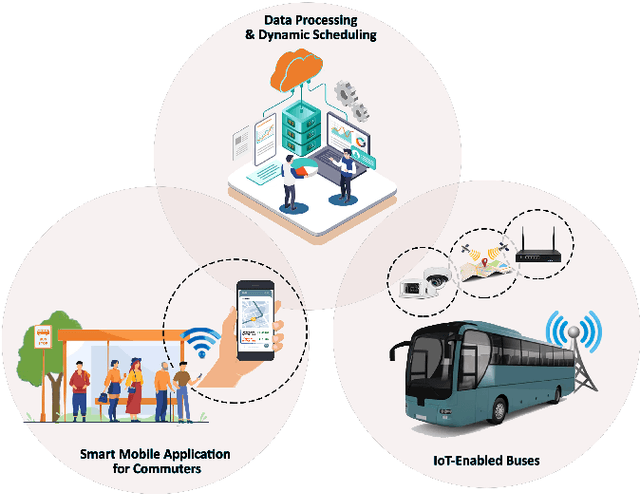

Bus transit plays a vital role in urban public transportation but often struggles to provide accurate and reliable departure times. This leads to delays, passenger dissatisfaction, and decreased ridership, particularly in transit-dependent areas. A major challenge lies in the discrepancy between actual and scheduled bus departure times, which disrupts timetables and impacts overall operational efficiency. To address these challenges, this paper presents a neural network-based approach for real-time bus departure time prediction tailored for smart IoT public transit applications. We leverage AI-driven models to enhance the accuracy of bus schedules by preprocessing data, engineering relevant features, and implementing a fully connected neural network that utilizes historical departure data to predict departure times at subsequent stops. In our case study analyzing bus data from Boston, we observed an average deviation of nearly 4 minutes from scheduled times. However, our model, evaluated across 151 bus routes, demonstrates a significant improvement, predicting departure time deviations with an accuracy of under 80 seconds. This advancement not only improves the reliability of bus transit schedules but also plays a crucial role in enabling smart bus systems and IoT applications within public transit networks. By providing more accurate real-time predictions, our approach can facilitate the integration of IoT devices, such as smart bus stops and passenger information systems, that rely on precise data for optimal performance.
A Novel Neural Network Approach for Predicting the Arrival Time of Buses for Smart On-Demand Public Transit
Mar 27, 2023Among the major public transportation systems in cities, bus transit has its problems, including more accuracy and reliability when estimating the bus arrival time for riders. This can lead to delays and decreased ridership, especially in cities where public transportation is heavily relied upon. A common issue is that the arrival times of buses do not match the schedules, resulting in latency for fixed schedules. According to the study in this paper on New York City bus data, there is an average delay of around eight minutes or 491 seconds mismatch between the bus arrivals and the actual scheduled time. This research paper presents a novel AI-based data-driven approach for estimating the arrival times of buses at each transit point (station). Our approach is based on a fully connected neural network and can predict the arrival time collectively across all bus lines in large metropolitan areas. Our neural-net data-driven approach provides a new way to estimate the arrival time of the buses, which can lead to a more efficient and smarter way to bring the bus transit to the general public. Our evaluation of the network bus system with more than 200 bus lines, and 2 million data points, demonstrates less than 40 seconds of estimated error for arrival times. The inference time per each validation set data point is less than 0.006 ms.