 Add to Chrome
 Add to Firefox
 Add to Edge
Addressable Recall Compaction for Long Context-Window Control in AI Agents
Jul 27, 2026
Long-horizon LLM agents accumulate reasoning traces, actions, and tool observations that can eventually exceed a model's fixed context window. Existing compaction methods address this limitation by discarding, summarizing, or retrieving earlier information, but they may remove task-critical details or fail to recover them reliably. We propose ARC (Addressable Recall Compaction), a context-management framework that separates archival storage from active-context presentation. ARC stores tool observations in an append-only, ID-addressable log and replaces older observations with compact citations when compaction is required. The agent can subsequently use these identifiers to request stored content without re-executing the corresponding tools or depending solely on similarity-based retrieval. We evaluate ARC using Qwen3-8B with a 16k context window and Qwen3-32B with a 32k context window. On the Needle-in-a-Haystack evaluation, ARC achieves an average exact-answer accuracy of 99.40%, compared with 88.12% for the best-performing baseline in our evaluation. ARC also reduces estimated serving time and HBM traffic under our hardware-cost model. On the LongBench-v2 Hard subset, ARC obtains an average accuracy of 29.97%, compared with 28.25% for the best-performing baseline. These results indicate that explicit, address-based recall can improve information retention and serving efficiency relative to the evaluated context-management baselines under the tested settings.

Towards Neural Synthesis for SMT-Assisted Proof-Oriented Programming
May 03, 2024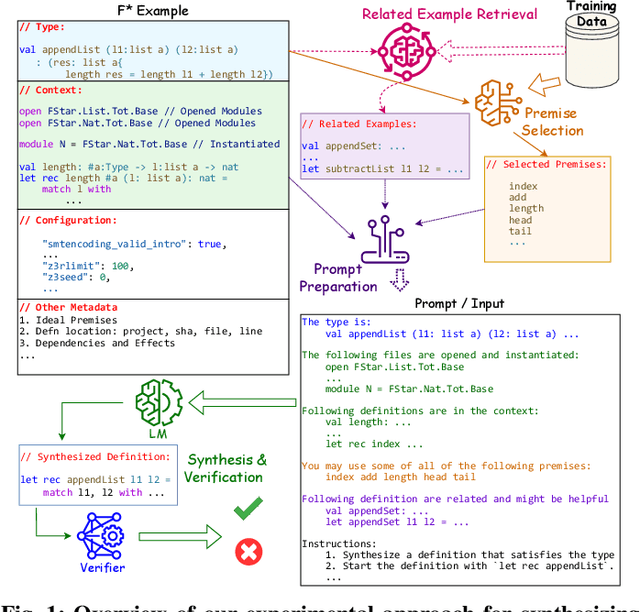
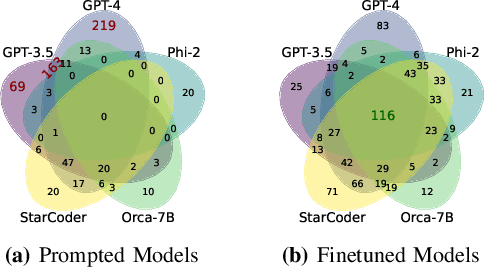
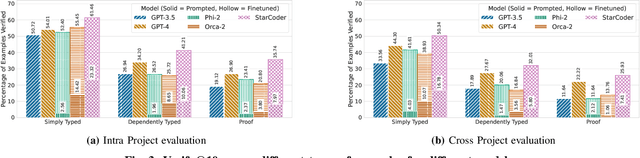
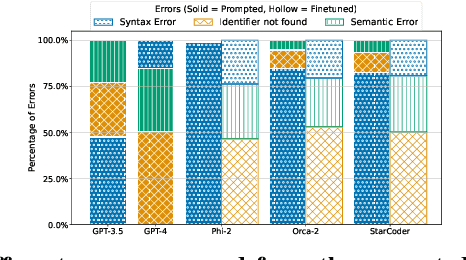
Proof-oriented programs mix computational content with proofs of program correctness. However, the human effort involved in programming and proving is still substantial, despite the use of Satisfiability Modulo Theories (SMT) solvers to automate proofs in languages such as F*. Seeking to spur research on using AI to automate the construction of proof-oriented programs, we curate a dataset of 600K lines of open-source F* programs and proofs, including software used in production systems ranging from Windows and Linux, to Python and Firefox. Our dataset includes around 32K top-level F* definitions, each representing a type-directed program and proof synthesis problem -- producing a definition given a formal specification expressed as an F* type. We provide a program-fragment checker that queries F* to check the correctness of candidate solutions. We believe this is the largest corpus of SMT-assisted program proofs coupled with a reproducible program-fragment checker. Grounded in this dataset, we investigate the use of AI to synthesize programs and their proofs in F*, with promising results. Our main finding in that the performance of fine-tuned smaller language models (such as Phi-2 or StarCoder) compare favorably with large language models (such as GPT-4), at a much lower computational cost. We also identify various type-based retrieval augmentation techniques and find that they boost performance significantly. With detailed error analysis and case studies, we identify potential strengths and weaknesses of models and techniques and suggest directions for future improvements.
Black-Box Prediction of Flaky Test Fix Categories Using Language Models
Jun 21, 2023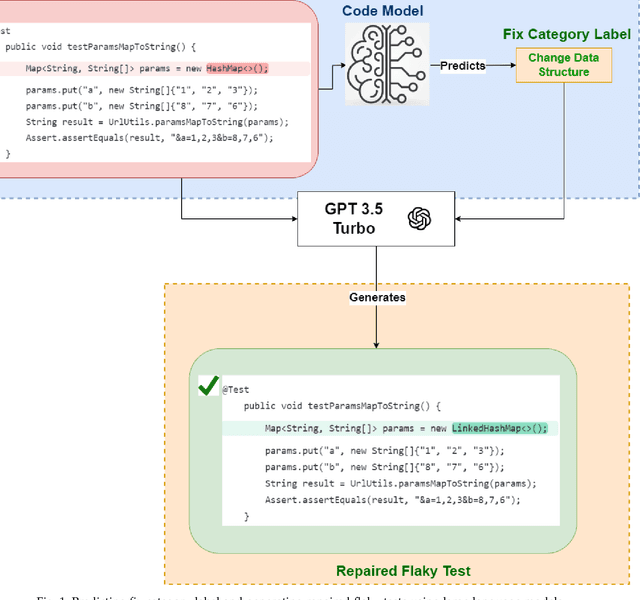
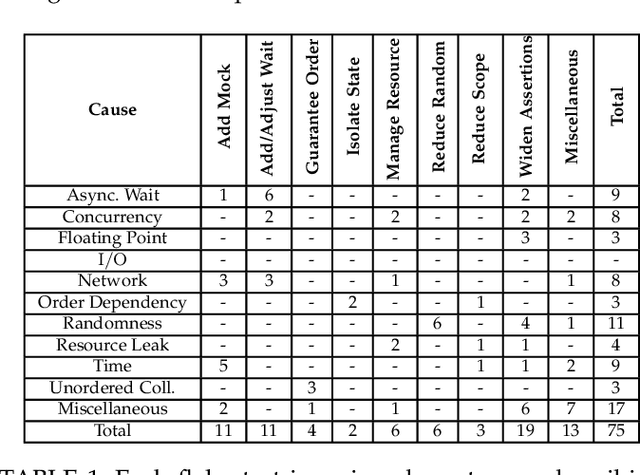
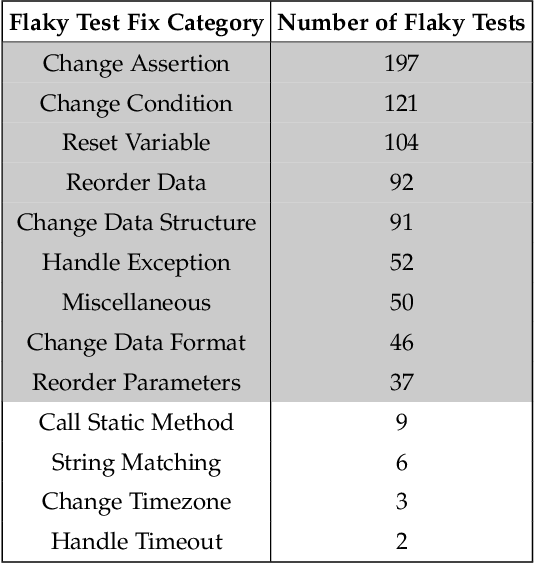

Flaky tests are problematic because they non-deterministically pass or fail for the same software version under test, causing confusion and wasting developer time. While machine learning models have been used to predict flakiness and its root causes, there is less work on providing support to fix the problem. To address this gap, we propose a framework that automatically generates labeled datasets for 13 fix categories and train models to predict the fix category of a flaky test by analyzing the test code only. Though it is unrealistic at this stage to accurately predict the fix itself, the categories provide precise guidance about what part of the test code to look at. Our approach is based on language models, namely CodeBERT and UniXcoder, whose output is fine-tuned with a Feed Forward Neural Network (FNN) or a Siamese Network-based Few Shot Learning (FSL). Our experimental results show that UniXcoder outperforms CodeBERT, in correctly predicting most of the categories of fixes a developer should apply. Furthermore, FSL does not appear to have any significant effect. Given the high accuracy obtained for most fix categories, our proposed framework has the potential to help developers to fix flaky tests quickly and accurately.To aid future research, we make our automated labeling tool, dataset, prediction models, and experimental infrastructure publicly available.