 Add to Chrome
 Add to Firefox
 Add to Edge
Omnilingual ASR: Open-Source Multilingual Speech Recognition for 1600+ Languages
Nov 12, 2025
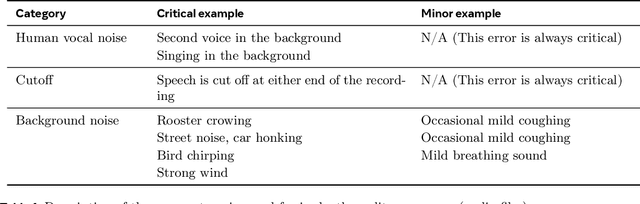
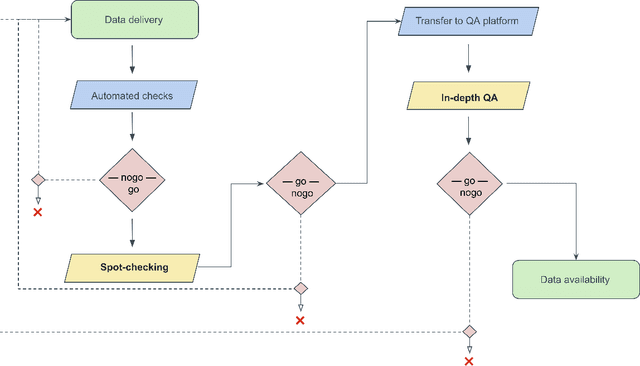
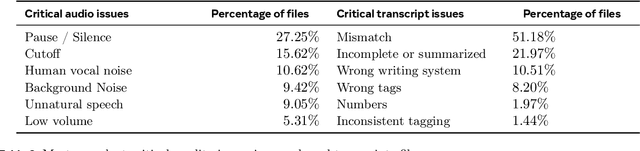
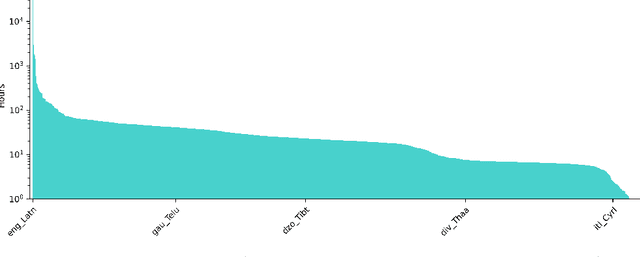
Automatic speech recognition (ASR) has advanced in high-resource languages, but most of the world's 7,000+ languages remain unsupported, leaving thousands of long-tail languages behind. Expanding ASR coverage has been costly and limited by architectures that restrict language support, making extension inaccessible to most--all while entangled with ethical concerns when pursued without community collaboration. To transcend these limitations, we introduce Omnilingual ASR, the first large-scale ASR system designed for extensibility. Omnilingual ASR enables communities to introduce unserved languages with only a handful of data samples. It scales self-supervised pre-training to 7B parameters to learn robust speech representations and introduces an encoder-decoder architecture designed for zero-shot generalization, leveraging a LLM-inspired decoder. This capability is grounded in a massive and diverse training corpus; by combining breadth of coverage with linguistic variety, the model learns representations robust enough to adapt to unseen languages. Incorporating public resources with community-sourced recordings gathered through compensated local partnerships, Omnilingual ASR expands coverage to over 1,600 languages, the largest such effort to date--including over 500 never before served by ASR. Automatic evaluations show substantial gains over prior systems, especially in low-resource conditions, and strong generalization. We release Omnilingual ASR as a family of models, from 300M variants for low-power devices to 7B for maximum accuracy. We reflect on the ethical considerations shaping this design and conclude by discussing its societal impact. In particular, we highlight how open-sourcing models and tools can lower barriers for researchers and communities, inviting new forms of participation. Open-source artifacts are available at https://github.com/facebookresearch/omnilingual-asr.

EgoBlur: Responsible Innovation in Aria
Sep 06, 2023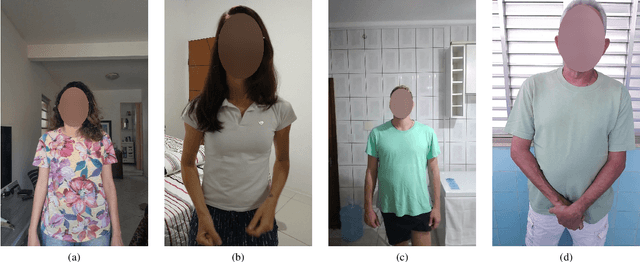
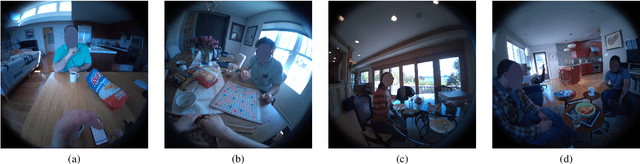
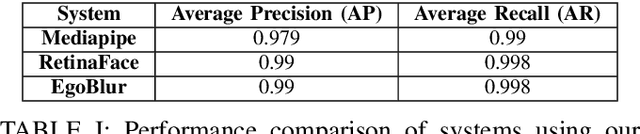

Project Aria pushes the frontiers of Egocentric AI with large-scale real-world data collection using purposely designed glasses with privacy first approach. To protect the privacy of bystanders being recorded by the glasses, our research protocols are designed to ensure recorded video is processed by an AI anonymization model that removes bystander faces and vehicle license plates. Detected face and license plate regions are processed with a Gaussian blur such that these personal identification information (PII) regions are obscured. This process helps to ensure that anonymized versions of the video is retained for research purposes. In Project Aria, we have developed a state-of-the-art anonymization system EgoBlur. In this paper, we present extensive analysis of EgoBlur on challenging datasets comparing its performance with other state-of-the-art systems from industry and academia including extensive Responsible AI analysis on recently released Casual Conversations V2 dataset.