 Add to Chrome
 Add to Firefox
 Add to Edge
A medical coding language model trained on clinical narratives from a population-wide cohort of 1.8 million patients
Mar 03, 2026
Medical coding translates clinical documentation into standardized codes for billing, research, and public health, but manual coding is time-consuming and error-prone. Existing automation efforts rely on small datasets that poorly represent real-world patient heterogeneity. We trained a language model on 5.8 million electronic health records from 1.8 million patients across nearly all specialties in Eastern Denmark (2006--2016) to predict ICD-10 codes from clinical notes, medications, and laboratory results. Evaluated on 270,000 held-out patients, the model achieved a micro F1 of 71.8% and a top-10 recall of 95.5%. Performance varied by specialty (F1: 53--91%), with higher scores in specialties with well-defined diagnostic criteria. Codes appearing predominantly as secondary diagnoses had markedly lower F1 scores. For three such codes (suicide-related behaviors, weight disorders, and hypertension), the model identified thousands of uncoded cases, of which 76-86% were confirmed valid upon manual review, suggesting systematic under-coding rather than model error. These findings suggest under-coding of secondary diagnoses in Eastern Denmark during this period, with potential implications for epidemiological research, public health surveillance, and understanding of multimorbidity. Similar time constraints and reimbursement structures in other healthcare systems suggest this may not be isolated to this dataset. The model can automate coding for approximately 50% of cases and provide accurate suggestions for most others, and may offer a practical solution to help capture missed secondary conditions.

Implementing a Nordic-Baltic Federated Health Data Network: a case report
Sep 26, 2024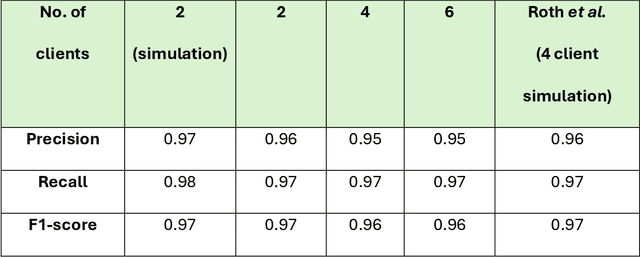
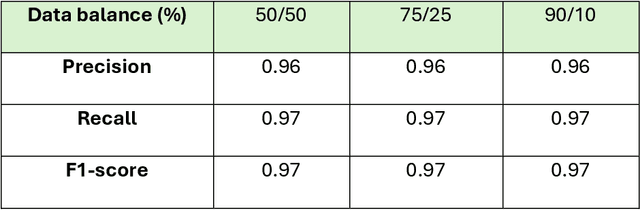
Background: Centralized collection and processing of healthcare data across national borders pose significant challenges, including privacy concerns, data heterogeneity and legal barriers. To address some of these challenges, we formed an interdisciplinary consortium to develop a feder-ated health data network, comprised of six institutions across five countries, to facilitate Nordic-Baltic cooperation on secondary use of health data. The objective of this report is to offer early insights into our experiences developing this network. Methods: We used a mixed-method ap-proach, combining both experimental design and implementation science to evaluate the factors affecting the implementation of our network. Results: Technically, our experiments indicate that the network functions without significant performance degradation compared to centralized simu-lation. Conclusion: While use of interdisciplinary approaches holds a potential to solve challeng-es associated with establishing such collaborative networks, our findings turn the spotlight on the uncertain regulatory landscape playing catch up and the significant operational costs.