 Add to Chrome
 Add to Firefox
 Add to Edge
FocalLens: Visualizing Narratives through Focalization
Apr 15, 2026
Visualizing narratives is useful to writers to reflect on unfinished drafts and identify unintentional biases and inconsistencies. Literary scholars can use the visualizations to identify nuanced patterns and literary styles from written text. Current narrative visualization is limited to representing character and location co-occurrences in a timeline, omitting important and complex narrative components such as focalization, causality, and speech. This paper aims to capture and visualize underexplored, complex narrative components as a basis for narrative visualization. As a starting point, we propose a new narrative visualization, named FocalLens, that uses focalization, the component that establishes who sees or perceives the events in a narrative, for representing the narrative. We provide the theoretical foundation of focalization and describe various types and facets of focalization. The details are incorporated in the novel visualization that captures how different characters perceive an event, who directly participate in an event, who indirectly observe the event, and who narrate the event. We also developed a tool that provides fluid interaction between the text and the proposed visualization. The tool was evaluated with four writers and scholars in a qualitative study, where writers analyzed their draft stories and scholars analyzed well-known stories. The findings suggest the tool added a new dimension to the workflow for writers and scholars, an analytical lens that is not available otherwise. We conclude by identifying design implications and future directions.

Freezing of Gait Detection Using Gramian Angular Fields and Federated Learning from Wearable Sensors
Nov 19, 2024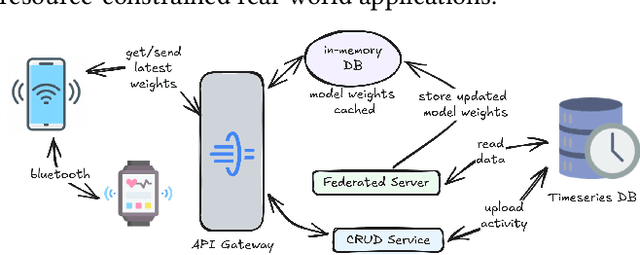
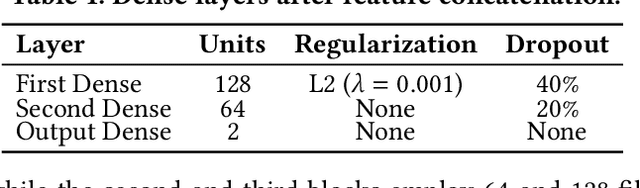
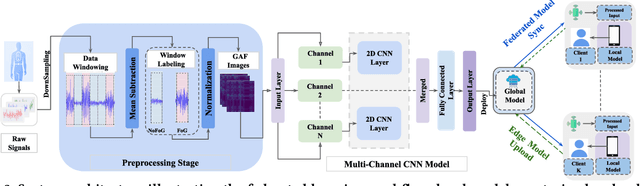
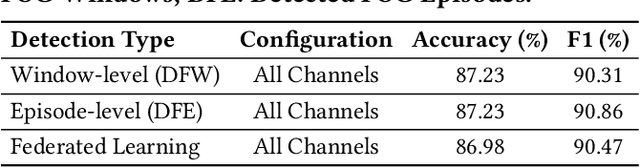
Freezing of gait (FOG) is a debilitating symptom of Parkinson's disease (PD) that impairs mobility and safety. Traditional detection methods face challenges due to intra and inter-patient variability, and most systems are tested in controlled settings, limiting their real-world applicability. Addressing these gaps, we present FOGSense, a novel FOG detection system designed for uncontrolled, free-living conditions. It uses Gramian Angular Field (GAF) transformations and federated deep learning to capture temporal and spatial gait patterns missed by traditional methods. We evaluated our FOGSense system using a public PD dataset, 'tdcsfog'. FOGSense improves accuracy by 10.4% over a single-axis accelerometer, reduces failure points compared to multi-sensor systems, and demonstrates robustness to missing values. The federated architecture allows personalized model adaptation and efficient smartphone synchronization during off-peak hours, making it effective for long-term monitoring as symptoms evolve. Overall, FOGSense achieves a 22.2% improvement in F1-score compared to state-of-the-art methods, along with enhanced sensitivity for FOG episode detection. Code is available: https://github.com/shovito66/FOGSense.