 Add to Chrome
 Add to Firefox
 Add to Edge
TornadoNet: Real-Time Building Damage Detection with Ordinal Supervision
Mar 12, 2026
We present TornadoNet, a comprehensive benchmark for automated street-level building damage assessment evaluating how modern real-time object detection architectures and ordinal-aware supervision strategies perform under realistic post-disaster conditions. TornadoNet provides the first controlled benchmark demonstrating how architectural design and loss formulation jointly influence multi-level damage detection from street-view imagery, delivering methodological insights and deployable tools for disaster response. Using 3,333 high-resolution geotagged images and 8,890 annotated building instances from the 2021 Midwest tornado outbreak, we systematically compare CNN-based detectors from the YOLO family against transformer-based models (RT-DETR) for multi-level damage detection. Models are trained under standardized protocols using a five-level damage classification framework based on IN-CORE damage states, validated through expert cross-annotation. Baseline experiments reveal complementary architectural strengths. CNN-based YOLO models achieve highest detection accuracy and throughput, with larger variants reaching 46.05% mAP@0.5 at 66-276 FPS on A100 GPUs. Transformer-based RT-DETR models exhibit stronger ordinal consistency, achieving 88.13% Ordinal Top-1 Accuracy and MAOE of 0.65, indicating more reliable severity grading despite lower baseline mAP. To align supervision with the ordered nature of damage severity, we introduce soft ordinal classification targets and evaluate explicit ordinal-distance penalties. RT-DETR trained with calibrated ordinal supervision achieves 44.70% mAP@0.5, a 4.8 percentage-point improvement, with gains in ordinal metrics (91.15% Ordinal Top-1 Accuracy, MAOE = 0.56). These findings establish that ordinal-aware supervision improves damage severity estimation when aligned with detector architecture. Model & Data: https://github.com/crumeike/TornadoNet

Partial-Attribution Instance Segmentation for Astronomical Source Detection and Deblending
Jan 12, 2022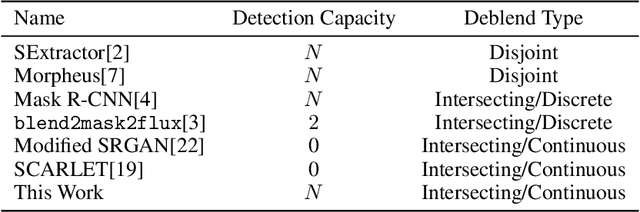
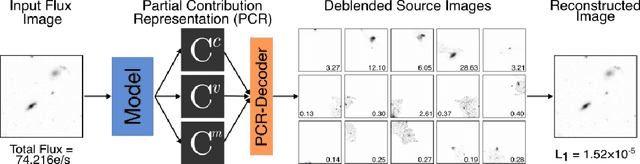
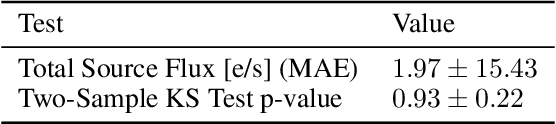
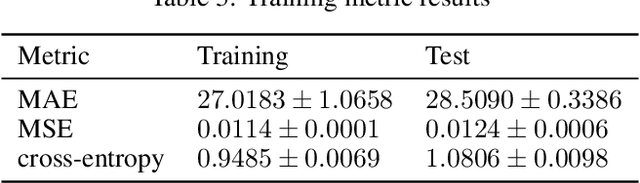
Astronomical source deblending is the process of separating the contribution of individual stars or galaxies (sources) to an image comprised of multiple, possibly overlapping sources. Astronomical sources display a wide range of sizes and brightnesses and may show substantial overlap in images. Astronomical imaging data can further challenge off-the-shelf computer vision algorithms owing to its high dynamic range, low signal-to-noise ratio, and unconventional image format. These challenges make source deblending an open area of astronomical research, and in this work, we introduce a new approach called Partial-Attribution Instance Segmentation that enables source detection and deblending in a manner tractable for deep learning models. We provide a novel neural network implementation as a demonstration of the method.
Morpheus: A Deep Learning Framework For Pixel-Level Analysis of Astronomical Image Data
Jun 26, 2019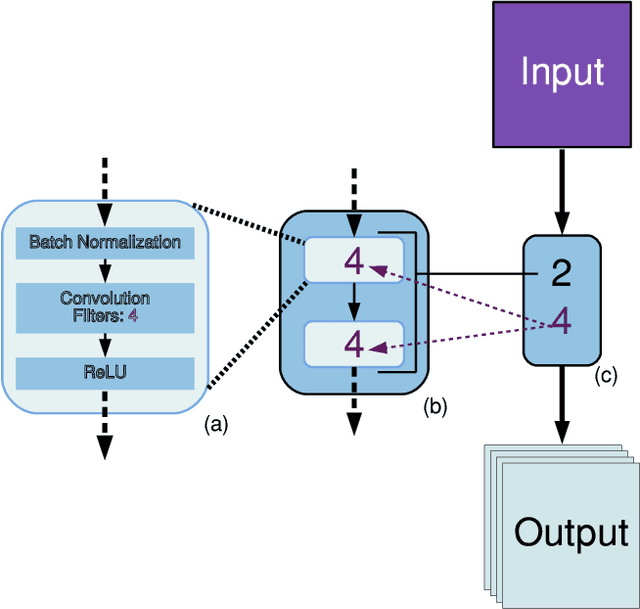
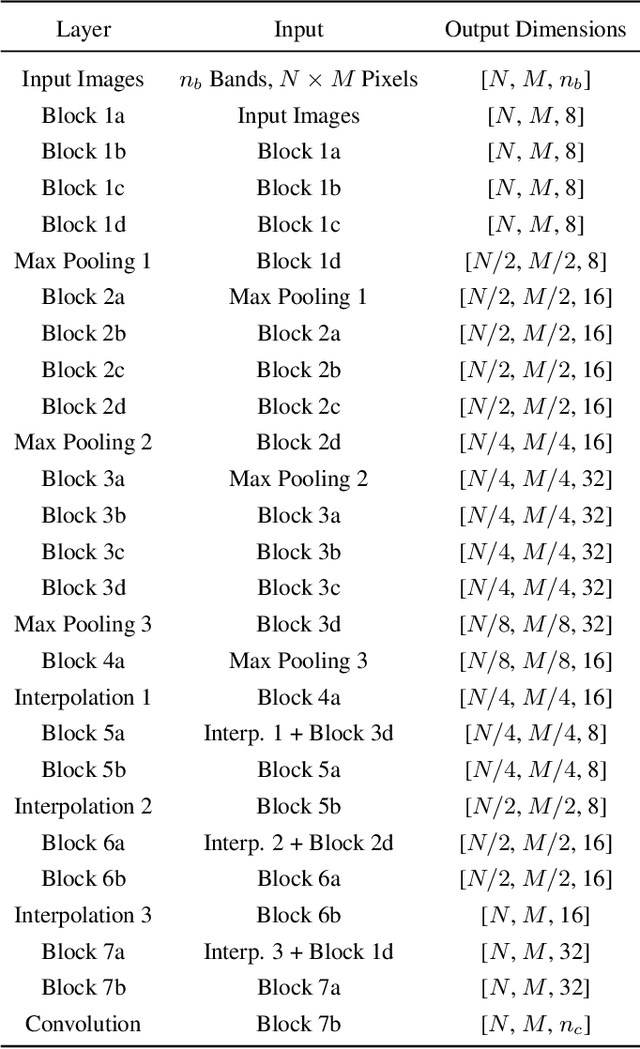
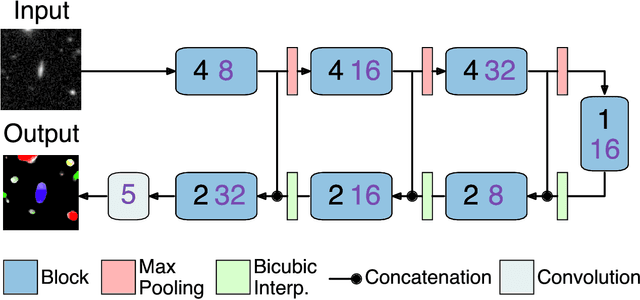
We present Morpheus, a new model for generating pixel level morphological classifications of astronomical sources. Morpheus leverages advances in deep learning to perform source detection, source segmentation, and morphological classification pixel-by-pixel via a semantic segmentation algorithm adopted from the field of computer vision. By utilizing morphological information about the flux of real astronomical sources during object detection, Morpheus shows resiliency to false positive identifications of sources. We evaluate Morpheus by performing source detection, source segmentation, morphological classification on the Hubble Space Telescope data in the GOODS South field, and demonstrate a high completeness in recovering known 3D-HST sources with H<26 AB. We release the code publicly, provide online demonstrations, and present an interactive visualization of the Morpheus results in GOODS South.