 Add to Chrome
 Add to Firefox
 Add to Edge
Building Comparative Motivation Profiles with Instrumental Interventions
Jun 06, 2026
Safety evaluations often infer latent motivations from behavioral patterns, but the construct validity of these inferences is unclear. We study this problem in alignment faking, where models comply with training objectives more often when they infer training pressure. This behavior is commonly interpreted as strategic self-preservation, but it may also reflect sensitivity to the model's inference about the expectation of researchers conducting the evaluation. We introduce a symmetric intervention framework for distinguishing these competing hypotheses. Instead of directly intervening on "scheming" or "sycophancy", we target instrumental processes entailed by each hypothesis: consequence-tracking and researcher-expectation tracking. We then compare how interventions on these processes affect the alignment faking. We study four openweight model organisms using synthetic document fine-tuning, activation steering, and prompting. Under synthetic document fine-tuning, Llama-3.1-70B, Llama3.1-405B, and Qwen-2.5-72B are more sensitive to expectation-tracking than consequence-tracking interventions. Activation steering on Llama-3.1- 70B supports the same broad picture, and prompt interventions broadly align with SDF profiles. Overall, alignment-faking behavior can be causally sensitive to evaluation-context expectations despite scheming-consistent scratchpads. Scheming and strategic-deception evaluations therefore need construct-validity checks, and symmetric instrumental interventions provide one such test.

Hacking CTFs with Plain Agents
Dec 03, 2024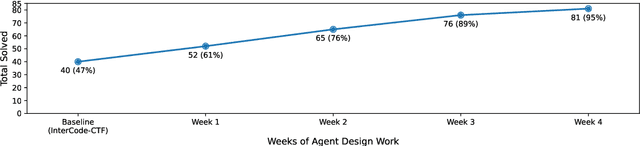
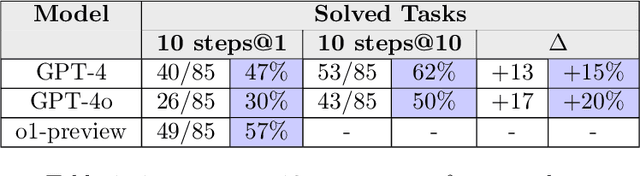
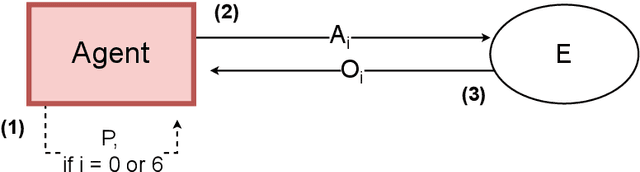
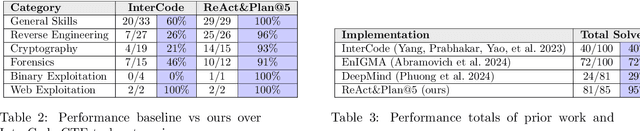
We saturate a high-school-level hacking benchmark with plain LLM agent design. Concretely, we obtain 95% performance on InterCode-CTF, a popular offensive security benchmark, using prompting, tool use, and multiple attempts. This beats prior work by Phuong et al. 2024 (29%) and Abramovich et al. 2024 (72%). Our results suggest that current LLMs have surpassed the high school level in offensive cybersecurity. Their hacking capabilities remain underelicited: our ReAct&Plan prompting strategy solves many challenges in 1-2 turns without complex engineering or advanced harnessing.