 Add to Chrome
 Add to Firefox
 Add to Edge
Computing the Reachability Value of Posterior-Deterministic POMDPs
Feb 07, 2026
Partially observable Markov decision processes (POMDPs) are a fundamental model for sequential decision-making under uncertainty. However, many verification and synthesis problems for POMDPs are undecidable or intractable. Most prominently, the seminal result of Madani et al. (2003) states that there is no algorithm that, given a POMDP and a set of target states, can compute the maximal probability of reaching the target states, or even approximate it up to a non-trivial constant. This is in stark contrast to fully observable Markov decision processes (MDPs), where the reachability value can be computed in polynomial time. In this work, we introduce posterior-deterministic POMDPs, a novel class of POMDPs. Our main technical contribution is to show that for posterior-deterministic POMDPs, the maximal probability of reaching a given set of states can be approximated up to arbitrary precision. A POMDP is posterior-deterministic if the next state can be uniquely determined by the current state, the action taken, and the observation received. While the actual state is generally uncertain in POMDPs, the posterior-deterministic property tells us that once the true state is known it remains known forever. This simple and natural definition includes all MDPs and captures classical non-trivial examples such as the Tiger POMDP (Kaelbling et al. 1998), making it one of the largest known classes of POMDPs for which the reachability value can be approximated.

Simplicial Models for the Epistemic Logic of Faulty Agents
Nov 14, 2023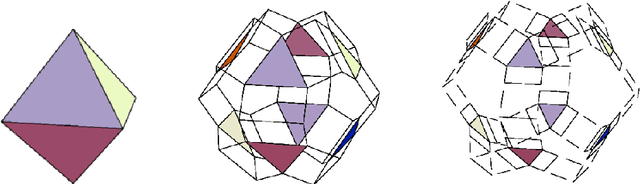
In recent years, several authors have been investigating simplicial models, a model of epistemic logic based on higher-dimensional structures called simplicial complexes. In the original formulation, simplicial models were always assumed to be pure, meaning that all worlds have the same dimension. This is equivalent to the standard S5n semantics of epistemic logic, based on Kripke models. By removing the assumption that models must be pure, we can go beyond the usual Kripke semantics and study epistemic logics where the number of agents participating in a world can vary. This approach has been developed in a number of papers, with applications in fault-tolerant distributed computing where processes may crash during the execution of a system. A difficulty that arises is that subtle design choices in the definition of impure simplicial models can result in different axioms of the resulting logic. In this paper, we classify those design choices systematically, and axiomatize the corresponding logics. We illustrate them via distributed computing examples of synchronous systems where processes may crash.