 Add to Chrome
 Add to Firefox
 Add to Edge
Offshore oil and gas platform dynamics in the North Sea, Gulf of Mexico, and Persian Gulf: Exploiting the Sentinel-1 archive
Mar 20, 2026
The increasing use of marine spaces by offshore infrastructure, including oil and gas platforms, underscores the need for consistent, scalable monitoring. Offshore development has economic, environmental, and regulatory implications, yet maritime areas remain difficult to monitor systematically due to their inaccessibility and spatial extent. This study presents an automated approach to the spatiotemporal detection of offshore oil and gas platforms based on freely available Earth observation data. Leveraging Sentinel-1 archive data and deep learning-based object detection, a consistent quarterly time series of platform locations for three major production regions: the North Sea, the Gulf of Mexico, and the Persian Gulf, was created for the period 2017-2025. In addition, platform size, water depth, distance to the coast, national affiliation, and installation and decommissioning dates were derived. 3,728 offshore platforms were identified in 2025, 356 in the North Sea, 1,641 in the Gulf of Mexico, and 1,731 in the Persian Gulf. While expansion was observed in the Persian Gulf until 2024, the Gulf of Mexico and the North Sea saw a decline in platform numbers from 2018-2020. At the same time, a pronounced dynamic was apparent. More than 2,700 platforms were installed or relocated to new sites, while a comparable number were decommissioned or relocated. Furthermore, the increasing number of platforms with short lifespans points to a structural change in the offshore sector associated with the growing importance of mobile offshore units such as jack-ups or drillships. The results highlighted the potential of freely available Earth observation data and deep learning for consistent, long-term monitoring of marine infrastructure. The derived dataset is public and provides a basis for offshore monitoring, maritime planning, and analyses of the transformation of the offshore energy sector.

Deep learning-based object detection of offshore platforms on Sentinel-1 Imagery and the impact of synthetic training data
Nov 06, 2025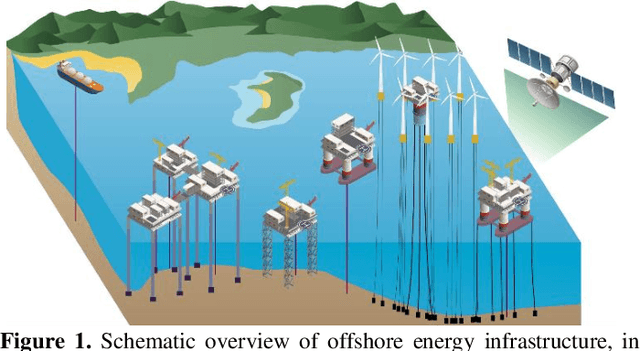
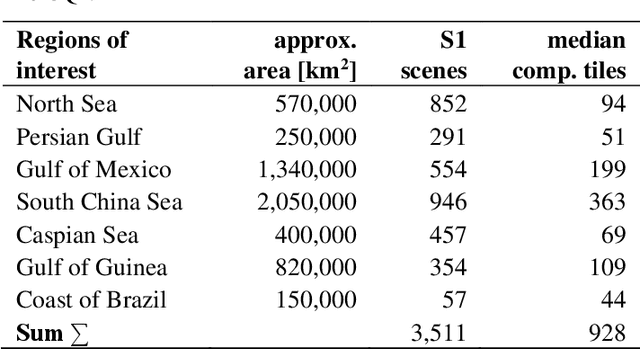
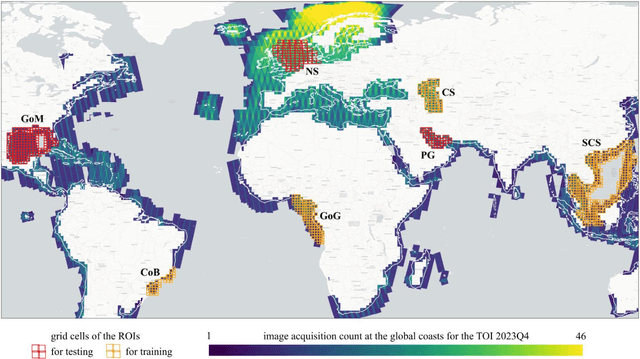

The recent and ongoing expansion of marine infrastructure, including offshore wind farms, oil and gas platforms, artificial islands, and aquaculture facilities, highlights the need for effective monitoring systems. The development of robust models for offshore infrastructure detection relies on comprehensive, balanced datasets, but falls short when samples are scarce, particularly for underrepresented object classes, shapes, and sizes. By training deep learning-based YOLOv10 object detection models with a combination of synthetic and real Sentinel-1 satellite imagery acquired in the fourth quarter of 2023 from four regions (Caspian Sea, South China Sea, Gulf of Guinea, and Coast of Brazil), this study investigates the use of synthetic training data to enhance model performance. We evaluated this approach by applying the model to detect offshore platforms in three unseen regions (Gulf of Mexico, North Sea, Persian Gulf) and thereby assess geographic transferability. This region-holdout evaluation demonstrated that the model generalises beyond the training areas. In total, 3,529 offshore platforms were detected, including 411 in the North Sea, 1,519 in the Gulf of Mexico, and 1,593 in the Persian Gulf. The model achieved an F1 score of 0.85, which improved to 0.90 upon incorporating synthetic data. We analysed how synthetic data enhances the representation of unbalanced classes and overall model performance, taking a first step toward globally transferable detection of offshore infrastructure. This study underscores the importance of balanced datasets and highlights synthetic data generation as an effective strategy to address common challenges in remote sensing, demonstrating the potential of deep learning for scalable, global offshore infrastructure monitoring.