 Add to Chrome
 Add to Firefox
 Add to Edge
Intelligence Impact Quotient (IIQ): A Framework for Measuring Organizational AI Impact
May 14, 2026
The Intelligence Impact Quotient (IIQ) is a composite metric intended to quantify the depth to which AI systems are integrated into organizational work and their impact. Rather than treating access counts or aggregate token volume as sufficient evidence of impact, IIQ combines a novelty-weighted, time-decayed token stock with usage frequency, a grace-period recency gate, organizational leverage, task complexity, and autonomy. The formulation produces a raw Intelligence Adoption Index (IAI) and a normalized 0-1000 IIQ index for comparison between heterogeneous users and units. We also derive sub-daily update rules and a bounded interpretation layer for estimated efficiency and financial impact. The paper positions IIQ as a deployment-oriented measurement framework: a formal proposal for tracking AI embedding in workflows, not a direct measure of model capability or a substitute for causal productivity evaluation. Synthetic scenarios illustrate how the revised metric distinguishes between frequent low-leverage use, semantically repetitive prompting, and more autonomous, higher-consequence AI-assisted work.

Multiple-input, multiple-output modal testing of a Hawk T1A aircraft: A new full-scale dataset for structural health monitoring
Jun 07, 2024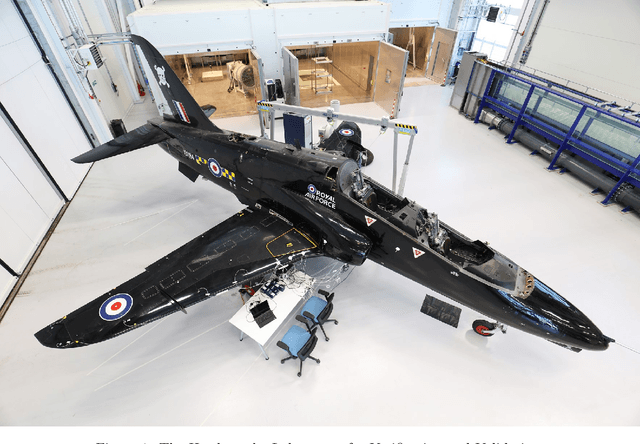
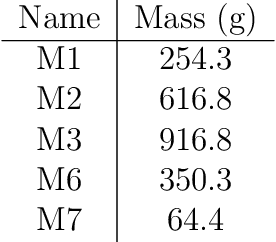
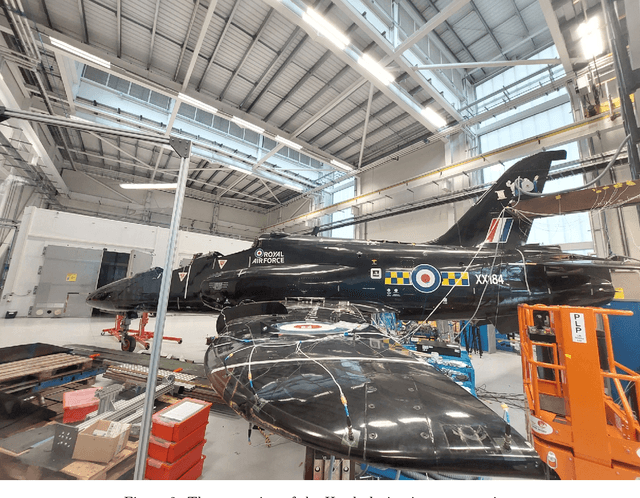
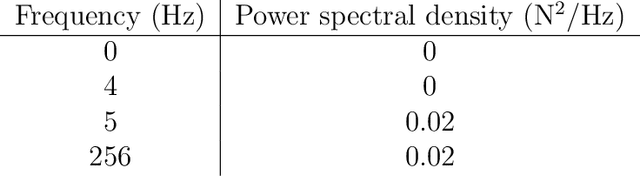
The use of measured vibration data from structures has a long history of enabling the development of methods for inference and monitoring. In particular, applications based on system identification and structural health monitoring have risen to prominence over recent decades and promise significant benefits when implemented in practice. However, significant challenges remain in the development of these methods. The introduction of realistic, full-scale datasets will be an important contribution to overcoming these challenges. This paper presents a new benchmark dataset capturing the dynamic response of a decommissioned BAE Systems Hawk T1A. The dataset reflects the behaviour of a complex structure with a history of service that can still be tested in controlled laboratory conditions, using a variety of known loading and damage simulation conditions. As such, it provides a key stepping stone between simple laboratory test structures and in-service structures. In this paper, the Hawk structure is described in detail, alongside a comprehensive summary of the experimental work undertaken. Following this, key descriptive highlights of the dataset are presented, before a discussion of the research challenges that the data present. Using the dataset, non-linearity in the structure is demonstrated, as well as the sensitivity of the structure to damage of different types. The dataset is highly applicable to many academic enquiries and additional analysis techniques which will enable further advancement of vibration-based engineering techniques.