 Add to Chrome
 Add to Firefox
 Add to Edge
PETRA: Transforming Web Text for Petroleum-Engineering Domain Adaptation
Jun 23, 2026
Petroleum-engineering search exposes a supervision gap for strong general retrievers: relevant evidence exists in public web text, but domain relevance labels are scarce. To address this gap, we propose PETRA, a large-scale Petroleum Engineering Text for Retrieval Adaptation dataset and pipeline that converts noisy public web data into a curated domain corpus and synthetic supervision for dense retrieval and reranking. PETRA contains 1.36M curated chunks, approximately 2B token equivalents, $\approx$859k, embedding training rows from $\approx$224k anchors, and roughly 400k teacher-scored reranker candidate rows. Its construction combines high-recall energy-domain curation, an energy-domain classifier with 98.4% test accuracy, chunk-grounded query generation, LLM-written hard negatives, and retrieval-mined candidate lists. PETRA improves first-stage in-domain Normalized Discounted Cumulative Gain (nDCG) from 0.703 to 0.763 through score fusion. Reranker adaptation improves the public Earth Science benchmark by 44% relative and a six-task reasoning-intensive panel by 23%. Failed training recipes show that high train-holdout accuracy on synthetic labels does not predict retrieval gains; retrieval-mined data helps only after being repackaged as teacher-scored candidate lists sampled from the inference-time candidate distribution.

Intelligence Impact Quotient (IIQ): A Framework for Measuring Organizational AI Impact
May 14, 2026The Intelligence Impact Quotient (IIQ) is a composite metric intended to quantify the depth to which AI systems are integrated into organizational work and their impact. Rather than treating access counts or aggregate token volume as sufficient evidence of impact, IIQ combines a novelty-weighted, time-decayed token stock with usage frequency, a grace-period recency gate, organizational leverage, task complexity, and autonomy. The formulation produces a raw Intelligence Adoption Index (IAI) and a normalized 0-1000 IIQ index for comparison between heterogeneous users and units. We also derive sub-daily update rules and a bounded interpretation layer for estimated efficiency and financial impact. The paper positions IIQ as a deployment-oriented measurement framework: a formal proposal for tracking AI embedding in workflows, not a direct measure of model capability or a substitute for causal productivity evaluation. Synthetic scenarios illustrate how the revised metric distinguishes between frequent low-leverage use, semantically repetitive prompting, and more autonomous, higher-consequence AI-assisted work.
Performing Highly Accurate Predictions Through Convolutional Networks for Actual Telecommunication Challenges
Jul 14, 2016
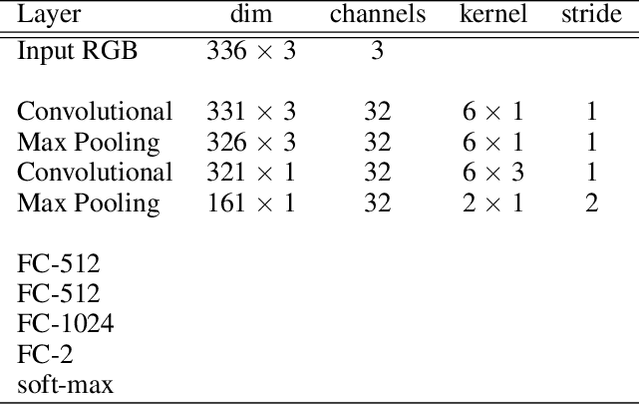
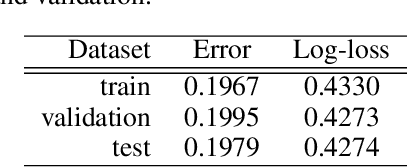
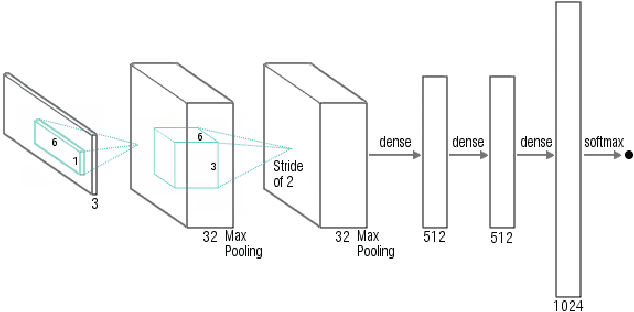
We investigated how the application of deep learning, specifically the use of convolutional networks trained with GPUs, can help to build better predictive models in telecommunication business environments, and fill this gap. In particular, we focus on the non-trivial problem of predicting customer churn in telecommunication operators. Our model, called WiseNet, consists of a convolutional network and a novel encoding method that transforms customer activity data and Call Detail Records (CDRs) into images. Experimental evaluation with several machine learning classifiers supports the ability of WiseNet for learning features when using structured input data. For this type of telecommunication business problems, we found that WiseNet outperforms machine learning models with hand-crafted features, and does not require the labor-intensive step of feature engineering. Furthermore, the same model has been applied without retraining to a different market, achieving consistent results. This confirms the generalization property of WiseNet and the ability to extract useful representations.