 Add to Chrome
 Add to Firefox
 Add to Edge
Which Algorithms Can Graph Neural Networks Learn?
Feb 13, 2026
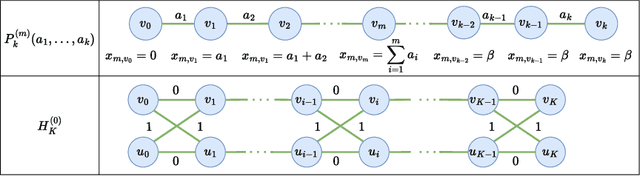
In recent years, there has been growing interest in understanding neural architectures' ability to learn to execute discrete algorithms, a line of work often referred to as neural algorithmic reasoning. The goal is to integrate algorithmic reasoning capabilities into larger neural pipelines. Many such architectures are based on (message-passing) graph neural networks (MPNNs), owing to their permutation equivariance and ability to deal with sparsity and variable-sized inputs. However, existing work is either largely empirical and lacks formal guarantees or it focuses solely on expressivity, leaving open the question of when and how such architectures generalize beyond a finite training set. In this work, we propose a general theoretical framework that characterizes the sufficient conditions under which MPNNs can learn an algorithm from a training set of small instances and provably approximate its behavior on inputs of arbitrary size. Our framework applies to a broad class of algorithms, including single-source shortest paths, minimum spanning trees, and general dynamic programming problems, such as the $0$-$1$ knapsack problem. In addition, we establish impossibility results for a wide range of algorithmic tasks, showing that standard MPNNs cannot learn them, and we derive more expressive MPNN-like architectures that overcome these limitations. Finally, we refine our analysis for the Bellman-Ford algorithm, yielding a substantially smaller required training set and significantly extending the recent work of Nerem et al. [2025] by allowing for a differentiable regularization loss. Empirical results largely support our theoretical findings.

Graph neural networks extrapolate out-of-distribution for shortest paths
Mar 24, 2025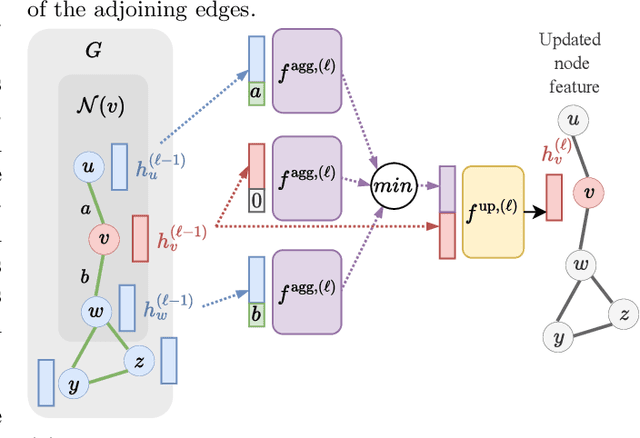


Neural networks (NNs), despite their success and wide adoption, still struggle to extrapolate out-of-distribution (OOD), i.e., to inputs that are not well-represented by their training dataset. Addressing the OOD generalization gap is crucial when models are deployed in environments significantly different from the training set, such as applying Graph Neural Networks (GNNs) trained on small graphs to large, real-world graphs. One promising approach for achieving robust OOD generalization is the framework of neural algorithmic alignment, which incorporates ideas from classical algorithms by designing neural architectures that resemble specific algorithmic paradigms (e.g. dynamic programming). The hope is that trained models of this form would have superior OOD capabilities, in much the same way that classical algorithms work for all instances. We rigorously analyze the role of algorithmic alignment in achieving OOD generalization, focusing on graph neural networks (GNNs) applied to the canonical shortest path problem. We prove that GNNs, trained to minimize a sparsity-regularized loss over a small set of shortest path instances, exactly implement the Bellman-Ford (BF) algorithm for shortest paths. In fact, if a GNN minimizes this loss within an error of $\epsilon$, it implements the BF algorithm with an error of $O(\epsilon)$. Consequently, despite limited training data, these GNNs are guaranteed to extrapolate to arbitrary shortest-path problems, including instances of any size. Our empirical results support our theory by showing that NNs trained by gradient descent are able to minimize this loss and extrapolate in practice.
NN-Steiner: A Mixed Neural-algorithmic Approach for the Rectilinear Steiner Minimum Tree Problem
Dec 19, 2023Recent years have witnessed rapid advances in the use of neural networks to solve combinatorial optimization problems. Nevertheless, designing the "right" neural model that can effectively handle a given optimization problem can be challenging, and often there is no theoretical understanding or justification of the resulting neural model. In this paper, we focus on the rectilinear Steiner minimum tree (RSMT) problem, which is of critical importance in IC layout design and as a result has attracted numerous heuristic approaches in the VLSI literature. Our contributions are two-fold. On the methodology front, we propose NN-Steiner, which is a novel mixed neural-algorithmic framework for computing RSMTs that leverages the celebrated PTAS algorithmic framework of Arora to solve this problem (and other geometric optimization problems). Our NN-Steiner replaces key algorithmic components within Arora's PTAS by suitable neural components. In particular, NN-Steiner only needs four neural network (NN) components that are called repeatedly within an algorithmic framework. Crucially, each of the four NN components is only of bounded size independent of input size, and thus easy to train. Furthermore, as the NN component is learning a generic algorithmic step, once learned, the resulting mixed neural-algorithmic framework generalizes to much larger instances not seen in training. Our NN-Steiner, to our best knowledge, is the first neural architecture of bounded size that has capacity to approximately solve RSMT (and variants). On the empirical front, we show how NN-Steiner can be implemented and demonstrate the effectiveness of our resulting approach, especially in terms of generalization, by comparing with state-of-the-art methods (both neural and non-neural based).