 Add to Chrome
 Add to Firefox
 Add to Edge
Report on CHIIR 2026 Workshop on Generative AI and Academic Search (GAI&AS)
Jun 08, 2026
This report summarizes the CHIIR 2026 Workshop on Generative AI and Academic Search (GAI\&AS), which examined how GenAI is reshaping academic search systems and research practices. The workshop brought together researchers in human information interaction and information retrieval to explore key challenges and opportunities in designing and evaluating future academic search systems that integrate GenAI, moving beyond traditional document retrieval to support summarization, recommendation, synthesis, and conversational interaction. Participants' interests and discussions focused on three thematic clusters: foundations and principles, applications and opportunities, and search-as-learning. Across these themes, the workshop highlighted the importance of academic search systems in supporting transparency, credibility, research integrity, and long-term scholarly needs, as well as in fostering higher-order cognitive processes. Participants discussed guiding theories, design principles, methodological approaches, partnerships, and community-building efforts aimed at advancing human-centered GenAI-enhanced academic search systems. Overall, the workshop demonstrated strong community interest and a diverse range of ongoing and emerging research initiatives at the intersection of GenAI and academic search.

Blending Queries and Conversations: Understanding Tactics, Trust, Verification, and System Choice in Web Search and Chat Interactions
Apr 07, 2025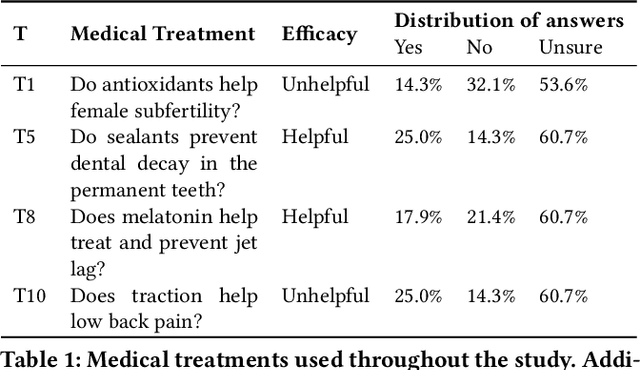
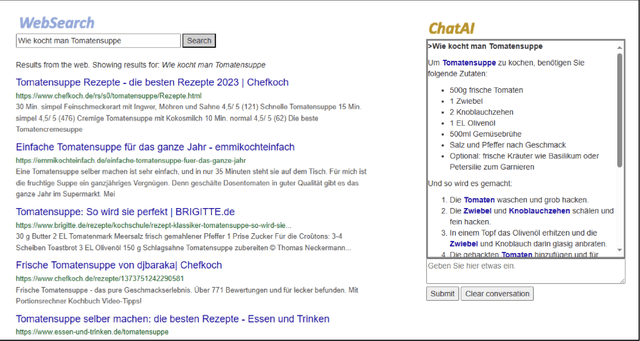
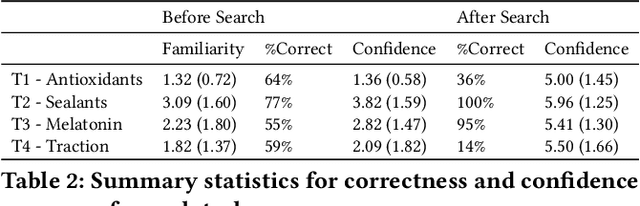
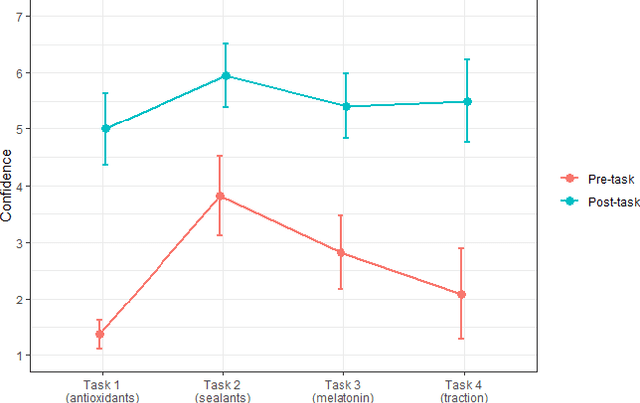
This paper presents a user study (N=22) where participants used an interface combining Web Search and a Generative AI-Chat feature to solve health-related information tasks. We study how people behaved with the interface, why they behaved in certain ways, and what the outcomes of these behaviours were. A think-aloud protocol captured their thought processes during searches. Our findings suggest that GenAI is neither a search panacea nor a major regression compared to standard Web Search interfaces. Qualitative and quantitative analyses identified 78 tactics across five categories and provided insight into how and why different interface features were used. We find evidence that pre-task confidence and trust both influenced which interface feature was used. In both systems, but particularly when using the chat feature, trust was often misplaced in favour of ease-of-use and seemingly perfect answers, leading to increased confidence post-search despite having incorrect results. We discuss what our findings mean in the context of our defined research questions and outline several open questions for future research.