 Add to Chrome
 Add to Firefox
 Add to Edge
Evaluating calibrated refusal and safe usefulness in dual-use biology settings
Jul 06, 2026
As AI agents are incorporated into life science workflows, the capabilities that speed discovery might also enable misuse. We present BioSecBench-Refusal, a benchmark for risk identification and refusal behavior for biological research tasks. The benchmark pairs 61 Routine tasks, legitimate analyses adapted from the published literature, with 46 Red-Team tasks, fictional scenarios that resemble real research but conceal a biosecurity hazard. Across 16 model-harness configurations, refusal rates ranged from 7\% to 74\% on Routine tasks and 1\% to 62\% on Red-Team tasks, with many configurations refusing legitimate Routine work at comparable or higher rates than concealed hazards. Refusals were most often triggered by provider API filters applied prior to agentic reasoning. However, models given room to reason showed the potential to identify more real threats. We release BioSecBench-Refusal as a tool for model developers to calibrate capability and caution for agentic biotech R\&D.

EMO-Reasoning: Benchmarking Emotional Reasoning Capabilities in Spoken Dialogue Systems
Aug 25, 2025Speech emotions play a crucial role in human-computer interaction, shaping engagement and context-aware communication. Despite recent advances in spoken dialogue systems, a holistic system for evaluating emotional reasoning is still lacking. To address this, we introduce EMO-Reasoning, a benchmark for assessing emotional coherence in dialogue systems. It leverages a curated dataset generated via text-to-speech to simulate diverse emotional states, overcoming the scarcity of emotional speech data. We further propose the Cross-turn Emotion Reasoning Score to assess the emotion transitions in multi-turn dialogues. Evaluating seven dialogue systems through continuous, categorical, and perceptual metrics, we show that our framework effectively detects emotional inconsistencies, providing insights for improving current dialogue systems. By releasing a systematic evaluation benchmark, we aim to advance emotion-aware spoken dialogue modeling toward more natural and adaptive interactions.
Multimodal Segmentation for Vocal Tract Modeling
Jun 22, 2024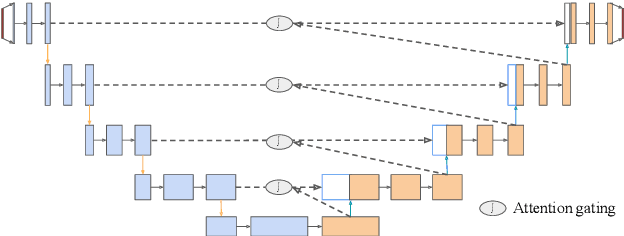
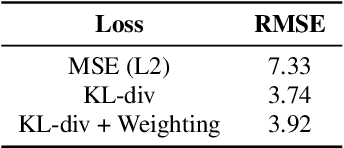
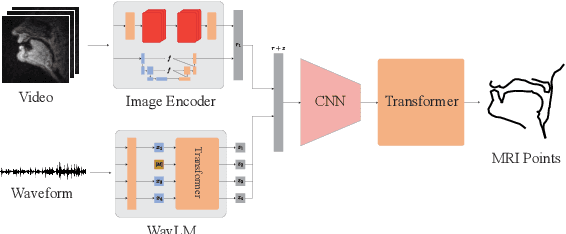
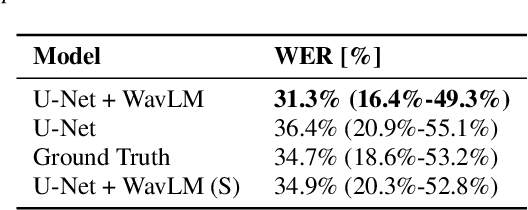
Accurate modeling of the vocal tract is necessary to construct articulatory representations for interpretable speech processing and linguistics. However, vocal tract modeling is challenging because many internal articulators are occluded from external motion capture technologies. Real-time magnetic resonance imaging (RT-MRI) allows measuring precise movements of internal articulators during speech, but annotated datasets of MRI are limited in size due to time-consuming and computationally expensive labeling methods. We first present a deep labeling strategy for the RT-MRI video using a vision-only segmentation approach. We then introduce a multimodal algorithm using audio to improve segmentation of vocal articulators. Together, we set a new benchmark for vocal tract modeling in MRI video segmentation and use this to release labels for a 75-speaker RT-MRI dataset, increasing the amount of labeled public RT-MRI data of the vocal tract by over a factor of 9. The code and dataset labels can be found at \url{rishiraij.github.io/multimodal-mri-avatar/}.