 Add to Chrome
 Add to Firefox
 Add to Edge
Evidence-Informed LLM Beliefs for Continual Scientific Discovery
Jun 28, 2026
Open-ended scientific discovery with large language models (LLMs) increasingly operates as a long-horizon loop of hypothesis search and verification, where a reward signal guides which hypotheses to test next. A notable recent example is AutoDiscovery, which uses "Bayesian surprise" - the belief shift an LLM undergoes after observing evidence for a hypothesis - as both a discovery metric and a reward for search. We first observe that AutoDiscovery treats surprisal as a static quantity, while surprisal in human reasoning is non-stationary - it is defined relative to beliefs that evolve with experience, a prerequisite for continual scientific discovery. We address this mismatch with evidence-informed LLM beliefs: priors updated with evidence from previous hypotheses to compute non-stationary surprisal for new hypotheses. We compare in-context belief-updating mechanisms and find that embedding-based retrieval-augmented generation over prior discoveries best anticipates eventual posteriors, identifying 37.5% of static surprisals as spurious. We then modify search to avoid these spurious rewards and prioritize hypotheses that remain surprising under non-stationary beliefs. Concretely, we introduce two complementary changes to the original search procedure: belief-update filtering and diversity maximization. Across five discovery domains, our method increases accumulated non-stationary surprisal by 30.62% on average compared to the original search procedure, demonstrating that continual scientific discovery with LLMs requires not only better belief measurement but also search procedures that avoid redundancy and encourage diversity.

Replicating ReLM Results: Validating Large Language Models with ReLM
Apr 16, 2025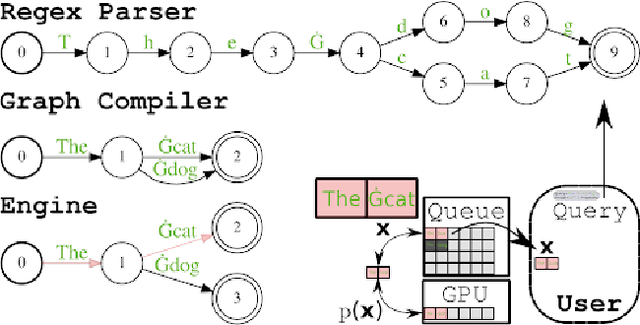
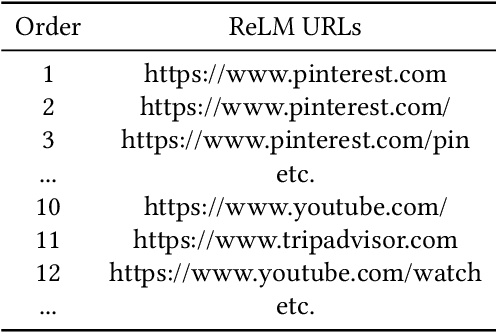
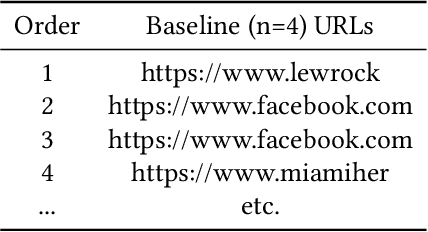
Validating Large Language Models with ReLM explores the application of formal languages to evaluate and control Large Language Models (LLMs) for memorization, bias, and zero-shot performance. Current approaches for evaluating these types behavior are often slow, imprecise, costly, or introduce biases of their own, but are necessary due to the importance of this behavior when productionizing LLMs. This project reproduces key results from the original ReLM paper and expounds on the approach and applications with an emphasis on the relevance to the field of systems for machine learning.
The Forward-Forward Algorithm: Characterizing Training Behavior
Apr 15, 2025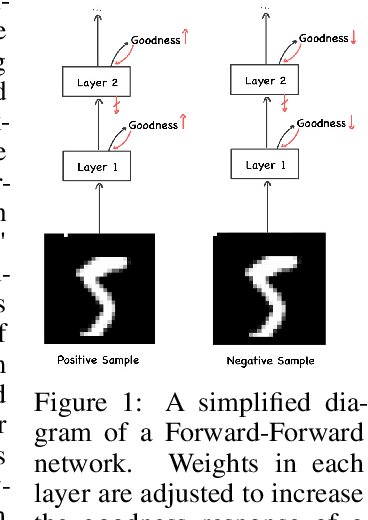
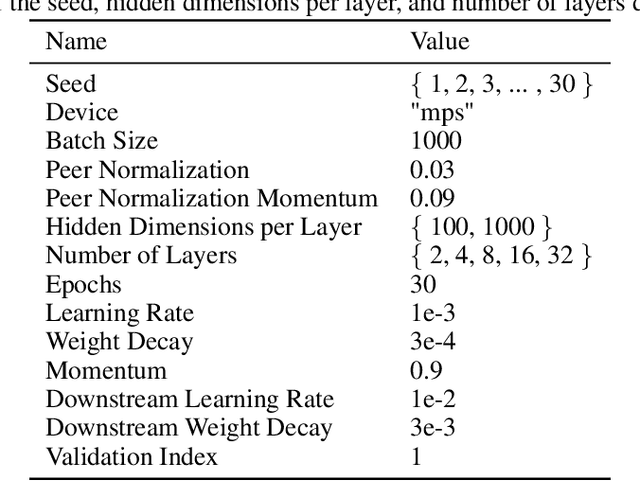
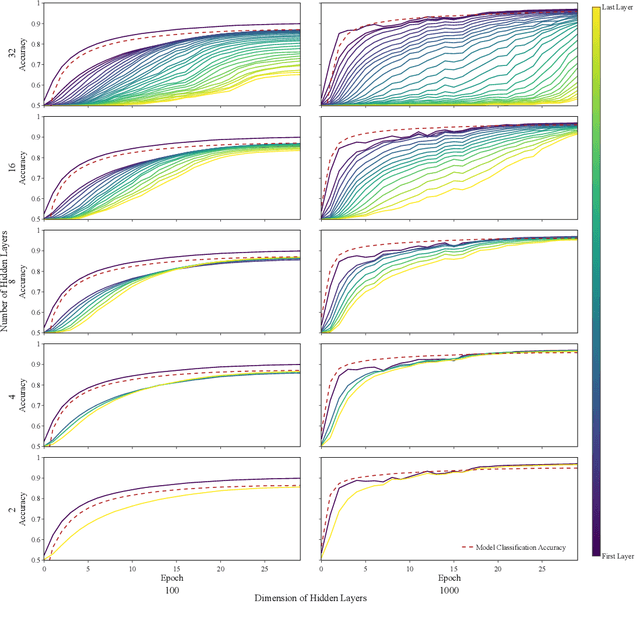
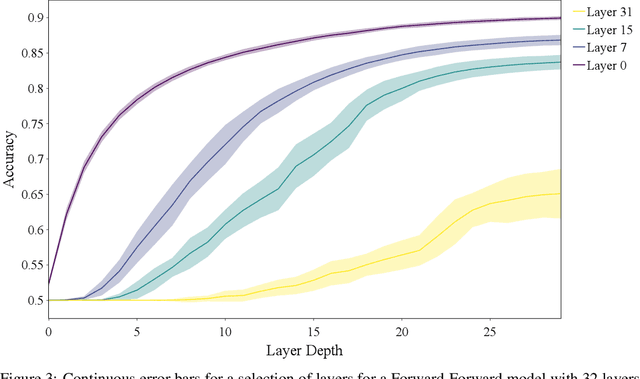
The Forward-Forward algorithm is an alternative learning method which consists of two forward passes rather than a forward and backward pass employed by backpropagation. Forward-Forward networks employ layer local loss functions which are optimized based on the layer activation for each forward pass rather than a single global objective function. This work explores the dynamics of model and layer accuracy changes in Forward-Forward networks as training progresses in pursuit of a mechanistic understanding of their internal behavior. Treatments to various system characteristics are applied to investigate changes in layer and overall model accuracy as training progresses, how accuracy is impacted by layer depth, and how strongly individual layer accuracy is correlated with overall model accuracy. The empirical results presented suggest that layers deeper within Forward-Forward networks experience a delay in accuracy improvement relative to shallower layers and that shallower layer accuracy is strongly correlated with overall model accuracy.