 Add to Chrome
 Add to Firefox
 Add to Edge
Deep RL- Tuned Mo del-Free Adaptive Control for Lower-Limb Exoskeletons During Sit-to-Stand Transitions
Jun 20, 2026
Sit-to-stand (STS) transitions impose significant joint-loading demands on elderly individuals, making them a primary target for lower-limb exoskeleton assistance. However, accurate trajectory tracking during STS is challenging due to complex, time-varying human exoskeleton interaction dynamics and inter-subject variability that render model-based control approaches difficult to apply in practice. This paper presents an intelligent model free adaptive backstepping control strategy for a bilateral lower-limb exoskeleton during STS motion. The proposed controller design uses an ultra-local second-order model to avoid explicit system identification, while a Gaussian radial basis function (RBF) neural network estimates the unknown lumped dynamics online. To further improve phase-aware tracking performance, a Twin Delayed Deep Deterministic Policy Gradient (TD3) reinforcement learning agent is integrated as a supervisory gain scheduler that adaptively adjusts controller gains across the distinct phases of STS motion. The proposed controller is evaluated through co-simulation in MATLAB/Simulink and Simscape Multibody using OpenSim-derived reference trajectories and benchmarked against state-of-the-art controllers. Results demonstrate that the proposed controller achieves the lowest average RMSE of 0.078 degree across all joints, representing improvements of 60.2%, 54.4%, 48.7%, and 42.6% over proportional integral derivative (PID), model-free adaptive control (MFAC), linear quadratic regulator (LQR), and sliding-mode control (SMC), respectively. TD3 integration further reduces tracking error by 35%, 33%, and 79% at the hip, knee, and ankle joints compared to the standalone RBF-MFAC baseline. These results demonstrate the effectiveness and robustness of the proposed controller design for assistive exoskeleton control during STS transitions.

Evaluation of electrical efficiency of photovoltaic thermal solar collector
Feb 11, 2020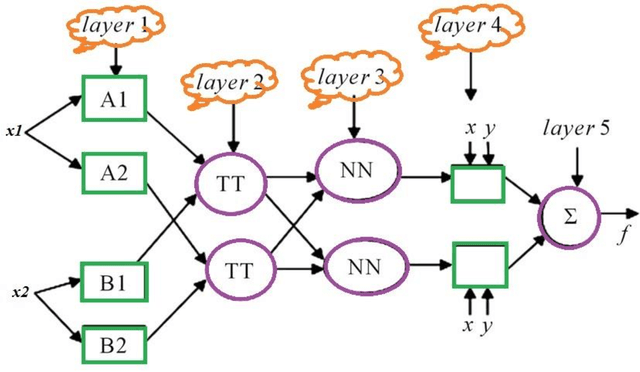
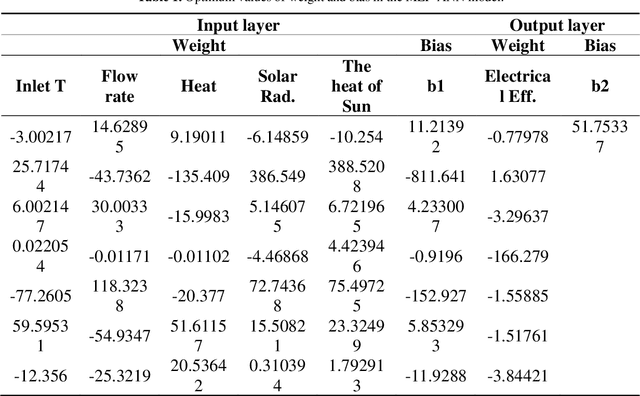
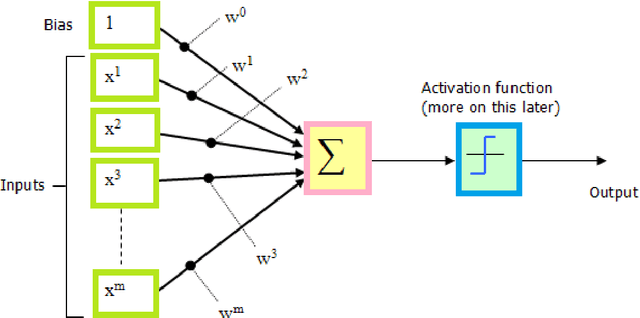
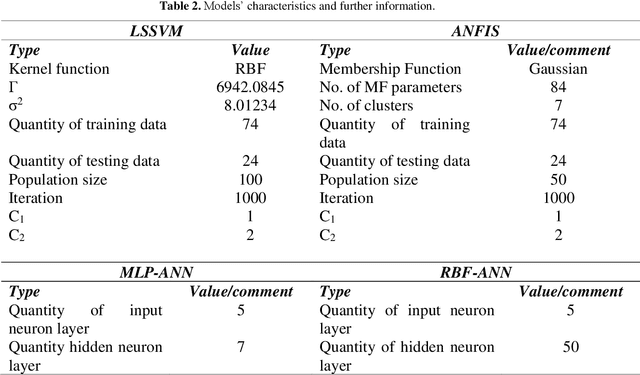
Solar energy is a renewable resource of energy that is broadly utilized and has the least emissions among renewable energies. In this study, machine learning methods of artificial neural networks (ANNs), least squares support vector machines (LSSVM), and neuro-fuzzy are used for advancing prediction models for the thermal performance of a photovoltaic-thermal solar collector (PV/T). In the proposed models, the inlet temperature, flow rate, heat, solar radiation, and the sun heat have been considered as the inputs variables. Data set has been extracted through experimental measurements from a novel solar collector system. Different analyses are performed to examine the credibility of the introduced approaches and evaluate their performance. The proposed LSSVM model outperformed ANFIS and ANNs models. LSSVM model is reported suitable when the laboratory measurements are costly and time-consuming, or achieving such values requires sophisticated interpretations.