 Add to Chrome
 Add to Firefox
 Add to Edge
A Novel Hybrid PID-LQR Controller for Sit-To-Stand Assistance Using a CAD-Integrated Simscape Multibody Lower Limb Exoskeleton
Apr 04, 2026
Precise control of lower limb exoskeletons during sit-to-stand (STS) transitions remains a central challenge in rehabilitation robotics owing to the highly nonlinear, time-varying dynamics of the human-exoskeleton system and the stringent trajectory tracking requirements imposed by clinical safety. This paper presents the systematic design, simulation, and comparative evaluation of three control strategies: a classical Proportional-Integral-Derivative (PID) controller, a Linear Quadratic Regulator (LQR), and a novel Hybrid PID-LQR controller applied to a bilateral lower limb exoskeleton performing the sit-to-stand transition. A high-fidelity, physics-based dynamic model of the exoskeleton is constructed by importing a SolidWorks CAD assembly directly into the MATLAB/Simulink Simscape Multibody environment, preserving accurate geometric and inertial properties of all links. Physiologically representative reference joint trajectories for the hip, knee, and ankle joints are generated using OpenSim musculoskeletal simulation and decomposed into three biomechanical phases: flexion-momentum (0-33%), momentum-transfer (34-66%), and extension (67-100%). The proposed Hybrid PID-LQR controller combines the optimal transient response of LQR with the integral disturbance rejection of PID through a tuned blending coefficient alpha = 0.65. Simulation results demonstrate that the Hybrid PID-LQR achieves RMSE reductions of 72.3% and 70.4% over PID at the hip and knee joints, respectively, reduces settling time by over 90% relative to PID across all joints, and limits overshoot to 2.39%-6.10%, confirming its superiority over both baseline strategies across all evaluated performance metrics and demonstrating strong translational potential for clinical assistive exoskeleton deployment.

Modelling, Design Optimization and Prototype development of Knee Exoskeleton
Sep 04, 2024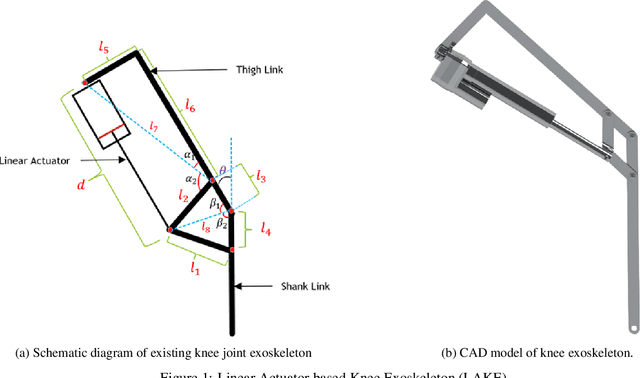
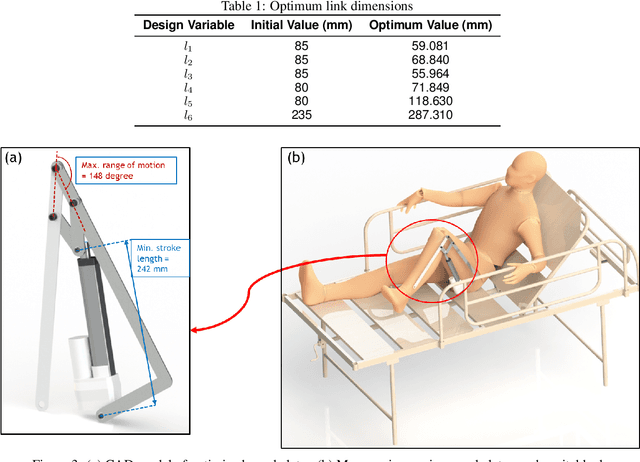
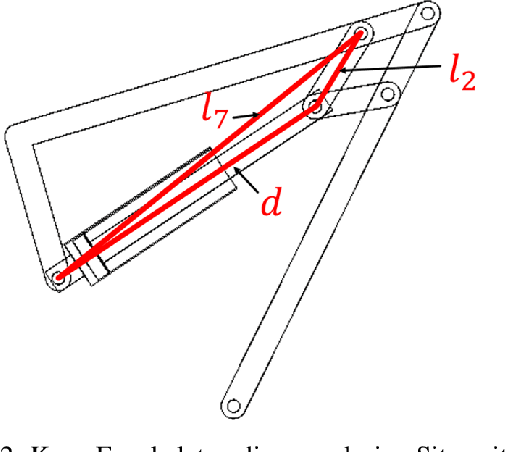
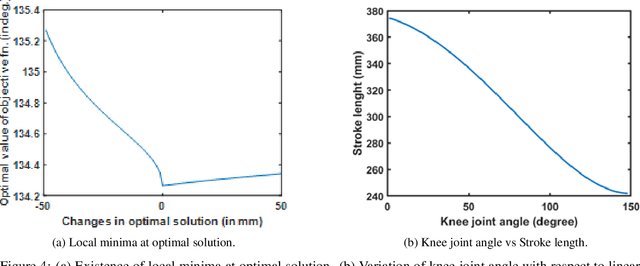
This study focuses on enhancing the design of an existing knee exoskeleton by addressing limitations in the range of motion (ROM) during Sit-to-Stand (STS) motions. While current knee exoskeletons emphasize toughness and rehabilitation, their closed-loop mechanisms hinder optimal ROM, which is crucial for effective rehabilitation. This research aims to optimize the exoskeleton design to achieve the necessary ROM, improving its functionality in rehabilitation. This can be achieved by utilizing kinematic modeling and formulation, the existing design was represented in the non-linear and non-convex mathematical functions. Optimization techniques, considering constraints based on human leg measurements, were applied to determine the best dimensions for the exoskeleton. This resulted in a significant increase in ROM compared to existing models. A MATLAB program was developed to compare the ROM of the optimized exoskeleton with the original design. To validate the practicality of the optimized design, analysis was conducted using a mannequin with average human dimensions, followed by constructing a cardboard dummy model to confirm simulation results. The STS motion of an average human was captured using a camera and TRACKER software, and the motion was compared with that of the dummy model to identify any misalignments between the human and exoskeleton knee joints. Furthermore, a prototype of the knee joint exoskeleton is being developed to further investigate misalignments and improve the design. Future work includes the use of EMG sensors for more detailed analysis and better results.