 Add to Chrome
 Add to Firefox
 Add to Edge
Portable Active Learning for Object Detection
May 11, 2026
Annotating bounding boxes is costly and limits the scalability of object detection. This challenge is compounded by the need to preserve high accuracy while minimizing manual effort in real-world applications. Prior active learning methods often depend on model features or modify detector internals and training schedules, increasing integration overhead. Moreover, they rarely jointly exploit the benefits of image-level signals, class-imbalance cues, and instance-level uncertainty for comprehensive selection. We present Portable Active Learning (PAL), a detector-agnostic, easily portable framework that operates solely on inference outputs. PAL combines class-wise instance uncertainty with image-level diversity to guide data selection. At each round, PAL trains lightweight class-specific logistic classifiers to distinguish true from false positives, producing entropy-based uncertainty scores for proposals. Candidate images are then refined using global image entropy, class diversity, and image similarity, yielding batches that are both informative and diverse. PAL requires no changes to model internals or training pipelines, ensuring broad compatibility across detectors. Extensive experiments on COCO, PASCAL VOC, and BDD100K demonstrate that PAL consistently improves label efficiency and detection accuracy compared to existing active learning baselines, making it a practical solution for scalable and cost-effective deployment of object detection in real-world settings.

Decoding BACnet Packets: A Large Language Model Approach for Packet Interpretation
Jul 22, 2024
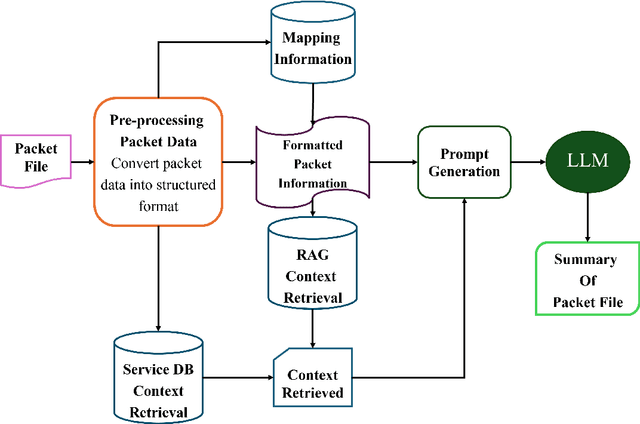
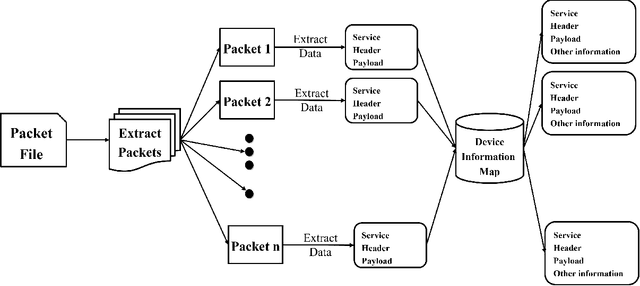
The Industrial Control System (ICS) environment encompasses a wide range of intricate communication protocols, posing substantial challenges for Security Operations Center (SOC) analysts tasked with monitoring, interpreting, and addressing network activities and security incidents. Conventional monitoring tools and techniques often struggle to provide a clear understanding of the nature and intent of ICS-specific communications. To enhance comprehension, we propose a software solution powered by a Large Language Model (LLM). This solution currently focused on BACnet protocol, processes a packet file data and extracts context by using a mapping database, and contemporary context retrieval methods for Retrieval Augmented Generation (RAG). The processed packet information, combined with the extracted context, serves as input to the LLM, which generates a concise packet file summary for the user. The software delivers a clear, coherent, and easily understandable summary of network activities, enabling SOC analysts to better assess the current state of the control system.