 Add to Chrome
 Add to Firefox
 Add to Edge
Let's Predict Who Will Move to a New Job
Sep 15, 2023
Any company's human resources department faces the challenge of predicting whether an applicant will search for a new job or stay with the company. In this paper, we discuss how machine learning (ML) is used to predict who will move to a new job. First, the data is pre-processed into a suitable format for ML models. To deal with categorical features, data encoding is applied and several MLA (ML Algorithms) are performed including Random Forest (RF), Logistic Regression (LR), Decision Tree (DT), and eXtreme Gradient Boosting (XGBoost). To improve the performance of ML models, the synthetic minority oversampling technique (SMOTE) is used to retain them. Models are assessed using decision support metrics such as precision, recall, F1-Score, and accuracy.
* 5 pages, 3 figures

Dimensionality reduction with missing values imputation
Jul 02, 2017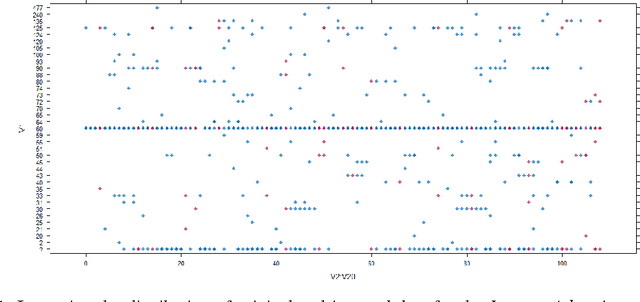
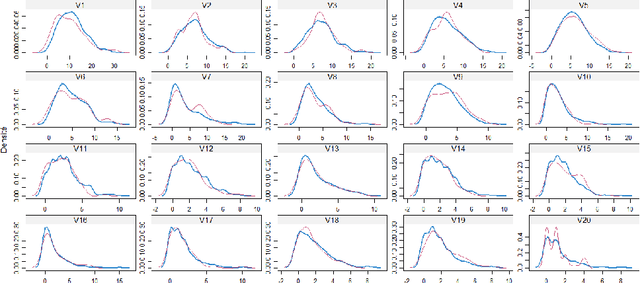

In this study, we propose a new statical approach for high-dimensionality reduction of heterogenous data that limits the curse of dimensionality and deals with missing values. To handle these latter, we propose to use the Random Forest imputation's method. The main purpose here is to extract useful information and so reducing the search space to facilitate the data exploration process. Several illustrative numeric examples, using data coming from publicly available machine learning repositories are also included. The experimental component of the study shows the efficiency of the proposed analytical approach.