 Add to Chrome
 Add to Firefox
 Add to Edge
Towards Robust Deep Learning-based Rumex Obtusifolius Detection from Drone Images
Apr 28, 2026
Domain adaptation (DA) addresses the challenge of transferring a machine learning model trained on a source domain to a target domain with a different data distribution. In this work, we study DA for the task of Rumex obtusifolius (Rumex) image classification. We train models on a published, ground vehicle-based dataset (source) and evaluate their performance on a custom target dataset acquired by unmanned aerial vehicles (UAVs). We find that Convolutional Neural Network (CNN) models, specifically ResNets, generalize poorly to the target domain, even after fine-tuning on the source data. Applying moment-matching and maximum classifier discrepancy, two established DA techniques, substantially improves target-domain performance. However, Vision Transformer (ViT) models pretrained with self-supervised objectives (DINOv2, DINOv3) handle domain shifts intrinsically well, surpassing even moment-matching-trained ResNets, likely due to the rich, general-purpose representations acquired during large-scale pretraining. Using ViTs fine-tuned on the source dataset, we demonstrate high classification performances in the range of F1=0.8 on our target dataset. To support further research on DA for weed detection in grassland systems, we publicly release our UAV-based target dataset AGSMultiRumex, comprising data from 15 flights over Swiss meadows.

Fly out-smarts man
Feb 27, 2012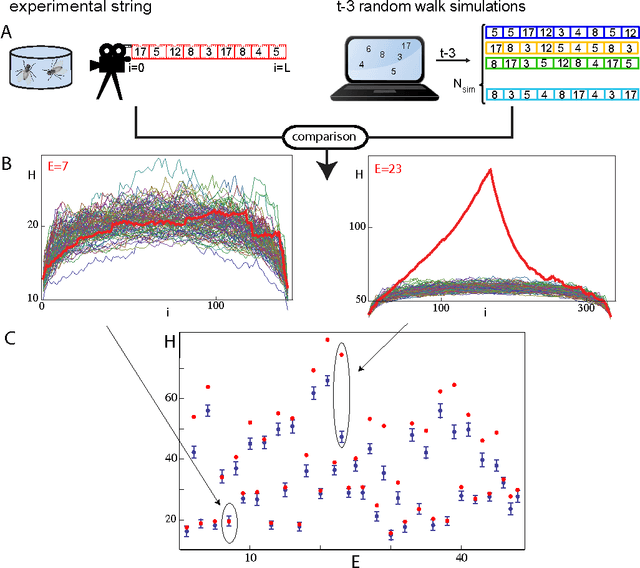
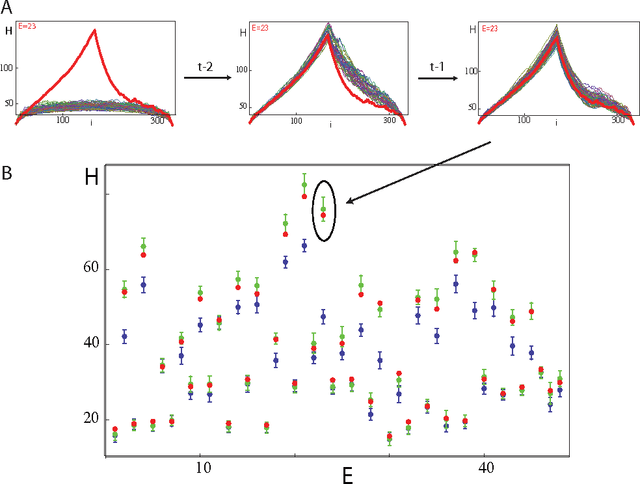
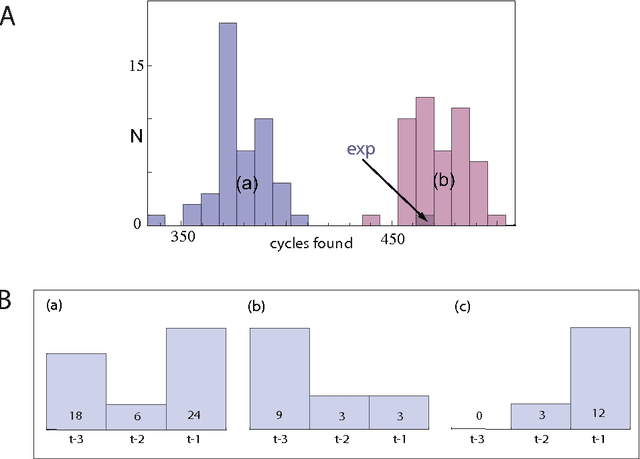
Precopulatory courtship is a high-cost, non-well understood animal world mystery. Drosophila's (=D.'s) precopulatory courtship not only shows marked structural similarities with mammalian courtship, but also with human spoken language. This suggests the study of purpose, modalities and in particular of the power of this language and to compare it to human language. Following a mathematical symbolic dynamics approach, we translate courtship videos of D.'s body language into a formal language. This approach made it possible to show that D. may use its body language to express individual information - information that may be important for evolutionary optimization, on top of the sexual group membership. Here, we use Chomsky's hierarchical language classification to characterize the power of D.'s body language, and then compare it with the power of languages spoken by humans. We find that from a formal language point of view, D.'s body language is at least as powerful as the languages spoken by humans. From this we conclude that human intellect cannot be the direct consequence of the formal grammar complexity of human language.