 Add to Chrome
 Add to Firefox
 Add to Edge
Virtual Smart Metering in District Heating Networks via Heterogeneous Spatial-Temporal Graph Neural Networks
Apr 11, 2026
Intelligent operation of thermal energy networks aims to improve energy efficiency, reliability, and operational flexibility through data-driven control, predictive optimization, and early fault detection. Achieving these goals relies on sufficient observability, requiring continuous and well-distributed monitoring of thermal and hydraulic states. However, district heating systems are typically sparsely instrumented and frequently affected by sensor faults, limiting monitoring. Virtual sensing offers a cost-effective means to enhance observability, yet its development and validation remain limited in practice. Existing data-driven methods generally assume dense synchronized data, while analytical models rely on simplified hydraulic and thermal assumptions that may not adequately capture the behavior of heterogeneous network topologies. Consequently, modeling the coupled nonlinear dependencies between pressure, flow, and temperature under realistic operating conditions remains challenging. In addition, the lack of publicly available benchmark datasets hinders systematic comparison of virtual sensing approaches. To address these challenges, we propose a heterogeneous spatial-temporal graph neural network (HSTGNN) for constructing virtual smart heat meters. The model incorporates the functional relationships inherent in district heating networks and employs dedicated branches to learn graph structures and temporal dynamics for flow, temperature, and pressure measurements, thereby enabling the joint modeling of cross-variable and spatial correlations. To support further research, we introduce a controlled laboratory dataset collected at the Aalborg Smart Water Infrastructure Laboratory, providing synchronized high-resolution measurements representative of real operating conditions. Extensive experiments demonstrate that the proposed approach significantly outperforms existing baselines.

PAC-Bayesian bounds for learning LTI-ss systems with input from empirical loss
Mar 29, 2023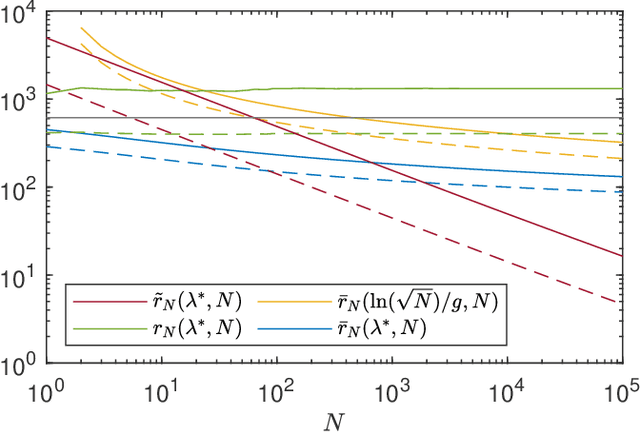
In this paper we derive a Probably Approxilmately Correct(PAC)-Bayesian error bound for linear time-invariant (LTI) stochastic dynamical systems with inputs. Such bounds are widespread in machine learning, and they are useful for characterizing the predictive power of models learned from finitely many data points. In particular, with the bound derived in this paper relates future average prediction errors with the prediction error generated by the model on the data used for learning. In turn, this allows us to provide finite-sample error bounds for a wide class of learning/system identification algorithms. Furthermore, as LTI systems are a sub-class of recurrent neural networks (RNNs), these error bounds could be a first step towards PAC-Bayesian bounds for RNNs.
Secure PAC Bayesian Regression via Real Shamir Secret Sharing
Sep 23, 2021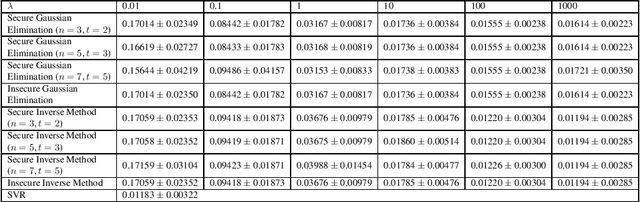
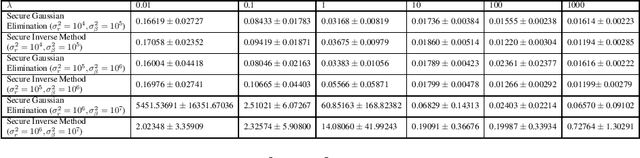
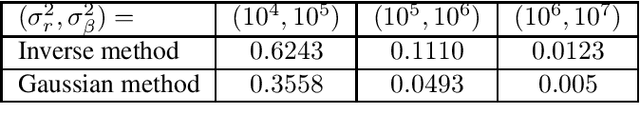
Common approach of machine learning is to generate a model by using huge amount of training data to predict the test data instances as accurate as possible. Nonetheless, concerns about data privacy are increasingly raised, but not always addressed. We present a secure protocol for obtaining a linear model relying on recently described technique called real number secret sharing. We take as our starting point the PAC Bayesian bounds and deduce a closed form for the model parameters which depends on the data and the prior from the PAC Bayesian bounds. To obtain the model parameters one need to solve a linear system. However, we consider the situation where several parties hold different data instances and they are not willing to give up the privacy of the data. Hence, we suggest to use real number secret sharing and multiparty computation to share the data and solve the linear regression in a secure way without violating the privacy of data. We suggest two methods; an inverse method and a Gaussian elimination method, and compare these methods at the end.