 Add to Chrome
 Add to Firefox
 Add to Edge
OmegaUse-OfficeVal: Benchmarking LLM Agents on Long-Horizon Office-Suite Tasks with Economic Grounding
Jul 29, 2026
Large language model (LLM) agents are increasingly expected to assist users in completing tasks. However, existing benchmarks provide limited support for evaluating whether agents can carry out office-suite workflows at a reasonable cost. We introduce OmegaUse-OfficeVal, a benchmark for evaluating LLM agents on long-horizon office-suite tasks with task-level economic grounding. The benchmark comprises 100 tasks derived from office-suite requests proposed by practitioners and adapted through a privacy-preserving process. On average, these tasks require 2.32 hours of human labor to complete. An important feature of the benchmark is that each task is paired with two economic signals: human labor time and task price proxy. These signals enable direct comparisons between human costs and LLM inference costs, as well as value-weighted evaluation. To support stable evaluation, we develop code-based verifiers from fine-grained rubrics. We evaluate several frontier LLMs together with a human baseline. Although all evaluated LLMs are substantially cheaper and faster than human workers, they have not yet approached human-level deliverable quality. The code and dataset are fully open-sourced, and more information is available on our project website: https://omegause-officeval.github.io.

Role Similarity Metric Based on Spanning Rooted Forest
Oct 15, 2021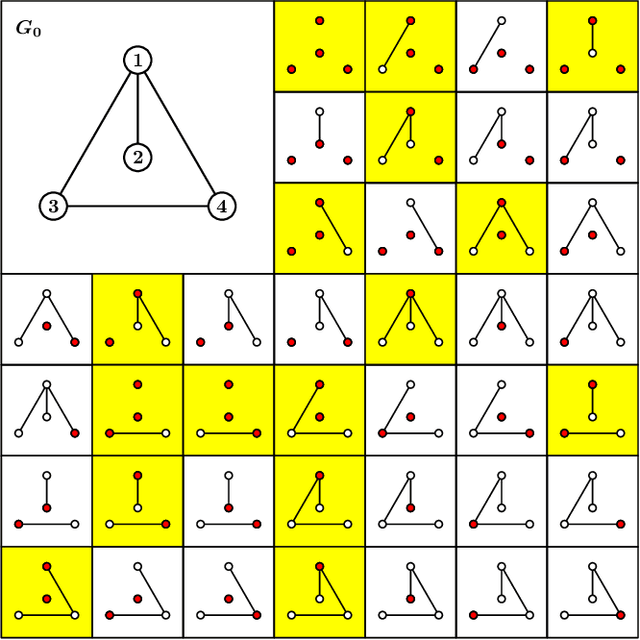
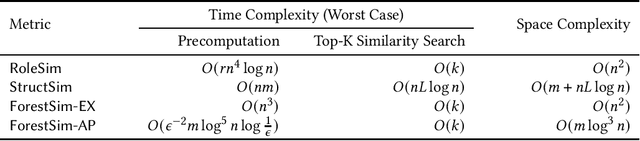
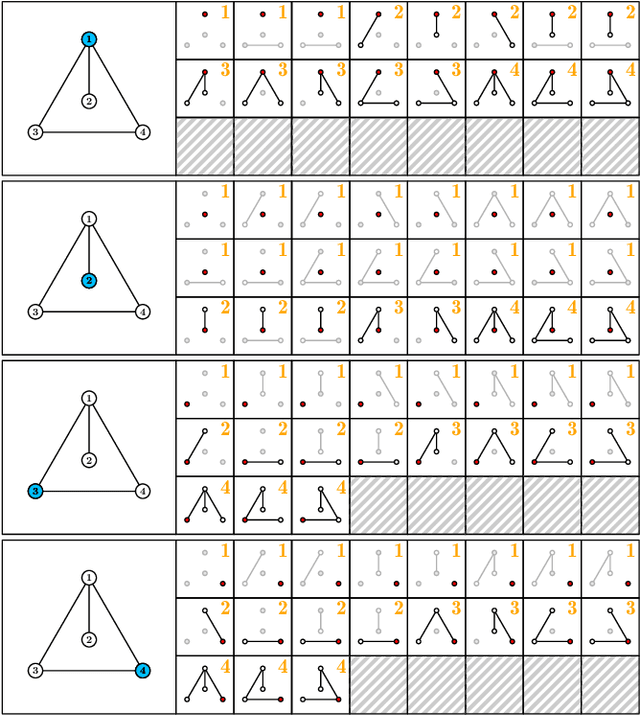
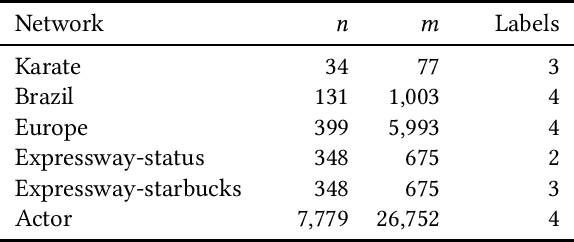
As a fundamental issue in network analysis, structural node similarity has received much attention in academia and is adopted in a wide range of applications. Among these proposed structural node similarity measures, role similarity stands out because of satisfying several axiomatic properties including automorphism conformation. Existing role similarity metrics cannot handle top-k queries on large real-world networks due to the high time and space cost. In this paper, we propose a new role similarity metric, namely \textsf{ForestSim}. We prove that \textsf{ForestSim} is an admissible role similarity metric and devise the corresponding top-k similarity search algorithm, namely \textsf{ForestSimSearch}, which is able to process a top-k query in $O(k)$ time once the precomputation is finished. Moreover, we speed up the precomputation by using a fast approximate algorithm to compute the diagonal entries of the forest matrix, which reduces the time and space complexity of the precomputation to $O(\epsilon^{-2}m\log^5{n}\log{\frac{1}{\epsilon}})$ and $O(m\log^3{n})$, respectively. Finally, we conduct extensive experiments on 26 real-world networks. The results show that \textsf{ForestSim} works efficiently on million-scale networks and achieves comparable performance to the state-of-art methods.