 Add to Chrome
 Add to Firefox
 Add to Edge
Explainable AI for Blind and Low-Vision Users: Navigating Trust, Modality, and Interpretability in the Agentic Era
Mar 31, 2026
Explainable Artificial Intelligence (XAI) is critical for ensuring trust and accountability, yet its development remains predominantly visual. For blind and low-vision (BLV) users, the lack of accessible explanations creates a fundamental barrier to the independent use of AI-driven assistive technologies. This problem intensifies as AI systems shift from single-query tools into autonomous agents that take multi-step actions and make consequential decisions across extended task horizons, where a single undetected error can propagate irreversibly before any feedback is available. This paper investigates the unique XAI requirements of the BLV community through a comprehensive analysis of user interviews and contemporary research. By examining usage patterns across environmental perception and decision support, we identify a significant modality gap. Empirical evidence suggests that while BLV users highly value conversational explanations, they frequently experience "self-blame" for AI failures. The paper concludes with a research agenda for accessible Explainable AI in agentic systems, advocating for multimodal interfaces, blame-aware explanation design, and participatory development.

Are You Misinformed? A Study of Covid-Related Fake News in Bengali on Facebook
Mar 22, 2022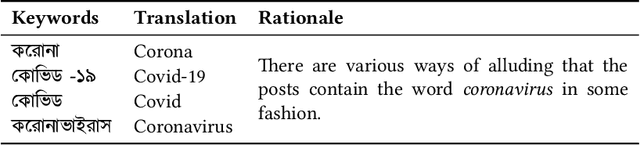


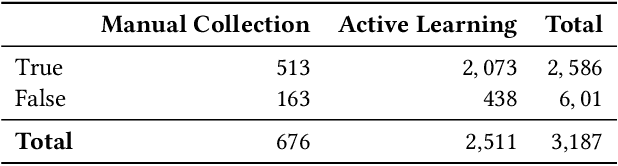
Our opinions and views of life can be shaped by how we perceive the opinions of others on social media like Facebook. This dependence has increased during COVID-19 periods when we have fewer means to connect with others. However, fake news related to COVID-19 has become a significant problem on Facebook. Bengali is the seventh most spoken language worldwide, yet we are aware of no previous research that studied the prevalence of COVID-19 related fake news in Bengali on Facebook. In this paper, we develop machine learning models to detect fake news in Bengali automatically. The best performing model is BERT, with an F1-score of 0.97. We apply BERT on all Facebook Bengali posts related to COVID-19. We find 10 topics in the COVID-19 Bengali fake news grouped into three categories: System (e.g., medical system), belief (e.g., religious rituals), and social (e.g., scientific awareness).